Answering the common buyer need: choose polycarbonate panels that maximize light, resist impact, and provide year‑round insulation for your greenhouse. The following five products are selected for all‑weather performance, clear light transmission, and durability. They suit hobbyists creating bright, healthy growing spaces, serious gardeners expanding a greenhouse, or DIY adopters replacing aging panels. Below, you’ll find a quick product comparison and detailed notes to help you pick the right panels for your climate and project.
| Product | Light Transmission | Thickness | Best For |
|---|---|---|---|
| FAHKNS 14 Pack 4′ x 2′ x 0.16″ Twin-Wall | 80% | 0.16 in | All‑weather greenhouses; light‑dense setups |
| DGSL 6 Pcs 4′ x 2′ x 0.16” | 80% | 0.16 in | Cost‑effective, durable walls and roof |
| FAHKNS 14 Pack 4′ x 2′ x 0.24″ Twin-Wall | 80% | 0.24 in | Better insulation with strong light diffusion |
| EVERECO 6 Pcs 6′ x 2′ x 0.24″ | Over 90% | 0.24 in | High transparency with strong UV protection |
| Sinimaka 8 Pack 8′ x 4′ x 0.24″ | ~89% light | 0.24 in | Large panels for quick coverage |
FAHKNS 14 Pack 4′ x 2′ 0.16″ Twin-Wall Panels
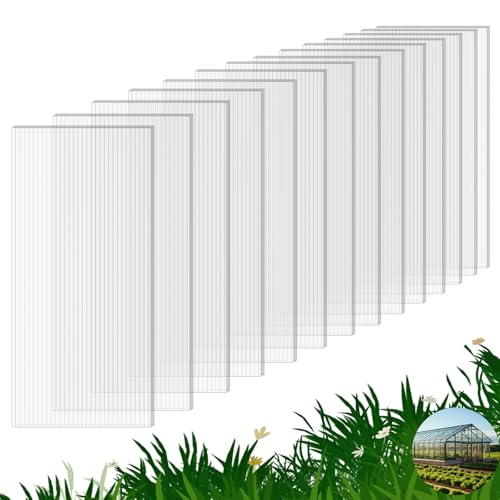
Best for: moderate‑size greenhouses where light is important but weight and price matter. These panels offer 80% light transmission and UV protection, balancing bright growth with energy efficiency. The twin‑wall construction provides good insulation without excessive weight, helping maintain a favorable climate for most crops.
Why selected: The combination of high light transmission, shatter resistance, and wide operating temperature range (-44°C to 120°C) supports year‑round gardening in varied climates. The 0.16″ thickness makes them lighter than thicker panels, which can simplify installation for DIYers.
Limitations to consider: While shatter‑resistant, the thinner profile may be less impact resistant than heavier sheets in high‑hazard wind zones. For extreme hail, thicker options may be preferable.
DGSL 6 Pcs 4′ x 2′ 0.16″ Twin-Wall Panels

Best for: homeowners seeking a cost‑effective, durable option for basic greenhouse roofs and walls. The 0.16″ panels provide a solid balance of light transmission and wind resistance, suitable for moderate climates.
Why selected: The 80% light transmission supports healthy plant growth while the twin‑wall design improves insulation. They are designed to withstand temperature swings from -44°C to 120°C, aiding climate stability across seasons.
Limitations to consider: The thinner panel may require more careful handling during installation to avoid nicks or scratches that could affect clarity over time.
FAHKNS 14 Pack 4′ x 2′ 0.24″ Twin-Wall Panels

Best for: growers needing stronger panels that reduce heat loss while maintaining strong light levels. The thicker 0.24″ panels improve thermal performance without sacrificing light transmission.
Why selected: The same 80% light transmission with enhanced thickness translates to better insulation during cooler months, helping maintain stable temperatures for sensitive crops.
Limitations to consider: Heavier sheets may require more robust framing and handling during installation, potentially increasing setup time.
EVERECO 6 Pcs 6′ x 2′ 0.24″

Best for: serious greenhouses where maximum light and UV protection are priorities. These panels deliver over 90% light transmittance with a UV coating that blocks 99% of UV rays, reducing plant stress and fading.
Why selected: The combination of very high light transmission and robust UV protection supports vigorous photosynthesis and longer panel life. Their 0.24″ thickness offers a strong balance of light, insulation, and wind resistance.
Caution: The higher clarity and UV protection relate to performance but may attract more heat in very sunny climates; consider shading or venting if heat buildup becomes a concern.
Sinimaka 8 Pack 8′ x 4′ x 0.24″

Best for: larger projects that need quick coverage with fewer joints. The 8′ x 4′ panels cover more area and simplify installation for expansive greenhouses or garden rooms.
Why selected: The 0.24″ thickness provides strong weather resistance and insulation, helping maintain stable interior conditions. The panels feature a high‑transparency coating to maximize daylight for plants.
Limitations to consider: In high wind areas, ensure the framing and fasteners are rated for heavier panels to avoid flex or damage from gusts.
Buying Guide: Key Considerations For Acrylic (Polycarbonate) Greenhouse Panels
What thickness do I need?
Thinner panels (0.16″) are lighter and easier to handle, suitable for small to mid‑sized greenhouses with moderate weather. Thicker panels (0.24″) offer better insulation and impact resistance, ideal for harsher climates or year‑round growing.
How much light should panels transmit?
Most panels in this set transmit around 80% of light, with higher values up to 90% in some options. Higher transmission supports faster photosynthesis but can require more cooling in hot, sunny climates.
UV protection and longevity
UV protection helps prevent yellowing and material degradation. A UV coating reduces plant stress and keeps panels clear longer, which benefits growth and light quality.
Durability and climate compatibility
Polycarbonate panels offer superior impact resistance compared with glass and many plastics. Look for a broad operating temperature range to match your local weather and growing season length.
Installation considerations
Panel size and weight influence ease of installation. Larger panels reduce seam counts but can require heavier framing. Ensure your greenhouse frame matches the panel dimensions for a snug, weather‑tight fit.
Maintenance and replacement planning
Polycarbonate panels are relatively low maintenance but check for scratches, cracks, or fogging over time. Plan replacements in sections to minimize disruption to growing cycles.
FAQ
- Are polycarbonate panels as clear as acrylic? They can be very clear and light‑transmitting, while offering higher impact resistance than many acrylic sheets. Look for high transmittance ratings and UV coatings.
- Will these panels block heat in summer? Panel thickness and ventilation influence heat buildup. Thicker panels insulate better but may require venting or shading in hot climates.
- Can I cut panels to fit my greenhouse? Many panels are designed to be cut to size with common tools. Follow manufacturer recommendations to avoid cracking or warping.
- Which panel is best for winter gardening? Thicker panels (0.24″) with strong insulation properties are better for winter climates and longer nights, as they minimize heat loss.
- Do panels resist hail and heavy rain? Twin‑wall polycarbonate panels provide strong impact resistance and weather durability, though heavier hail may still warrant extra protection with framing or additional layers.
- How long do polycarbonate panels last? With proper UV protection and care, they can last many seasons in outdoor use, maintaining clarity and structural integrity longer than basic plastics.