Air aerators for lawns help relieve soil compaction, improve drainage, and boost root oxygen for healthier grass. This guide highlights five well-rounded options ideal for small to mid-size yards, spot aeration, and easy DIY lawn care. Suitable buyers range from compact-area homeowners to gardening enthusiasts seeking durable, hands-on tools. Each pick is evaluated for ease of use, coverage, and soil compatibility, with practical cautions to consider before buying.
Below is a quick comparison of the selected products to help you choose at a glance:
| Product | |||
|---|---|---|---|
| Saker Manual Lawn Aerator | Manual Spike | 15 spikes | Quick, broad coverage in small to medium lawns |
| Walensee Lawn Aerator Spike | Manual Spike | 15 spikes | Better ground coverage for small lawns |
| Onadak Lawn Aerator | Manual Spike | 15 spikes | Efficient alloy spikes with straightforward assembly |
| LawnVigor Manual Core Aerator | Core Aerator (hollow tines) | 3 hollow tines | Deep soil cores; good for dense thatch areas |
| Grenebo Lawn Aerator | Manual Spike | 16 spikes | High spike count with self-cleaning design |
Saker Manual Lawn Aerator Tool

The Saker lawn aerator uses 15 sharp iron spikes to penetrate compacted soil, creating multiple holes per step. It is designed for easy insertion, improved drainage, and better air circulation so grass roots receive water, nutrients, and oxygen more efficiently. This tool is best for homeowners who want a straightforward manual solution with ample coverage across small to medium lawns.
Best for: small to mid-sized lawns that need quick, repeatable aeration. Why selected: high spike count and solid iron construction maximize soil penetration with each pass. Caution: ensure soil is not overly dry—soft soil yields easier penetration but overly hard soil can increase effort.
Walensee Lawn Aerator Spike

Walensee’s lawn aerator features 15 iron spikes arranged in three rows, offering broader coverage per step. The tool aims to loosen compacted soil and improve channels for air, water, and nutrients to reach roots. It’s particularly suitable for smaller lawns with edging or irregular areas where edge-to-edge aeration matters.
Best for: small lawns and edge work where uniform spike coverage improves overall aeration. Why selected: tri-row spike design increases efficiency. Caution: metal spikes can heat up in sun; use gloves and take breaks in hot weather.
Onadak Lawn Aerator

The Onadak aerator uses 15 sharp metal spikes over a compact frame, designed to reduce soil sloughing and bring air, water, and fertilizer down to the root zone. It emphasizes efficient spike depth and a straightforward assembly process. This model is best for gardeners who want a simple, time-saving manual solution for medium-sized lawns.
Best for: users seeking a practical, efficient manual aerator with clear assembly steps. Why selected: 15 spikes deliver wide coverage and faster aeration. Caution: follow the correct assembly sequence to avoid unusable connections.
LawnVigor Manual Core Aerator
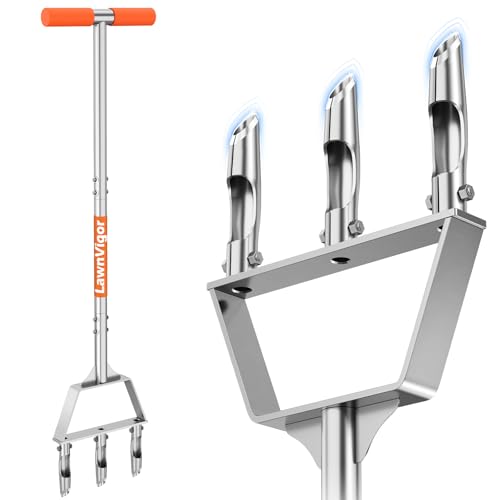
The LawnVigor core aerator uses three hollow tines to extract soil plugs, enabling deeper penetration for improved drainage and root access. Its hollow design helps reduce clogging and supports long-term durability with replaceable inserts. This tool is better for lawns needing deeper core aeration, especially in compacted or clay soils.
Best for: lawns that benefit from deeper cores and plug removal. Why selected: hollow tines create effective channels while minimizing clogging. Caution: water roots well before use and avoid side-to-side rocking while the tool is in the ground.
Grenebo Lawn Aerator

The Grenebo aerator features 16 spikes in a stable 4×4 layout, designed for efficient coverage and deep penetration. It employs self-cleaning springs to reduce clogging and improve long-term stability. This model is suitable for frequent use across various soil types and is particularly advantageous for thorough, time-efficient aeration in moderate-sized lawns.
Best for: users needing high spike count with self-cleaning capability. Why selected: 16 spikes in a grid provide broad, consistent aeration; self-cleaning reduces maintenance. Caution: ensure spikes are securely fastened before use to avoid loosening during operation.
Buying Guide
What type of aerator should you choose?
- Manual spike aerators: Quick setup and simple maintenance; best for small to mid-sized lawns and spot aeration. Look for multiple spikes per pass and sturdy iron construction.
- Core aerators with hollow tines: Best for deeper soil penetration and heavy compaction. They remove plugs, improving drainage and root access but may require more cleanup and maintenance.
- Rolling aerators: Generally more efficient on larger areas and provide smoother operation. They can weigh more but cover ground quickly.
How to maximize aeration results?
- Water the lawn the day before aeration to soften soil and improve spike or core penetration.
- Avoid aerating when soil is extremely dry or waterlogged to prevent damage to the tool or turf.
- After aeration, overseed and fertilize as part of a broader lawn care plan to maximize root growth and nutrient uptake.
Material durability and maintenance considerations
- Look for rust-resistant finishes and heavy-duty steel to ensure long life in outdoor conditions.
- Check spike security and fastening nuts; choose models with self-tightening or locking features to prevent loosening.
- For hollow-tine models, keep inserts in place and follow cleaning recommendations to reduce clogging.
Frequently Asked Questions
How deep should I aerate my lawn?
Aim for holes that reach the root zone, typically 2–3 inches deep for most lawns, depending on soil type and compaction.
Can I use lawn aerators on wet soil?
Wait until soil moisture is moderate to avoid ripping and damage. Very wet soil can clump and clog spikes or tines.
Should I aerate before or after overseeding?
Aerate first to loosen soil, then overseed to maximize seed-soil contact and germination.
Do core aerators require cleanup after use?
Yes. Remove soil plugs and debris per model instructions. Hollow-tine cores may leave plugs that compact a bit if not cleared.
Is rolling aeration better than spike aeration?
Rolling aeration can offer smoother operation and broader coverage, but spike aerators are simpler and lighter for tight spaces.