Find the right air stones to keep koi ponds well-oxygenated and healthy. This guide highlights five reliable options, explaining who each is best for and why. Use these tips to match a diffuser or stone with pond size, pump power, and maintenance needs.
| Product | Why It Stands Out | Best For |
|---|---|---|
| AQUANEAT Air Stones For Ponds 2 Inch (4 Pack) | Four durable 2″ stones for broad coverage and stable aeration. | Ponds needing strong, consistent oxygenation and multi-point diffusion. |
| AquaMiracle New Innovative Rubber Air Stone (2-Pack, 8” x 1.25”) | Rubber construction with thousands of pores for finer bubbles and efficient oxygen transfer. | Large ponds or systems that benefit from finer bubbles and steadier diffusion. |
| AQUANEAT Aquarium 5 Inch Air Stone Cylindrical (2 Pack) | Large-diameter stones that create dense, stable bubbles and broader aeration area. | Mid-to-large setups needing robust aeration with simple placement. |
| AQUANEAT Air Stones For Ponds 2 Inch (2 Pack) | Two 2″ stones with similar specs to the 4-pack, convenient pair option. | Smaller installations or backup aeration for redundancy. |
| Pawfly Aquarium 8 Inch Large Air Stone Disc | Wide-diffusion disc for high-volume aeration and DWC suitability. | Very large ponds or systems needing strong surface agitation. |
AQUANEAT Air Stones For Ponds 2 Inch (4 Pack)

Best for: Small to medium ponds that require multiple aeration points. The four 2″ stones distribute oxygen across a wider area, keeping water circulating and preventing stratification. This set is suitable for hydroponics, fish tanks, and DWC systems as well as ponds in winter-use scenarios.
Why selected: Fine bubbles increase dissolved oxygen more effectively than larger stones in similar flow conditions. Durable construction helps maintain performance over time. The 2″ diameter with 3/16″ or 3/8″ connectors fits common air lines and suitable pumps.
Caution: Ensure your air pump provides adequate power (recommended > 4 W per stone) and that tubing matches the connector size to avoid leaks or reduced diffusion.
AquaMiracle New Innovative Rubber Air Stone (2-Pack)

Best for: Large ponds or aquaculture setups where finer, steadier bubbles improve oxygen transfer and circulation. The rubber cylinder design reduces movement and stays where placed.
Why selected: The rubber material features thousands of tiny pores that deliver finer and richer bubbles than traditional sand stones, enhancing oxygen dissolution. Self-weighted and square-ended to stay at the bottom, even with water flow.
Caution: If bubbles appear weaker than expected, consider a higher-flow pump to match the diffusion rate for your pond size.
AQUANEAT Aquarium 5 Inch Air Stone Cylindrical (2 Pack)
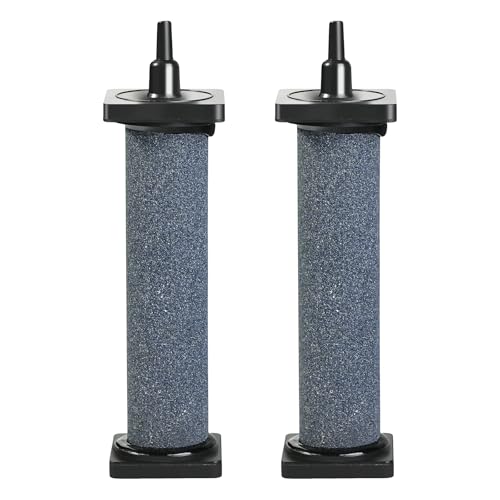
Best for: Ponds or larger aquariums where medium-to-dense bubbles are desirable to sustain oxygen levels and promote plant growth.
Why selected: The pair design provides a larger aeration footprint and a stable base, helping maintain the diffusion area. It’s a straightforward upgrade where existing stones are undersized or overworked.
Caution: The larger size may require a more capable air pump and tubing routing to prevent back-pressure on the diffuser.
AQUANEAT Air Stones For Ponds 2 Inch (2 Pack)

Best for: Small to mid-size ponds needing dependable, compact diffusion with easy pairing to existing pumps.
Why selected: Like the 4-pack variant, these stones deliver fine bubbles and broad compatibility with hydroponic and pond setups. They’re a practical pair for redundancy or phased upgrading.
Caution: Monitor for clogging over time; routine cleaning helps maintain maximum oxygen transfer and prevent reduced performance.
Pawfly Aquarium 8 Inch Large Air Stone Disc

Best for: Very large ponds or DWC systems that require high-volume diffusion and wide coverage across the water surface.
Why selected: The large disc creates abundant, dense bubbles and supports substantial water circulation, which is key for larger volumes and higher fish density. It’s a straightforward upgrade when smaller stones underperform.
Caution: Requires a robust air pump (recommended > 15 W) and compatible tubing (3/8″ inner diameter). Not suitable for some setups that rely on compact diffuser shapes.
Buying Guide: Key Purchase Considerations
- Pond size and water volume: Larger ponds benefit from bigger stones or multiple diffusion points to ensure even oxygenation.
- Pump compatibility: Match stone size and diffusion requirements to pump flow, pressure, and tubing size (3/16″, 3/8″, or other connectors).
- Bubble size and oxygen transfer: Finer bubbles increase dissolved oxygen but may require higher flow for the same diffusion area.
- Durability and placement: Rubber and ceramic materials resist clogging and stay in place better in flowing water or under fish activity.
- Maintenance: Some stones are easier to clean; consider stones with self-weighting or stable bases to minimize movement.
- Redundancy: For koi ponds, having a spare diffuser or a second set helps maintain oxygenation if one stone becomes clogged or damaged.
Frequently Asked Questions
- What size air stone is best for a koi pond? The best size depends on pond volume and pump capacity. Larger ponds often benefit from 5 inch or multiple 2 inch stones with a capable pump.
- Do rubber air stones last longer than ceramic ones? Rubber stones can resist cracking and may stay seated better in moving water, but performance depends on density, pore size, and cleaning frequency.
- Why are finer bubbles better for oxygen transfer? Finer bubbles increase the surface area relative to water volume, improving gas exchange and oxygen dissolution in the water.
- Can I mix different brands of air stones? Yes, but ensure pump capacity and airline tubing fit the stones’ connectors and that overall air output remains balanced across devices.
- How often should air stones be cleaned? Regular cleaning is recommended, especially in ponds with debris or fish waste, to maintain diffusion efficiency and prevent clogging.
- Is it necessary to use multiple air stones? For larger ponds or higher fish loads, multiple stones provide better diffusion and water circulation, reducing dead zones.