Answering common garden questions: these antifungal products protect ornamentals, vegetables, and houseplants from powdery mildew, blight, and other fungal issues. Best choices vary by use, whether you need organic compatibility, pest synergy, or indoor/outdoor versatility. This guide highlights five options suited to different buyers and garden contexts.
Summary of selected products:
| Product | Brand | Best For | Key Benefit | Organic Friendly |
|---|---|---|---|---|
| Bonide Captain Jack’s Copper Fungicide, 32 oz Ready-to-Use | Bonide | Organic gardens, harvest day protection | Ready-to-use liquid copper with broad disease control | Yes |
| Bonide Captain Jack’s Neem Oil, 32 oz Ready-to-Use | Bonide | Pests and fungal prevention in one | Three-in-one fungicide, miticide, and insecticide | Yes |
| Garden Safe Fungicide 3 32 Oz | Garden Safe | General garden disease prevention | Fungicide, insecticide, and miticide in one | Yes |
| Grower’s Ally Fungicide Spray | Grower’s Ally | Natural, organic-friendly protection | Citrus-acid based, OMRI Listed | Yes |
| FortaGrow Plant Disease Control Spray | FortaGrow | Thyme-oil based, indoor/outdoor | Natural thyme oil formulation | Yes |
Bonide Captain Jack’s Copper Fungicide, 32 oz Ready-to-Use

Features include ready-to-use liquid copper fungicide for organic gardening. It is effective against a wide range of diseases, including blight, black spot, powdery mildew, and peach leaf curl. Best for gardeners who want a simple, day-of-harvest friendly option that remains compatible with organic produce.
Who it’s best for: home vegetable gardeners and fruit tree enthusiasts seeking a straightforward, organic-friendly copper-based solution. Why selected: broad disease coverage with harvest-day usability. Caution: copper fungicides can affect sensitive ornamentals if overapplied; follow label directions carefully.
Bonide Captain Jack’s Neem Oil, 32 oz Ready-to-Use
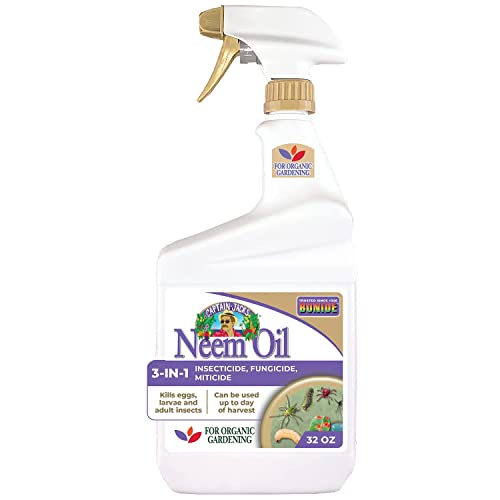
Neem oil provides multi-purpose protection as a fungicide, miticide, and insecticide. It’s ready to use and can be applied up to harvest in many cases. It kills all life stages of insects and helps prevent fungal attack on plant tissues.
Best for: gardeners needing an all-in-one plant safeguard against pests and fungal issues. Choose this if you want a versatile, easy-to-deploy spray. Caution: neem oil can cause phytotoxicity on some plants in bright sun or if applied during heat, so test on a small area first.
Garden Safe Fungicide 3 32 Oz

This product combines three garden products in one: fungicide, insecticide, and miticide. It’s designed for organic gardening and can be used around roses, vegetables, and ornamentals to prevent black spot, rust, and powdery mildew.
Best for: gardeners who want consolidated protection across fungi and insects. Choose this if you prefer a single product with multiple protective functions. Limitation: effectiveness varies with disease pressure; follow label timing for best results.
Grower’s Ally Fungicide Spray

Made with food-grade citric acid, this OMRI-listed spray is a natural, pesticide-free option. It kills and prevents powdery mildew, root, and foliar diseases while leaving no synthetic residues. It’s suitable for indoor and outdoor use with vegetables, houseplants, shrubs, and more.
Best for: buyers seeking a natural, plant-safe fungicide option. Choose this if you want a non-copper, plant-based approach. Caution: may require more frequent applications during high disease pressure or persistent humidity.
FortaGrow Plant Disease Control Spray

This thyme-oil-based spray focuses on antifungal protection with a natural plant-derived ingredient set. It’s designed for indoor and outdoor use and is marketed as safe for family and pets when used as directed. It offers broad disease control on a variety of crops without copper, suitable for organic gardening contexts.
Best for: gardeners who prefer a natural essential-oil based option. Choose this if you want a fragrance-free, plant-friendly alternative. Limitation: efficacy can vary with environmental conditions and pathogen pressure.
Buying Guide: Key Considerations for Anti-Fungal Tools
- Organic compatibility: If organic production is a priority, verify label claims such as “organic gardening” or OMRI-listed status.
- Active ingredient: Copper-based fungicides provide broad control but may affect copper-sensitive plants; plant type and growth stage matter.
- Mode of action: Contact vs. systemic options; consider whether you need preventative coverage or curative action.
- Indoor vs outdoor use: Some formulations are safer for indoor use or pet-friendly environments; check label instructions.
- Broader pest control: Some products combine fungicide with miticide or insecticide; assess if you need multi-target protection.
- Application timing: Many products are best applied at the first sign of symptoms or as a preventative spray on a schedule.
Frequently Asked Questions
- What is the best antifungal for powdery mildew on roses?
– A copper-based or essential-oil-based spray labeled for powdery mildew can be effective; test on a small area first and follow label timings. - Are copper fungicides safe for edible crops?
– Yes, many copper-based products are approved for organic gardening and can be used up to harvest when used as directed. - Can neem oil control fungal diseases?
– Neem oil provides fungicidal action and also acts as a miticide and insecticide, offering broad protection in one spray. - Is a natural fungicide as effective as synthetic options?
– Natural formulations can be effective when used consistently and against the right diseases; performance varies with conditions. - Should I spray indoors and outdoors with the same product?
– Use products labeled for both settings if you plan to apply indoors; otherwise follow the specific indoor or outdoor instructions. - How often should I reapply anti-fungal sprays?
– Reapplication frequency depends on product label, weather, and disease pressure; avoid over-application to minimize plant stress.