Answering the common buyer question: which automatic watering system for indoor plants best fits your setup? This guide highlights five reliable options that suit busy households, frequent travelers, and gardeners wanting precise moisture control. Each pick targets specific needs—two zones for larger collections, humidity-aware controls for sensitive greens, and app-based management for convenience. The buyer types best suited range from weekend travelers to home-office growers seeking consistent root-zone hydration.
| Product | Best For | Key Benefit |
|---|---|---|
| Beday 2026 Auto Plant Waterer System | Busy professionals and travelers | LED display, humidity mode, up to 15 pots |
| Moistenland Automatic Watering System | Structured schedules, water savings | Customizable timers, up to 15 pots |
| Vlaumiv Automatic Plant Waterer | Flexible control, manual override | Manual/Delayed options, adjustable drippers |
| RAINPOINT Easy-Setup Plant Waterer | Beginners and quick setup | Zero learning curve, auto/manual modes |
| LetPot Automatic Watering System | Smart remote control fans | WiFi/app control, up to 5 tasks |
Automatic Drip Irrigation System for Indoor Plants

Brand: beday. This system supports up to 15 pots and includes a 33 ft tubing setup. It offers two primary modes—Automatic and Manual—with a built-in anti-siphon feature to prevent backflow. The humidity-aware mode helps tailor watering to plant needs, while the digital timer enables precise scheduling. Best for: apartment gardeners who want a robust system that integrates humidity awareness with simple scheduling. Caution: complex setups can require careful layout planning to ensure even distribution across all pots.
Automatic Watering System For Indoor Plants

Brand: moistenland. This set provides customizable watering schedules with an internal clock, aiming to minimize overwatering and water waste—reportedly delivering up to 70% water savings versus traditional methods. Best for: professionals who want reliable, schedule-driven irrigation with clear advantages in water conservation. Caution: verify compatibility with your plant mix and pot distances to ensure optimal coverage.
Automatic Plant Waterer For Indoor Plants
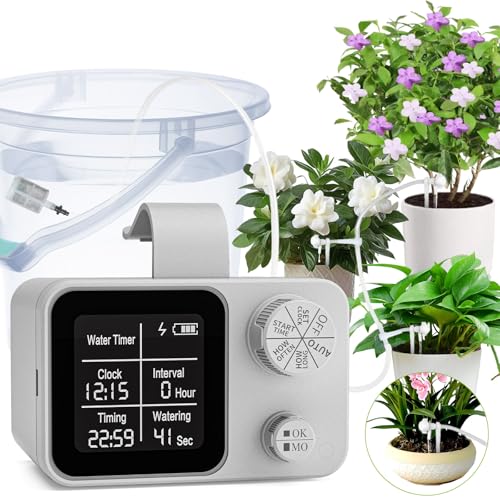
Brand: Vlaumiv. Features include adjustable drippers and a manual override. The system emphasizes flexibility for individual plant needs, enabling precise per-pot water control. Best for: owners with varied plant types who want per-pot adjustment without reconfiguring the whole setup. Caution: check the flow range to ensure it matches the smallest pots in your collection.
RAINPOINT Easy-Setup Automatic Plant Waterer Indoor

Brand: RAINPOINT. Notable for its zero-learning-curve setup with two dials for duration and frequency. It supports automatic scheduling for up to 10–15 plants and offers a manual override. Best for: beginners and busy individuals who want an ultra-simple start-to-finish system. Caution: limited remote monitoring features compared to app-based systems.
Automatic Plant Waterer Indoor Self Watering System

Brand: beday. A Butler-grade watering system designed for up to 15 pots, with stable pressure to reach distant plants. It’s ideal for travelers who want a dependable, schedule-based irrigation routine. Best for: households with multiple pots spread across rooms. Caution: system robustness depends on water source pressure; verify your setup can sustain consistent flow.
LetPot WiFi & App Controlled Automatic Watering

Brand: LETPOT. This system supports WiFi and app control, with up to 5 simultaneous watering tasks. It includes anti-backflow improvements and a dedicated app that offers scheduling, reminders, and plant notes. Best for: tech-savvy plant parents who want remote management and multi-task scheduling. Caution: app reliability varies with network conditions; ensure stable connectivity for consistent performance.
Unistyle 2 Zone Automatic Plant Waterer

Brand: Unistyle. A two-zone independent watering system that can handle up to 30 pots, with a high flow rate and 90 days of watering after a power loss. Best for: larger collections or rooms with varied plant needs that require separate programs. Caution: higher initial setup complexity due to two zones; plan routing accordingly.
Buying Guide: How To Choose The Right Automatic Plant Watering System
- Plant quantity and layout: If you have many pots spread around, look for systems supporting multiple zones or a higher pot count to avoid bottlenecks.
- Control method: Choose between LED displays, app control, or simple dials based on your tech comfort and desired ease of use. App-based systems offer remote management, while manual-control models excel in simplicity.
- Water delivery precision: Drippers, anti-backflow valves, and adjustable flow help prevent overwatering and tailor hydration to plant types. Consider humidity-sensing features for moisture-sensitive greens.
- Power and reliability: Battery backups or 90-day continuity after power loss are valuable for travel. Check for water source compatibility and pressure needs.
- Ease of setup and maintenance: Beginners often benefit from “zero-learning-curve” designs, while experienced gardeners may want deeper customization options.
Frequently Asked Questions
- What is an automatic plant watering system? It is a programmable setup that hydrates indoor plants on a schedule or in response to environmental conditions, reducing manual watering.
- Can these systems water 15 pots at once? Yes, several options in this guide support up to 15 pots, with some models offering two zones for larger collections.
- Do these systems prevent root rot? Many include anti-siphon valves and controlled flow to minimize overwatering and runoff, helping reduce root rot risk.
- Is app control necessary? Not essential, but apps provide remote scheduling, alerts, and multi-task watering, which is convenient for busy households or frequent travelers.
- Will these work if I travel for weeks? Models with battery backups, humidity modes, and extended water supply can cover longer trips, though it’s best to verify capacity for your plant load.
- What should I consider before buying? Count plants, examine water source and space, assess desired control level, and check for required maintenance like refills and tubing compatibility.