Answering the question “Which bagworm spray for trees should I choose?” this guide highlights five effective options for treating bagworms, tent caterpillars, and other chewing insects on trees and ornamentals. Each product is evaluated for outdoor use, target pests, and practical considerations like ease of application and safety for people and beneficial insects. The top picks are suited for homeowners with ornamental trees, fruit trees, and edible gardens who want targeted control without complex mixing. The following table summarizes the chosen products and who they’re best for.
| Product | Best For | Notes |
|---|---|---|
| SUMMIT 021-6 Caterpillar and Webworm Control | General outdoor use; homeowners seeking hose-end convenience | Quick hose-end application; white label |
| Fertilome Spinosad Insecticide RTS/Concentrate (32 oz.) | Wide pest spectrum; OMRI-listed for outdoor use | Ready-to-spray or concentrate options |
| Fertilome Spinosad Insecticide (32 oz.) | Similar to RTS; versatile for various landscapes | Concentrate/RTS choices |
| Fertilome Spinosad Bagworm & Tent Caterpillar Control (Quart) | Bagworms and tent caterpillars on larger ornamentals | Quart-sized convenient for larger trees |
| Bonide Captain Jack’s Bt Thuricide (BT) Ready-to-Use | Non-chemical option for worms and caterpillars | Bt-based, ingestion-based control |
SUMMIT 021-6 Caterpillar and Webworm Control

The SUMMIT 021-6 product is designed for hose-end application to control caterpillars and webworms on outdoor plants. It aims to reduce chewing damage on trees by targeting common pests that occur in landscapes and gardens. Best for homeowners who want a simple spray routine without mixing concentrates. Use caution around beneficial insects and pollinators when treating flowering shrubs or during active pollination periods. It is especially suitable for small- to medium-sized trees where quick, uniform coverage is needed.
Who it’s best for: homeowners seeking a convenient, ready-to-use option for routine bagworm or caterpillar management on decorative trees and shrubs. Why selected: hose-end design favors quick, broad coverage with minimal setup. Limitation: may require multiple applications during peak caterpillar seasons and may have limited residual activity compared to some concentrates.
Fertilome Spinosad Insecticide RTS (32 oz.)

This Ready-To-Spray (RTS) Spinosad insecticide from Fertilome is designed for outdoor use on vegetables, trees, shrubs, flowers, fruits, and citrus. It covers a broad range of pests including bagworms, tent caterpillars, leafminers, borers, and armyworms. The formulation allows homeowners to quickly treat affected areas with a spray that dries to a protective residue. Best for gardeners who want a versatile, low-dose product that can be applied with standard garden spray equipment. Caution: follow label directions regarding spray timing to protect pollinators.
Who it’s best for: those needing an all-purpose insecticide with OMRI-listed status for outdoor use. Why selected: strong pest spectrum and flexible application formats (RTS or concentrate). Limitation: Spinosad can affect pollinators if misapplied near flowering plants; avoid bloom time for flowering crops where possible.
Fertilome Spinosad Insecticide (32 oz.)

This Fertilome 32-ounce Spinosad product is designed to control a variety of insects that attack outdoor trees and shrubs, including bagworms, tent caterpillars, and caterpillars. It is OMRI-listed and available as a concentrate or ready-to-spray option, providing flexibility for different garden sizes and application habits. Best for: homeowners who want a reliable, broad-spectrum option with selectable packaging sizes. Caution: concentrate handling requires proper dilution to avoid phytotoxicity on sensitive ornamentals.
Fertilome Bagworm, Tent Caterpillar Control (Quart)

This Fertilome quart-sized product targets bagworms, tent caterpillars, and other chewing insects on a variety of outdoor plants. It is described as user-friendly and suitable for citrus, fruits, vegetables, and ornamental trees. Best for larger trees where a larger volume ensures thorough coverage. Limitations include the potential need for multiple applications in dense infestations and the inclusion of a broad pest list that may require careful label adherence to maximize effectiveness.
Bonide Captain Jack’s Bt Thuricide Ready-to-Use
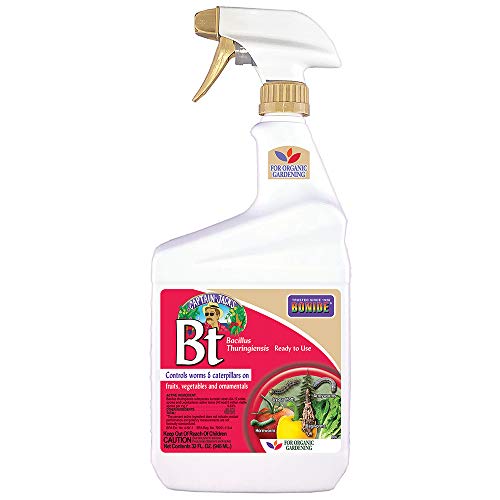
Bonide Captain Jack’s Bt Thuricide is a Bacillus thuringiensis-based product that provides organic-style control of worms and caterpillars. It’s ready-to-use, making it convenient for spot-treatments on cabbage looper, hornworms, tent caterpillars, and similar pests. Best for gardeners seeking non-synthetic options or wanting to minimize impact on beneficial insects when applied correctly. Caution: Bt products require ingestion by larvae, so coverage and timing are essential for effectiveness; rain can reduce residual activity.
Buying Guide: Key Considerations For Bag Worm Treatments
- Target pests: Identify whether you are dealing with bagworms, tent caterpillars, or general caterpillars to pick the most effective product.
- Formulation and application: Choose RTS sprays for convenience, concentrates for cost per use, or hose-end formats for quick coverage on larger trees.
- Safety and timing: Check pollinator sensitivity and flowering periods; avoid spraying while bees are active or during bloom when possible.
- Tree size and landscape: Larger trees may benefit from concentrates or RTUs designed for larger volumes; consider whether a handheld sprayer, backpack sprayer, or hose-end device is best.
- Active ingredients: Spinosad-based products provide broad pest control with relatively low non-target impact when applied properly; Bt-based products are organic-leaning and target caterpillars specifically.
- OMRI status: For organic or organic-friendly landscapes, look for OMRI-listed products, particularly with Spinosad formulations.
- Frequency and resistance: In heavy infestations, rotate products with different modes of action to reduce resistance risk and improve control.
Buyer Questions And Practical Answers
- Can I spray bagworm products on edible fruit trees? Yes, but follow label directions for safe use on fruiting trees and harvest intervals.
- Are Spinosad products safe for beneficial insects? When used as directed and avoided during bloom, they are less disruptive to pollinators than broad-spectrum insecticides.
- Is Bt Thuricide effective against all caterpillars? Bt targets specific caterpillar groups; not all chewing insects respond, so match the pest to the product.
- Should I use Ready-To-Spray or concentrate? RTS is convenient for smaller areas or quick responses; concentrates are cost-effective for larger infestations or multiple treatments.
- What about rain or irrigation after application? Most products require a rainfast period; check label instructions to maintain efficacy after watering or rain.
- How often should I reapply? Reapplication intervals depend on product and pest pressure; follow label guidance for safe timing and frequency.
FAQs
- What is bagworm and why is control important? Bagworms bore into tree foliage and can defoliate shrubs and trees, so timely treatment helps prevent damage.
- Are these products safe around pets? Keep pets out of treated areas until sprays have dried; always refer to product labels for pet safety details.
- Can I mix different insecticides? Do not mix products unless the label explicitly allows it; mixing can cause adverse chemical interactions and plant damage.
- Which product is best for beginners? Ready-to-use formulations with clear labeling and simple instructions are typically best for first-time users.
- Do these products protect against future infestations? Most sprays provide immediate control; ongoing monitoring and periodic applications may be needed during peak seasons.
- Are there any safety precautions when applying outdoors? Wear protective clothing and avoid drift to non-target plants; follow label directions for safe handling and disposal.