Bagged manure for the garden is a practical way to improve soil fertility, structure, and microbial life. This guide highlights five ready-to-use options, each best suited for different garden needs—from flower beds to edible crops. The selections emphasize odor control, nutrient content, and ease of use, helping you pick the right blend for your soil and plants. Use the quick reference table below to compare key points at a glance.
| Product | Main Benefit | Best For | Limitations |
|---|---|---|---|
| Garden Magic Compost and Manure Blend (40 Lbs) | Odor-free, ready-to-use mix with essential nutrients | Lawn, raised beds, general garden soil | Contains organic reed sedge peat blend |
| Espoma Organic Chicken Manure 25 lb | All-natural, mineral-rich 5-3-2 fertilizer | Flowers, vegetables, trees, shrubs | Dehydrated granules; requires proper application timing |
| Hoffman Dehydrated Super Manure 4-2-3, 5 lb | Pelletized poultry manure for easy use | Soil texture and humus improvement | Smaller bag; frequent applications may be needed |
| The Living Pasture Horse Poop | 100% natural, aged composted manure | Soil amender for lawns and beds | Natural sourcing; may vary by batch |
| BRUT Cow Compost – 1 Cubic Ft | Nutrient-rich, odor-free compost | Vegetable gardens, indoor and outdoor plants | Pure compost; no additives |
Garden Magic Compost and Manure Blend, 40 Lbs
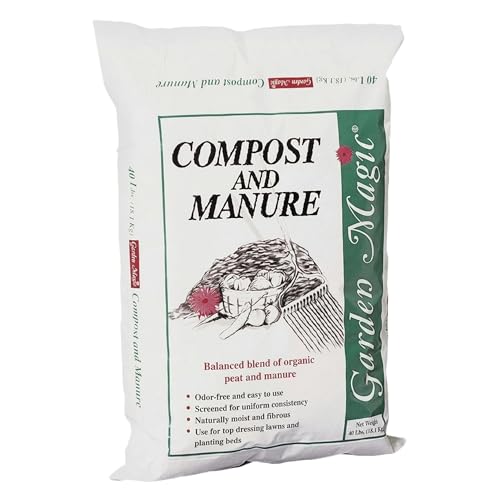
Brand: Garden Magic. Features: Organic compost blend to enhance soil nutrient content; ready-to-use mixture with odorless reed sedge peat and composted animal manure; provides essential nutrients for flowers, vegetables, and grass. Best for homeowners seeking an all-in-one soil boost for lawns and raised garden beds without strong odors. Caution: as with any soil amendment, apply according to soil type and plant needs to avoid nutrient imbalance. This blend is particularly suitable for general garden soil and outdoor beds where a straightforward, ready-to-use option is preferred.
Espoma Organic Chicken Manure 25 lb
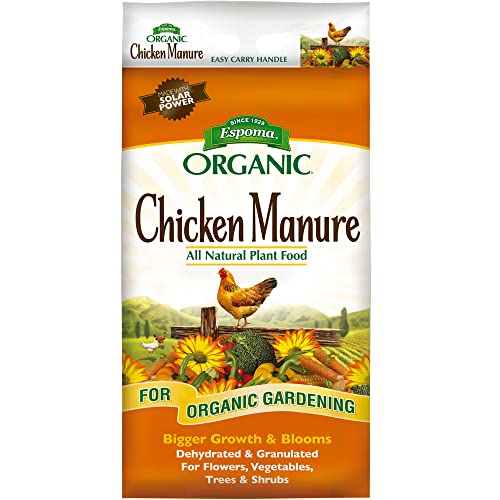
Brand: Espoma. Features: 5-3-2 fertilizer analysis with 8% calcium; dehydrated and granulated for easy application; no additives, environmentally safe. Best for gardeners who want a natural, ready-to-use fertilizer for flowers, vegetables, trees, and shrubs without mixing. Choose this if you prefer a classic poultry-manure fertilizer with predictable nutrient content. Caution: apply in spring and fall around the drip line; over-application can risk nutrient burn for sensitive plants.
Hoffman Dehydrated Super Manure 4-2-3

Brand: Hoffman. Features: Dehydrated poultry manure in pellet form; 4-2-3 analysis; improves soil texture and increases humus content without burning. Best for gardeners who want a compact, easy-to-apply option that still delivers soil-building benefits. Caution: pellets should be watered in to activate nutrients; avoid applying too close to plant stems to minimize root contact issues.
The Living Pasture Horse Poop 100% Natural

Brand: The Living Pasture. Features: 100% all-natural composition; aged composted horse manure; unpasteurized plant food. Best for gardeners seeking a natural soil amendment with real compost texture and nutrient value. Caution: natural variability between batches may affect nutrient levels and odor; best used in established beds where gradual nutrient release is preferred.
BRUT Cow Compost – 1 Cubic Ft

Brand: BRUT WORM FARMS. Features: Nutrient-rich growth with nitrogen, calcium, and iron; pure composted cow manure with no additives; odor-free and safe for all plants. Best for gardeners who want a pure, odor-free compost that enriches soil without introducing synthetic additives. Choose this if you prefer minimal processing and a straightforward soil amendment. Caution: fine-textured compost may be dusty in dry conditions; consider mixing with moisture-retentive amendments for sandy soils.
Buying Guide: Key Purchase Considerations
What should you look for when choosing bagged manure for your garden?
- Form and ease of use: Loose blends vs. pelletized pellets. Pellets are easy to apply and water in, while loose blends may require more handling.
- Nutrient content: Check the N-P-K ratio to ensure it matches your crop needs. Higher nitrogen helps leafy growth; balanced blends support general soil health.
- Odor control: Odor-free formulas are preferable for indoor or close-quarter gardening and for minimizing nuisance in small yards.
- Soil compatibility: Consider your soil type (clay, loam, sandy) and plant choices (vegetables, flowers, shrubs) to select a compatible blend.
- Application timing: Some products are suited for spring and fall use; others can be applied throughout the growing season.
- Safety and additives: Look for no sludges or toxic ingredients and avoid products with unnecessary additives if you prefer pure manure.
How To Choose The Right Bagged Manure For Your Garden
- For beginners with general soil improvement: Garden Magic blends provide ready-to-use, odor-free options that suit lawns and mixed beds.
- For nutrient-focused feeding: Espoma Chicken Manure offers a clear fertilizer ratio suitable for a wide range of edibles and ornamentals.
- For easy application: Hoffman Dehydrated Super Manure’s pellet form lets you sprinkle and water into the soil with minimal effort.
- For natural, animal-based amendments: The Living Pasture horse manure provides a traditional compost feel with natural nutrient release.
- For pure, odor-free compost: BRUT Cow Compost delivers a straightforward, additive-free option ideal for diverse plantings.
FAQ: Quick Answers To Common Questions
- What is bagged manure best used for? – It enriches soil minerals and organic matter, improving soil structure and microbial activity for a healthier garden.
- Is odor-free always better? – Odor-free formulas are more pleasant for home gardens, especially in small spaces, but odor is not a sign of quality not present in all blends.
- Can I use manure on all plants? – Most manure-based blends are suitable for vegetables, flowers, and lawns, but always follow package directions for sensitive plants.
- How often should I apply manure? – Application frequency depends on crop type and soil test results; generally, a few times per growing season is common for organic blends.
- Should I mix manure with soil before planting? – Many blends are ready-to-use; mixing with existing soil or potting mix improves uniformity and nutrient distribution.
- Can I reuse leftover soil amendment in subsequent seasons? – Yes, store in a cool, dry place and reintroduce to soil as needed, following safe storage guidelines.