Looking for the best bentgrass seed to create or repair a putting green at home or on a light-use lawn? This guide evaluates five top options that balance wear resistance, fine texture, and adaptability across climates. Each selection targets readers building or maintaining smooth, professional-quality greens and tees. The buyers most likely to benefit are DIY golf enthusiasts, homeowners with dedicated practice greens, turf managers for small facilities, and landscapers prioritizing low-maintenance, high-appearance turf.
Summary table of selected products:
- Outsidepride PC2.0 (Penncross) Creeping Bent Grass Seed – 1 lb
- Outsidepride PC2.0 (Penncross) Creeping Bent Grass Seed – 2 lbs
- Outsidepride PC2.0 (Penncross) Creeping Bent Grass Seed – 5 lbs
- Outsidepride Crystal Bluelinks Creeping Bent Grass Seed – 1 lb
- Outsidepride Pure Select Creeping Bent Grass Seed – 1 lb
Outsidepride PC2.0 Penncross 1 lb Bentgrass Seed

Best for: DIY putting greens in small to medium yards that require high wear tolerance and rapid establishment. This 1 lb bag is ideal for small repairs or creating a new practice surface in warm or cool climates (USDA zones 4–10).
Why selected: The PC2.0 Penncross line is renowned for wear tolerance, dense upright growth, and versatility across soils, including sandy and well-drained clay. Its broad climate adaptability makes it a strong starter option for hobbyists and professional setups seeking a smooth, putt-ready turf. A potential limitation is that results depend on proper drainage and maintenance, especially in heavy clay soils.
Outsidepride PC2.0 Penncross 2 lbs Bentgrass Seed

Best for: Homeowners expanding a practice green or tackling larger repair areas where more seed is needed quickly. This size supports faster establishment in moderate-sized sites.
Why selected: It maintains exceptional wear tolerance with dense growth ideal for high-traffic zones. Across USDA zones 4–10, it adapts well to sandy soils and well-drained clay, allowing flexible installation. Caution: larger bags require careful storage to preserve germination, and even strong seed can struggle in poorly drained clay without proper prep.
Outsidepride PC2.0 Penncross 5 lbs Bentgrass Seed
Best for: Golf-course-like green construction or large-scale home lawns where dense, wear-resistant turf is essential. The 5 lb bag provides ample seed for significant areas and long-term maintenance projects.
Why selected: This option reinforces thick, upright growth that resists wear and helps compete against Poa annua, supporting consistent green coverage. It thrives across diverse climates and soil types, including sandy and well-drained clay soils. Limitation: larger seed lots demand effective site preparation and ongoing moisture management for quick germination and uniform cover.
Outsidepride Crystal Bluelinks Creeping Bent Grass Seed – 1 lb

Best for: Home greens prioritizing distinctive blue-green color and shade tolerance. Suitable for putting greens and small fairways where aesthetics and disease resistance matter.
Why selected: Crystal Bluelinks is noted for high turf quality, dense finish, and a blue-green hue that stands out on greens. It offers relatively fast germination and good disease resistance, making it a solid choice for shaded or partly shaded sites. Caution: the color trait may be less uniform across very cool or very hot seasons, requiring occasional overseeding for edge-to-edge uniformity.
Outsidepride Pure Select Creeping Bent Grass Seed – 1 lb
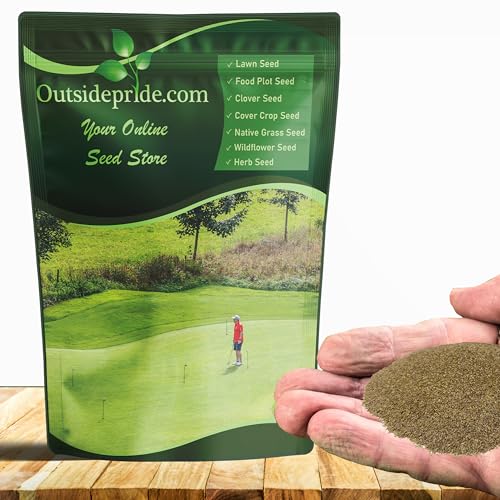
Best for: Professionals or serious hobbyists seeking year-round color with lower maintenance and reduced thatch. This 1 lb option suits mid-sized greens and tight fairways where consistent texture is key.
Why selected: Pure Select emphasizes dense, upright growth with minimal thatch and a focus on year-round performance. It’s designed for smoother mowing heights and lower maintenance compared to other bentgrass varieties. Limitation: performance depends on precise mowing and irrigation to avoid overly dense thatch in some soil types.
Buying Guide: Key Considerations For Bentgrass Seed
- Germination and establishment: Choose seed with rapid germination for faster green coverage. Consider seedbed preparation and soil drainage to maximize establishment success.
- Climate compatibility: Look for varieties rated for USDA zones 4–10 if you experience wide seasonal changes. Warmer regions benefit from deeper root resilience, cooler regions from fine-textured blades.
- Wear tolerance: For putting greens and high-traffic areas, select seed labeled as wear-tolerant and dense-growing to maintain a smooth surface under frequent use.
- Soil compatibility: Bentgrass generally performs well on well-drained sandy soils and, with proper drainage, on clay soils. Assess drainage and amend soil as needed before sowing.
- Maintenance needs: Some varieties require precise mowing heights and consistent irrigation. If water is limited, choose drought-tolerant options and plan a watering strategy that avoids stress during hot periods.
- Seed quantity: Bags range from 1 lb to 5 lbs. For larger projects, consider multiple bags to ensure uniform coverage and color balance across the green.
- Color and texture: Fine-textured bentgrass provides a smoother putting surface, while color variations (blue-green) may affect visual uniformity. Balance appearance with performance traits for your site.
Frequently Asked Questions
- What is bentgrass best used for on a home lawn? It is ideal for putting greens, tees, and neighboring fairways where a smooth, low-cut surface is desired.
- Which climate is best for Penncross Bentgrass? It adapts well across USDA zones 4–10, tolerating both warm and cool conditions with proper soil and moisture management.
- How much seed should I plant per 1,000 square feet? Seeding rates vary by product; follow the label for recommended pounds per 1,000 sq ft to ensure even coverage.
- Is bentgrass shade-tolerant? Some varieties show reasonable shade resistance, but most greens perform best with several hours of sunlight daily. Choose shade-tolerant selections if your site is limited in sun.
- Can I mix bentgrass with other grasses? Mixing can be done for certain renovations, but for best putting greens, a purified bentgrass seed blend is often preferred to maintain uniform texture and mowing height.
- What maintenance steps support bentgrass success? Seed-to-green timing, proper irrigation, regular mowing at low heights, and timely fertilization are essential for a consistent, high-quality surface.