The best bentonite clay for pond sealing depends on your pond size, soil type, and climate. This guide highlights five top options that expand on contact with water to form a waterproof barrier, helping you choose the right product for pond lining, leak repair, or water retention projects. Each entry includes who it is best for, why it was selected, and practical cautions to consider before purchasing.
Here’s a quick comparison to help buyers decide at a glance:
| Product | Best For | Key Benefit |
|---|---|---|
| Unearthed Sodium Bentonite Clay | Small to medium ponds requiring a natural barrier | Strong expansion on contact with water; odor and moisture control |
| Nuanchu 30lb Granular Bentonite | Sealing edges and surrounding soil areas | Granular form with clear expansion potential |
| Natural Waterscapes Granular 45 Lbs | General pond sealing and soil moisture isolation | Expands with moisture to form a flexible seal |
| Nuanchu 20lb Granular Bentonite | Smaller projects or backup sealant | Compact amount with high absorption and expansion |
| Natural Waterscapes 25 Lbs Granular Bentonite | Medium to larger pond seals | Natural expanding clay sealant with high swell |
Unearthed Sodium Bentonite Clay

Features include an ultimate pond sealer that expands on contact with water to form a natural barrier, suitable for lining ponds, lagoons, and water retention projects. It also offers natural odor and moisture control functions and is Safe Feed/Safe Food Certified, produced in a certified U.S. facility.
Best for: small to medium ponds or projects needing a natural, safe sealer with odor control. This product is a straightforward option when a robust environmental profile is important.
Caution: The effectiveness depends on proper mixing and application depth. Ensure uniform coverage to avoid gaps in the sealer layer.
Nuanchu 30lb Granular Bentonite Clay
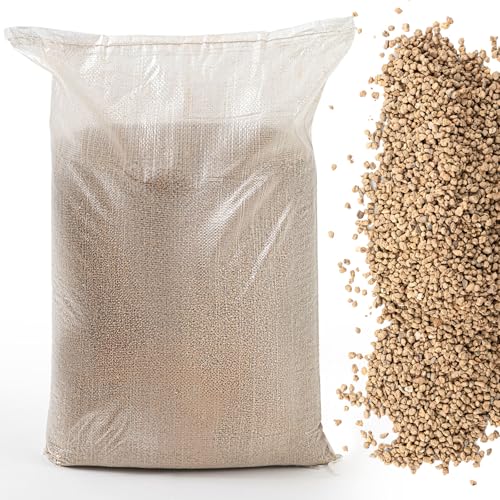
Granular, all-natural pond sealant designed to protect pond edges and soil from water damage while improving stability. It expands up to 15 times or more when exposed to moisture and has high water absorption capacity, making it effective when applied properly.
Best for: mid-sized gardens or community ponds where a granular, all-natural sealer is preferred. It’s well-suited for projects that require a scalable amount of material.
Caution: Use proper layering to avoid uneven sealing. Granular materials can be slower to cure in cooler conditions, so plan application accordingly.
Natural Waterscapes Granular Sodium Bentonite Clay 45 Lbs

Expanding clay for pond sealing, granular sodium bentonite clay serves as a soil amendment and sealer. It is designed specifically to create a waterproof isolation layer that prevents water from absorbing into surrounding soil.
Best for: larger pond projects or areas where a granular sealant is preferred for long-term seepage control.
Caution: Ensure the soil conditions allow for expansion without strain on the pond liner or edges; over-application can create uneven surfaces.
Nuanchu 20lb Granular Bentonite
Twenty pounds of granular all-natural pond sealant provides reliable containment by forming a waterproof isolation layer when exposed to moisture. It expands significantly and offers high absorption for moisture-rich environments.
Best for: smaller ponds or projects needing precise, lightweight sealant additions. This size is convenient for spot repairs or phased sealing work.
Caution: Not ideal for very large ponds without supplemental material due to quantity limitations; plan replenishment accordingly.
50 Pound Benseal Grouting Bentonite

Designed for heavier-duty projects, this item emphasizes sealing ponds and earth structures, including grouting for ground source heat loops. It is repackaged from bulk supply and lacks factory bags, which is a note for handling and storage.
Best for: larger sealing projects or professional-grade applications where a bulk-grade bentonite is advantageous. It suits contractors or serious do-it-yourself projects that demand significant material volume.
Caution: Repackaged product may require careful storage and handling; verify packaging integrity upon delivery and utilize promptly to prevent moisture exposure.
Buying Guide: Bentonite Clay For Pond Sealing
- Purpose and pond size: Choose granular bentonite for large areas and chips/powder blends for flexible sealing around irregular edges. For small to medium ponds, compact bags can be easier to handle.
- Expansion and absorption: Look for products that explicitly mention expansion on contact with water (often 10x–30x). Higher expansion helps seal larger voids but requires even application.
- Form factor: Granular vs. chipped vs. powder forms affect mixing and placement. Granular works well for gradual distribution, chips can fill gaps, and powder offers rapid isolation when mixed properly.
- Soil compatibility: Bentonite swells and creates a waterproof layer; ensure your soil type can accept a seal without hindering drainage or causing surface heave.
- Safety and sourcing: Consider products produced in certified facilities, with safety certifications if available. For uses beyond ponds (odor control, cat litter, etc.), verify suitability for intended application.
- Application method: Plan multi-pass applications for larger ponds. Uniform distribution helps avoid weak seams. Environmental conditions such as temperature and moisture influence cure time and performance.
- Protection and maintenance: After sealing, monitor for egress points or seepage after seasonal changes. Reapplication may be necessary after significant weather events or ground movement.
FAQ
What is bentonite clay used for in pond sealing?
Bentonite clay expands when wet to form a natural, flexible seal that reduces water loss through soil and improves pond containment.
Can bentonite sealant be used in all soil types?
Most soil types can benefit, but porous soils may require more material and multiple applications to achieve a durable seal.
Is granular bentonite better than chipped bentonite for ponds?
Granular bentonite is easier to spread evenly and mix into edges, while chips can fill gaps; for large, open areas, granules are typically preferred.
How should I apply bentonite to a leaking pond?
Prepare the area by removing loose debris, distribute the material evenly along the leak, then water in to activate expansion. Reapply as needed for larger leaks.
Are there safety concerns with bentonite products?
Many products are non-toxic and safe for general use, but always follow the product’s label instructions and store in a dry place away from moisture-sensitive items.
Can bentonite be used for purposes other than ponds?
Yes. Bentonite can be used for soil stabilization, moisture control, and even odor suppression in appropriate settings, as indicated by product features.