Finding the right bird feeder for an apartment balcony means balancing space, durability, and ease of use. This guide presents five top options and who they’re best for, from space-saving railing feeders to window-mounted stations. Each pick is assessed for compact design, weather resistance, and ease of installation on typical balcony rails. Ideal buyers include urban bird lovers, renters seeking temporary setups, and balcony gardeners who want to combine plant display with feathered visitors.
| Product | Best For | Key Benefit |
|---|---|---|
| Balcony & Porch Deck Railing Bird Feeder | Small balconies, railing installs | Three adjustable trays for versatile feeding |
| HRAYLTOP Deck Bird Feeders | Railing mounts, sturdy clamp | 360° rotating trays for wide visibility |
| CQAIRIOU Premium Deck Railing Feeder Tray | Heavy use, stainless build | Non-welded tray for durability |
| Josmimic Deck Rail Hanger | Plant hangers and feeders | Strong support up to 22 lbs |
| KEUYE Bird Feeder For Apartment Balcony | Two-in-one feeding and watering | Combined food tray and water dish |
What to look for when choosing a balcony feeder: material and rust resistance, rail compatibility, ease of assembly, and how many birds the feeder can support at once. The five options below each offer distinct strengths to fit different balcony layouts and feeding goals.
Balcony & Porch Deck Railing Bird Feeder

This 3-tray railing feeder is designed for compact spaces and can be mounted on rails up to 2.6 inches thick. It combines a sturdy steel frame with a powder-coated finish to resist rust. The three trays can be adjusted 360 degrees for optimal feeding angles and easy access for birds. Best for renters or balcony owners who want a multi-use setup that doubles as a plant pot holder when trays are removed. A small caution: ensure your railing meets the thickness requirement before mounting.
HRAYLTOP Deck Bird Feeders

This feeder features a heavy-duty clamp stand that fits fence thicknesses from 0.2 to 2 inches and a 17.3 by 7 inch footprint with a 7 by 7 inch round tray. The design includes a transparent plastic bowl for easy viewing of water levels and a steel mesh tray to hold seeds. The rotating capability allows birds to approach from multiple angles. Choose this if you need a robust, clamp-style feeder that can be rotated for better bird traffic. Limitation: the clamp must securely grip a compatible railing or fence for stability.
CQAIRIOU Premium Deck Railing Feeder Tray

This stainless steel, non-welded feeder tray emphasizes durability and rust resistance with a powder-coated finish. The absence of welding reduces sharp edges, which helps protect birds’ feet. Best for users who want a sturdy, corrosion-resistant tray with a clean, simple design. Best used on secure, compatible railings. Caution: measure railing thickness to ensure proper clamp fit.
Josmimic Deck Rail Hanger

The 22-pound capacity hanger uses weather-resistant stainless steel with a powder-coated finish to survive outdoor conditions. It’s adjustable in height on rails, enabling optimal sun and bird view. Best for balcony gardeners who want a versatile hanger for both plants and bird feeders. Limitation: mainly designed for hanging items from a railing; ensure your rail design accommodates the hook’s mounting style.
KEUYE Bird Feeder For Apartment Balcony
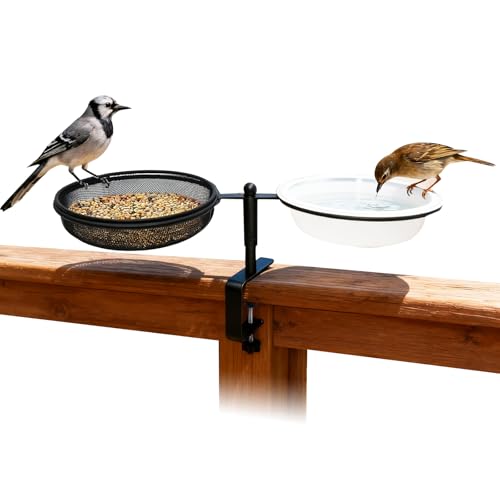
This feeder offers a two-in-one design with a food tray and a water bowl, sized at 17 inches long, 7 inches wide, and 9.5 inches high. The adjustable stand suits various balcony railings, and the built-in water dish helps attract a variety of birds. Best for balcony residents who want integrated feeding and hydration in a compact footprint. Caution: ensure the rail thickness is compatible with the stand’s adjustment range.
Buying Guide
Which feeder should you choose for a small balcony?
Roam-friendly railing feeders like the Balcony & Porch Deck Railing model maximize space by using existing railings. If you need robust protection against weather and don’t want to drill, a clamp-style feeder such as HRAYLTOP offers secure mounting with rotation features for better bird access.
What materials matter for urban use?
Stainless steel and powder-coated steel resist rust and corrosion, crucial in city climates or near coastlines. Non-welded trays reduce sharp edges and improve safety for birds and people.
Are two-in-one designs worth it?
Two-in-one designs save balcony space by combining feeding and water access. They’re convenient but ensure the water bowl is easy to clean and refill, especially in heat.
How important is rail compatibility?
Always measure rail thickness and width. Feeder clamps and hangers must fit your railing profile; otherwise installation can be unstable or impossible.
Maintenance considerations
Choose feeders with removable trays or trays designed for easy cleaning. Regular cleaning reduces mold and keeps seed fresh, which improves bird attendance and health.
Placement tips for balcony feeders
Place feeders in a location with some natural shelter to reduce wind strain. Position away from high-traffic areas and cat routes. A little shade helps keep water fresh longer in warm weather.
FAQ
- Will these feeders attract pigeons or only small birds? Most balcony feeders attract a range of birds, but seed types and tray angles can influence which species visit. Use appropriate seed to invite the target birds.
- Do I need to assemble tools for installation? Most options require simple hand-tightening; no tools are needed for models designed to fit railings, but check each product’s mounting method.
- Are these safe for pets or children? Yes, when installed out of reach and with stable mounting. Look for feeders with rounded edges and robust construction.
- How do I keep the water from freezing in winter? Use a heated or insulated water dish, or replace water frequently during cold weather to prevent ice formation.
- Can I use these as decorative garden features as well? Absolutely. Several models double as plant hangers or accessories, which can enhance balcony aesthetics while supporting wildlife.
- What maintenance schedule is recommended? Inspect mounting hardware monthly, clean trays every week during peak feeding, and sanitize feeding zones quarterly to reduce disease risk.