Black lava rock provides a natural, modern contrast for outdoor landscaping and fire features. This guide highlights five reliable options that perform well in fire pits, gardens, and decorative landscapes. It explains who each product is best for, plus practical limits to consider before buying. Ideal buyers include homeowners upgrading outdoor spaces, landscapers designing low-maintenance features, and indoor-outdoor entertainers seeking clean, heat-friendly materials.
Quick Reference: Selected Products
| Product | Best For | Approx. Weight | Notes |
|---|---|---|---|
| NUPICK 20lb Black Lava Rocks | Modern fire pits and poolsides | 20 lb | High-temp, clean look, ideal for gas systems |
| American Fire Products Medium Lava Rock | Large fire pits and decorative filler | 10 lb | Filler layer with fire glass on top for design |
| Onlyfire Black Lava Rock 10 Lbs | Versatile indoor/outdoor pits and tables | 10 lb | Multiple size options, safe and durable |
| IwoodUS 10 lb Lava Rocks | Budget-friendly landscaping and flame features | 10 lb | 1.2–2 inch size for good coverage |
| Mr. Fireglass Natural Lava Rock 10 lb | Fire pits and decorative landscaping | 10 lb | Small, porous lava stones with broad use |
NUPICK 20lb Black Lava Rocks for Fire Pits

Best for: Gas-fired fire pits and landscaping that require a clean, durable base. NUPICK lava rocks are authentic volcanic rock with deep charcoal tones, free of additives. They withstand up to 2000°F and are designed for natural gas or propane systems. These rocks help hide burners and piping while delivering even heat distribution for gatherings.
Selection rationale: The 20-pound bag provides ample coverage for mid- to larger-sized features. Its durability and non-emitting behavior make it suitable for outdoor or indoor installations without smoke or soot.
Limitation to note: As with any lava rock, ensure proper ventilation and follow safe gas-fire guidelines to avoid overloading with rock near venting areas.
American Fire Products | Medium Lava Rock

Best for: Filling large fire features or as a base layer in fireplaces and fire pits. The 1/2″–1″ size is economical and practical for spreading across deep pits, with a smooth transition to a top layer of fire glass for a polished look.
Selection rationale: Lava rock is durable, heat-resistant, and low-maintenance—an economical choice for bulk filling and hiding gas lines while providing a natural texture that complements modern designs.
Limitation to note: For complete aesthetics, pair with fire glass on top so the rocks themselves remain less visible in heavily designed spaces.
Onlyfire Black Lava Rock 10 Pounds

Best for: Indoor/outdoor fire bowls, pits, and grills where a flexible rock size helps conceal gas burners and plumbing. The 0.4–0.8 inch size is compact, enabling dense, clean coverage and a compact, tidy look.
Selection rationale: This lava rock is heat-resistant and non-toxic, making it suitable for a wide range of fire features while offering easy maintenance and minimal mess.
Caution: Confirm compatibility with your specific gas system and ensure rocks are dry before burning to avoid potential issues with gas flow or venting.
IwoodUS 10 lb Lava Rocks
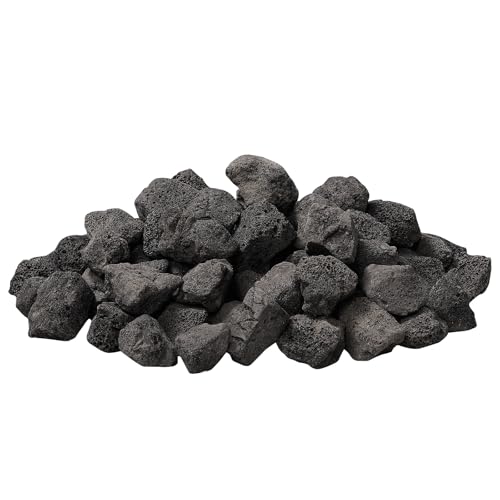
Best for: Medium-sized landscaping projects and gas-fire features where 1.2–2 inch rocks provide solid coverage and good airflow around burners.
Selection rationale: The 1.2–2 inch range helps keep flame distribution even while concealing piping. A cost-effective option for budget-conscious projects with a natural black appearance.
Limitation to note: Larger rocks may require deeper placements in pits; consider pit depth and burner height to avoid uneven surfaces.
Mr. Fireglass Natural Lava Rock

Best for: Multi-purpose use in fire pits, fireplaces, and decorative landscaping. The small 0.4–0.8 inch rocks provide a dense surface that distributes heat evenly and looks natural in garden settings.
Selection rationale: This lava rock is versatile for both indoor and outdoor settings and pairs well with additional decorative elements like fire glass or plants for a layered look.
Caution: Dry the rocks before lighting to prevent any gas-related concerns, and avoid overloading a small pit with too many rocks, which can alter flame behavior.
Buying Guide: Key Considerations For Choosing Black Lava Rock
- Size and coverage: Larger rocks cover more area quickly but can hinder flame visibility. Smaller rocks provide a uniform surface but may require more material for the same coverage.
- Temperature tolerance: Look for rocks rated to withstand high temperatures (typically up to or around 2000°F) to avoid cracking or popping in gas-fired features.
- Color and texture: Deep charcoal to black tones create a modern look. Porous surfaces help distribute gas and heat, contributing to steadier flames.
- Indoor vs outdoor use: Indoor-use lava rocks should be non-toxic and stable at room humidity; outdoor variants should resist weathering and color fading.
- Maintenance: Lava rocks are low-maintenance, but ensure they stay dry and free of contaminants that could affect flame performance.
- Pairing with other elements: Fire glass can cover and conceal rocks for a cleaner aesthetic. Consider venting and burner layout when layering materials.
- Installation: Confirm your pit depth and gas line arrangement before distributing rocks to avoid crowding or blocking burners.
FAQ: Quick Answers For Buyers
- What size lava rock is best for a standard fire pit?
A: Medium to large lava rocks (1/2″–1″ or larger) provide stable coverage and hide gas lines well in most fire pits. - Can lava rocks be used indoors?
A: Yes, many lava rocks are suitable for indoor fireplaces and fire tables, but ensure they are non-toxic and designed for indoor use. - Do lava rocks require maintenance?
A: They are low maintenance; keep them dry and clean and avoid mixing with unsuitable additives or chemicals. - Should I mix lava rocks with fire glass?
A: Mixing lava rocks with fire glass can create a more polished look by concealing rocks while preserving flame visibility. - Will lava rocks affect flame performance?
A: Properly sized rocks with a proper base layer help distribute gas evenly; improper layering can dampen flames or cause uneven heat. - How many pounds should I buy?
A: For mid-size features, 10–20 pounds usually suffices; larger pits or multiple features may require more material for full coverage.