When selecting blue-light-focused grow lights for seedlings, the goal is to promote sturdy stems, healthy leaf development, and strong early growth without excessive heat. The top picks below are suited for small or mid-sized indoor gardens, seed starting setups, and hydroponics systems. Best for compact spaces, medium-duty homes, and hobbyist growers who want reliable blue-spectrum support during early growth stages. The following selections balance blue-heavy spectra with practical features like timer control and energy efficiency.
| Product | Brand | Spectral Focus | Best For |
|---|---|---|---|
| Miracle LED 4KK Professional Indoor Grow Light Bulb | Miracle LED | Blue-dominant spectrum, 4000K | Small to mid-size indoor gardens and seed starting |
| AURAZIGLI Led Grow Lights, 4 Heads | AURAZIGLI | Red and blue mix with dimming, full control | Seed starting and early vegetative growth |
| LED Grow Light, 5700K Full Spectrum (Sonamindary) | Sonamindary | Full spectrum with emphasis on blue/white balance | Seedlings to mature plants in a single setup |
| Garpsen Grow Light, 2 Heads Full Spectrum | Garpsen | Red/Blue/Warm White mix, multi-mode | Versatile seedling and cutting setups |
| Miracle LED Almost Free Energy 100W | Miracle LED | Blue light spectrum for early-stage growth | Seed starting and early stem development |
Miracle LED 4KK Blue Spectrum Bulb

Best for compact desks or windows-less grow spaces, this 12W LED replaces traditional 150W incandescent lighting with blue-forward spectrum. It is designed to replicate professional grow-farm light characteristics in a smaller footprint. Suitable for herb gardens, leafy greens, and seedling vigor in low-heat environments. Note that this bulb is Warmer in appearance, with added benefits during later plant life cycles. Best used in dedicated seedling trays or small hydroponics bays where blue light supports early stem and leaf development.
AURAZIGLI 4 Heads Red Blue Grow Light

Best for growers who want a compact multi-headed setup with adjustable timing and dimming. The red-blue spectrum supports flowering later, but its blue component aids seedling development and leaf formation. Features include 3 lighting modes and 10 dimmable levels, plus auto on/off timing. Choose this if you need hands-off operation during seedling care and want flexible height and angle adjustments to cover multiple small pots simultaneously. Caution: ensure even distribution across plants to avoid uneven growth.
LED Grow Light, 5700K Full Spectrum (Sonamindary)

Best for a broader seedling-to-vegetative range with balanced white and blue light. This single-head fixture provides full spectrum to support early growth while maintaining a cooler appearance than pure blue lights. Ideal for readers who want a simple, energy-efficient setup without managing multiple light bars. Limitations: single head may require careful placement to avoid shading in larger seed trays; additional units may be needed for bigger flats.
Garpsen Grow Light 2 Heads Full Spectrum

Best for growers who want a broader spectrum with adjustable modes for different growth stages. This two-head design covers more area and provides three lighting modes plus 5 dimmable levels. It supports seedling vigor with red/blue combinations and adds warm white for more natural color rendering. Better for small to medium seedling setups, but keep an eye on heat with continuous operation; ensure adequate ventilation if used for extended periods.
Miracle LED Almost Free Energy 100W Blue Glow
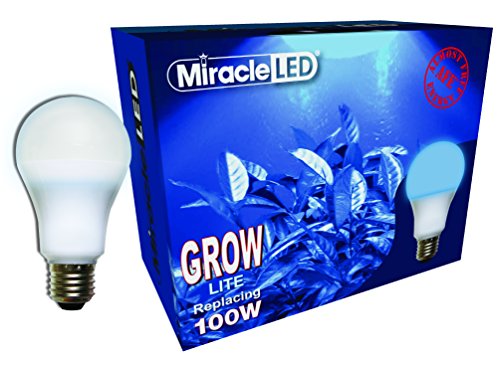
Best for seed starting and early stem strength, this blue-dominant light emphasizes early-stage growth while delivering energy efficiency. The Almost Free Energy certification suggests significant energy savings compared to traditional floodlights. This bulb is suitable for dedicated seed trays or small grow benches. Limitation: blue-dominant spectrum may be less effective alone for later flowering stages without supplemental red/white lighting.
Buying Guide: Key Considerations For Seedling Lighting
How much coverage do you need?
Measure your seedling area in feet or meters and choose lights that collectively cover the space evenly. Multi-head setups typically provide better uniformity for several trays compared with a single overhead unit.
Which spectrum is best for seedlings?
Blue-dominant or blue-heavy lights encourage compact growth and strong stems. A mix with red can assist later vegetative growth and transition to flowering, but when focused on seedling vigor, prioritize blue wavelengths (around 450-470 nm) for initial weeks.
How important are timers and dimming?
Timers reduce maintenance and ensure consistent daily photoperiods. Dimmable systems let you adjust light intensity as plants grow, preventing light stress in young seedlings.
What about heat and energy use?
LED options generally emit less heat and use less energy than traditional bulbs. Look for products that specify low heat output and long-term energy savings, especially for enclosed grow spaces.
Is installation simple and adjustable?
Consider adjustable stands, clamp mounts, or tripod bases to position lights over seed trays. Flexibility helps ensure even exposure across plants at different growth stages.
What are practical limitations to expect?
Some products use a single head or a fixed spectrum, which may limit effectiveness for larger seedling flats or for plants needing more red light during later stages. Plan for future expansion if your garden scales up.
Short FAQ
- Which light is best for seed starting? Blue-heavy lights are commonly recommended to promote strong stems and healthy early growth.
- Do I need a timer? Yes. Timers ensure consistent light cycles and reduce manual upkeep.
- Can one light cover multiple trays? It depends on the footprint; larger or multi-head fixtures cover more space than a single head.
- Is blue light harmful to plants? When used appropriately in the seedling stage, blue light aids growth; excessive intensity should be avoided to prevent stretching.
- Should I mix red and blue lights? A balanced spectrum supports ongoing growth, but seed starting benefits most from blue-enriched light at the initial stage.
- Do these lights heat up? LEDs typically run cooler than traditional bulbs, but placement should still allow ventilation to prevent overheating.