Finding the right brown pebbles for landscaping can transform pathways, borders, and planters. This guide highlights five top brown pebble options, explaining who they’re best for and why they stand out. It’s ideal for homeowners, DIY landscapers, and hobbyists looking for durable, natural-toned stones that age gracefully in outdoor settings.
| Product | Best For | Key Benefit |
|---|---|---|
| FANTIAN 20 lbs Large River Rocks | Large-scale accents, walkways | Natural, 3-4 inch stones with non-toxic composition |
| GASPRO 15-lb River Rocks | Indoor/outdoor decor, planters | High-polish finish adds shine and easy cleanup |
| OUPENG Pebbles Polished Gravel | Flower beds, water features | Natural colors with smooth, rounded edges |
| Virekm River Rocks | Vases, terrariums, mixed landscaping | Lightly polished, versatile color mix |
| TAIDINGHUAXIN Wood Brown Pebbles | Indoor plant pots, terrariums, crafts | Natural wood-grain look with good drainage |
FANTIAN 20 Lbs Large River Rocks

Best for bold, natural accents along walkways and garden borders. The 3-4 inch stones are natural, unpolished, and free from fillers, providing a rugged, authentic look. Suitable for creating low-maintenance features and safe reptile habitats due to their smooth, flat surfaces. The weight spread (20 pounds total) makes them easy to handle in small to medium-sized projects. A limitation is that color and texture can vary between batches since these are natural stones, so plan for a slight color variance in large installations.
Who it’s best for: Homeowners or DIYers tackling larger landscape areas who want a durable, natural river-rock aesthetic without added dyes.
GASPRO 15-lb Natural River Rocks
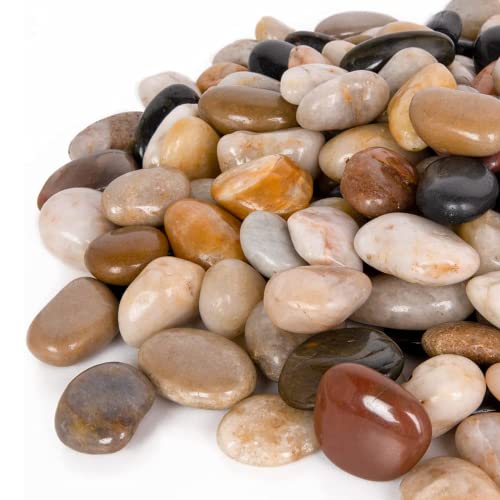
Better for polished appeal in planters, succulents, and indoor/outdoor decor where a bright, reflective surface is desired. The stones range from 1 to 1 3/4 inches, offering uniform but varied color tones that add dimension to arrangements. A potential limitation is that the polished finish may show dust more easily, requiring occasional cleaning for optimal shine.
Who it’s best for: Gardeners and designers who value a glossy, refined look in pots, vases, or feature areas.
OUPENG Pebbles Polished Gravel
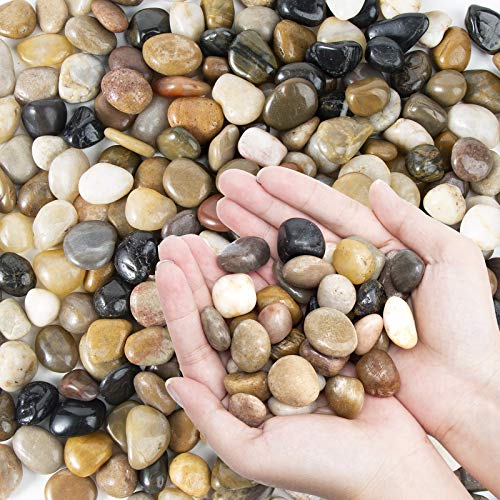
Best for decorative accents in flower beds, walkways, and water features. These natural-toned stones are lightly polished to provide a smooth texture without sharp edges. They offer visual variety through browns, whites, and blacks, which helps create a natural, cohesive look. A caveat is that some stones may arrive in varied shapes due to natural formation, so select an area where irregular shapes can be integrated creatively.
Who it’s best for: Home decorators and landscape designers who want a natural palette with safe, rounded edges for high-traffic areas.
Virekm River Rocks
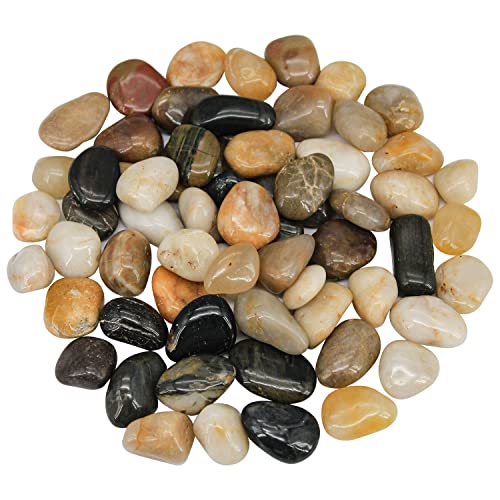
Best for versatile indoor-outdoor use, from flower arrangements to water features. Virekm rocks are lightly polished to provide a smooth feel while maintaining natural color variation. They pair well with multiple design styles, including modern, rustic, and bohemian landscapes. A limitation is that the stones are relatively small, so they’re not ideal for large-scale edging where bigger rocks are preferred.
Who it’s best for: Designers seeking a flexible, multi-use stone set that complements varied décor themes without dominating the space.
TAIDINGHUAXIN Wood Brown Pebbles

Choose this if you want a natural wood-grain appearance with good drainage properties for plant pots, terrariums, or crafts. The 5-pound bag provides a lighter option for smaller projects and accenting in indoor planters or decorative vases. A limitation is that the size range is smaller, which may require mixing with larger stones for a varied texture in outdoor beds.
Who it’s best for: Indoor planters, terrariums, or craft projects where a wood-like texture and light footprint are desired.
Buying Guide: Brown Pebbles For Landscaping
- Match pebble size to project scale. Larger rocks for borders and pathways; smaller pebbles for decorative fillers and pots.
- Decide between natural, matte, or polished finishes. Polished stones reflect light and cleaner surfaces but may show dust more readily.
- Consider natural stone versus ceramic or clay alternatives. Natural stones resist fading and offer longevity, while some clays provide enhanced drainage.
- Lighter colors reveal dirt; ongoing maintenance may be needed to preserve appearance.
- Outdoor weather exposure, pet safety, and whether stones will contact soil or water features should influence choice.
- Look for non-toxic, eco-friendly options and natural color variation that won’t require frequent replacement.
FAQ
- What size of brown pebbles works best for walkways? Larger stones (3-4 inches) create a sturdy, visible path; smaller pebbles are better for decorative borders and fill.
- Are polished river rocks safe for pets? Generally yes, but ensure no sharp edges and avoid very small stones that could be swallowed by curious pets.
- Do brown pebbles fade in sunlight? Natural stones may fade gradually, but high-quality, non-dyed stones tend to retain color longer than dyed alternatives.
- Can these pebbles be used in aquariums or terrariums? Some stones are suitable for aquariums and terrariums, but verify each product’s use-case and safety for aquatic life and reptiles.
- How do I maintain the look of polished rocks? Regular light cleaning and occasional rinsing help maintain shine; avoid harsh chemicals that could damage coatings.