When your lawn battles heavy clay, the ground stays compacted, water-logged, and hard for roots to penetrate. This guide highlights top clay-breaking products that loosen soil, improve drainage, and promote healthier grass. It’s ideal for homeowners with clay-rich soil, new lawns trying to establish roots, or gardeners seeking easier composting and yard care. The top picks below are chosen for different yard sizes, ease of use, and eco-friendliness. See the quick product table after the intro for a snapshot of options.
| Product | Best For | Notes |
|---|---|---|
| Florasoul Clay Breaker Soil Amendment | Organic, plant-based gardens | Soften clay without chemicals |
| Covington Liquid Lawn Aerator (32oz) | Small to medium lawns | Easy, no-core aeration |
| Covington Liquid Lawn Aerator (1 Gallon) | Medium to large lawns | Same formula, larger quantity |
| Anwick Manual Rolling Lawn Aerator | Hands-on maintenance-free aeration | Spike-based, for targeted aeration |
| ExploreHorizon 24-Inch All-Purpose Lawn Spreader | Even distribution for amendments | Spreader for compost/mulch/soil |
Florasoul Clay Breaker Soil Amendment
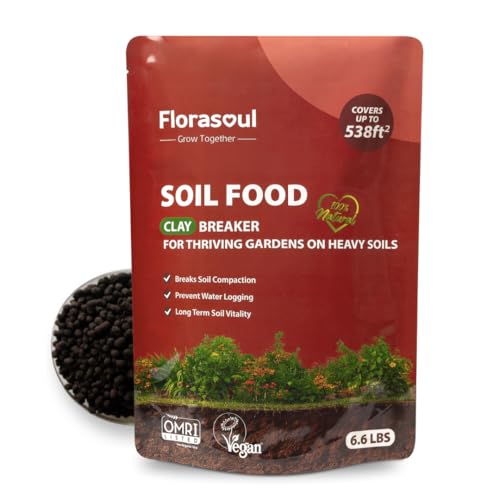
Product details indicate a plant-based, vegan formula designed to soften heavy clay soils and improve drainage and aeration. The amendment uses seaweed-derived and mineral ingredients to alter soil structure, facilitating deeper root penetration and a healthier underground ecosystem. Best for organic vegetable plots, flower beds, and lawns where chemical additives are undesirable. A key caveat is that organic amendments may require more time to show noticeable results compared with fast-acting chemical products.
Who it’s best for: Gardeners seeking a vegan, soil-health-focused solution for heavy clay in gardens or lawns, especially those avoiding animal by-products.
Why selected: It directly targets clay softening and aeration, aligns with organic practices, and provides long-term soil structure benefits through natural ingredients.
Limitations to note: Results may vary with weather and soil conditions; ongoing applications could be needed for sustained improvement.
Covington Liquid Lawn Aerator (32oz)

This liquid soil conditioner is marketed as an easy alternative to core aeration, designed to loosen compacted soils, improve water movement, and boost air circulation for better root absorption. It combines humic acids, amino acids, and kelp to feed beneficial microbes and support soil health. Best for homeowners who want a quick, non-mechanical approach to clay breakage and lawn improvement. Caution: effectiveness can depend on soil moisture and application rate; follow label directions to avoid over-application.
Who it’s best for: Lawn owners seeking an easy, non-mechanical solution to improve drainage and nutrient uptake on clay soils.
Why selected: It offers a convenient, sprayable method to enhance soil structure without renting equipment or performing core aeration.
Limitations to note: Liquid treatments may require repeated applications for persistent compaction or heavily clay soils.
Covington Liquid Lawn Aerator (1 Gallon)

This larger-volume variant mirrors the 32-ounce formula, intended for bigger lawns or more intensive clay breakage needs. It emphasizes deep soil conditioning, easier root access to water and nutrients, and safe use around pets and children when applied as directed. Best for homeowners who want fewer applications and a scalable solution for mid- to large-sized lawns. Consider irrigation timing to maximize effectiveness.
Who it’s best for: Property owners with substantial lawn areas needing regular aeration and conditioning without mechanical tools.
Why selected: It scales the liquid aeration concept to larger properties while maintaining safety and microbial support in the soil.
Limitations to note: As with other liquid products, results depend on application accuracy and soil moisture conditions.
Anwick Manual Rolling Lawn Aerator

This 16-inch push aerator uses a rolling spike system to perforate compacted soil, allowing air, water, and nutrients to reach roots without heavy equipment. It’s best for small to medium-sized lawns or targeted problem areas where clay remains stubborn. It provides a hands-on approach with straightforward operation and is compatible with various soil types. Limitation: may require multiple passes for deeply compacted clay and may not replace core aeration for large areas.
Who it’s best for: Homeowners who prefer a manual tool for occasional, targeted aeration and smaller lawns.
Why selected: It offers a cost-effective, non-mechanical option for localized clay relief and soil loosening with user-controlled depth.
Limitations to note: Physical effort is required; effectiveness depends on user technique and soil conditions.
ExploreHorizon 24-Inch All-Purpose Lawn Spreader

This broad-spread all-purpose spreader helps evenly distribute compost, mulch, and soil amendments across lawns and gardens. It’s particularly useful when you want uniform application of clay-break solutions or soil conditioners, reducing spots of over-application. Best for medium to large lawns where consistent coverage matters. A potential limitation is assembly and storage space; ensure it fits your shed or garage before purchase.
Who it’s best for: Gardeners needing even, wide-area distribution of soil amendments or mulch on larger lawns.
Why selected: It complements clay-breaking products by ensuring even application, which improves overall results and reduces waste.
Limitations to note: Larger spreaders require storage space and some setup time.
Buying Guide: Clay Breakers For Lawns
What matters most when choosing a clay breaker for lawns:
- Soil type and condition: Heavily compacted clay may respond best to a combination of conditioning liquids and organic amendments.
- Application method: Choose between liquid conditioners, granular soil amendments, and mechanical tools based on yard size and preferred effort level.
- Safety and environmental impact: Opt for plant-based or pet-safe formulas when possible, especially around homes with children, pets, or edible gardens.
- Ease of use and maintenance: Consider whether you want a hands-on tool, a DIY-friendly spreader, or a ready-to-apply liquid concentrate.
- Growth impact: Look for products that support microbial life and soil structure to promote long-term lawn health beyond immediate softening of clay.
Frequently Asked Questions
- What is the fastest way to break up clay soil on a lawn? A combination of liquid aerators or plant-based clay breakers paired with targeted aeration tools can provide quick surface relief, followed by longer-term soil conditioning.
- Are liquid lawn aerators safe for pets and kids? Many are formulated with safety in mind, but always follow label instructions and keep treated areas off-limits until dry.
- Do I need to core-aerate if I use a liquid aerator? Liquid products can complement core aeration, especially in dense clay; however, timing and soil conditions influence results.
- Can spreaders help with clay breakage beyond spreading fertilizer? Yes, spreaders ensure even distribution of soil conditioners and mulch, which improves overall soil structure when used as part of a broader plan.
- How often should I apply soil conditioners to clay? This depends on soil tests, weather, and product guidelines. Start with a conservative schedule and adjust based on results over the growing season.
- What’s the difference between a manual aerator and a rolling spike aerator? Manual aerators require effort and provide targeted penetration, while rolling spike tools cover more area with fewer passes but may not relieve deep compaction as effectively.