Answering the common buyer question, cloth garden netting provides a physical barrier that protects vegetables, fruits, and ornamentals from pests while still allowing sun, air, and water to reach plants. This guide highlights five sturdy options, explains who they’re best for, and helps you compare features like mesh size, durability, and ease of use. Ideal for gardeners seeking scalable, reusable protection for raised beds, containers, and in-ground plots.
Quick comparison at a glance: the table below shows five chosen products, their primary use case, and what sets each apart. Use this as a starting point to pick the right netting for your garden size and pest pressures.
| Product | Best For | Mesh Size / Material | Notes |
|---|---|---|---|
| Garden Tailor Garden Netting (4’x10′) | Home gardeners with small to medium plots | 0.8 mm x 1 mm, HDPE | High-quality, UV-resistant; easy to handle |
| YNERHAI 10x50FT Garden Netting | Large beds, orchards, or multiple plants | 0.8 mm x 1 mm, 60 mesh | Lightweight but durable; good irrigation compatibility |
| RIFNY Garden Netting 2 Pack 10x33FT | Raised beds and greenhouse applications | 0.04 inch mesh (~1.0 mm) | Two nets per package; easy watering through |
| FARAER 10x33FT Net Ultra Fine Mesh | Vegetables, fruits, and flowers in small plots | 0.8 mm x 1 mm | All-purpose; clear through with airflow |
| Jevrench Garden Netting 4x10FT | Compact plots and early-season protection | 0.8 mm x 1 mm | Durable PE; reusable and tough |
Garden Tailor Garden Netting: 4’x10′ Fine Bug Netting
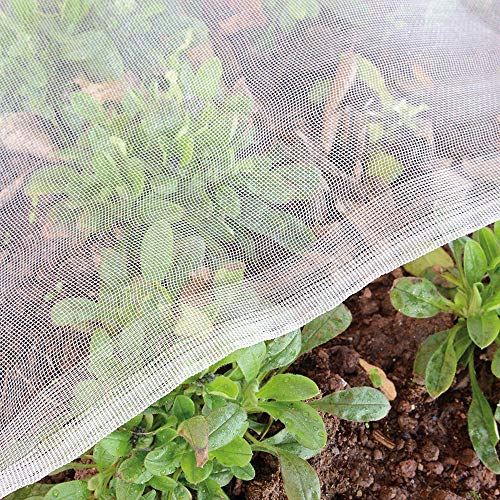
Best For: Small to mid-size vegetable beds, fruit trees, and greenhouse corners where a tight weave is needed to block aphids and small pests. This netting uses 100% new HDPE, is UV-resistant, and features a tight selvedge to prevent unraveling. Choose this if you want a robust, low-fray barrier that stays clear under sun exposure.
Why selected: It provides an effective barrier against cicadas and aphids while remaining lightweight enough to drape over beds without stressing plants. The extra-high quality construction helps ensure longevity in outdoor use.
Caution: The netting is designed for pests but may still require secure anchoring in windy locations to prevent ingress by larger pests or wind lift.
YNERHAI 10 X 50FT Garden Mesh Netting

Best For: Large garden plots, patchwork beds, and fruit tree rows where a long run of netting reduces the need for frequent reapplication. The 60-mesh design allows water, sunlight, and air to pass for healthy growth.
Why selected: Ultra-fine yet breathable mesh helps minimize pest entry while supporting irrigation and transpiration. It is lightweight, reduces shading, and is suitable for covering larger plantings without changing daily routines.
Caution: While the mesh is thin, ensure edges are secured to prevent wind flapping. The netting’s long run should be anchored well to avoid movement during storms.
RIFNY 2 Pack Garden Netting 10x33Ft

Best For: Raised beds or greenhouse rows where you want reliable airflow and light transmission. The 0.04 inch ultra-fine mesh provides strong protection without sacrificing photosynthesis.
Why selected: The two-pack option gives more coverage per order, and the durable construction allows direct watering through the mesh, reducing maintenance steps.
Caution: The packaging note clarifies one package contains two nets; plan your layout accordingly to avoid excess overlap or gaps near edges.
FARAER Garden Netting 10x33Ft Ultra Fine
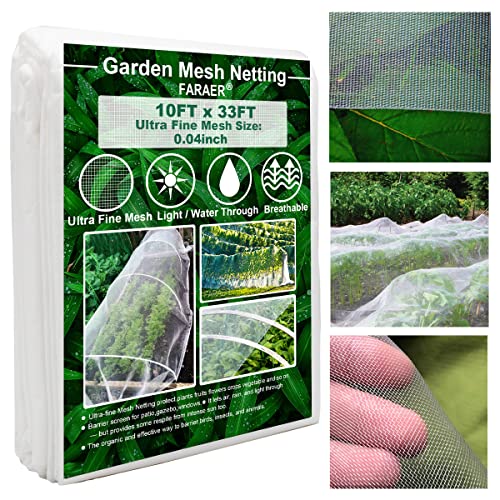
Best For: Gardeners needing a versatile net that fits raised beds or ground plots with minimal shading. The 0.8×1 mm ultra-fine mesh balances pest protection with crop development needs.
Why selected: All-purpose use; the mesh design allows air and moisture through, supporting plant health while blocking animals and large insects. It is a common choice for vegetables and fruits in home gardens.
Caution: Ensure the net is taut and edges are weighted to prevent wind uplift in exposed areas.
Jevrench Garden Netting 4x10FT

Best For: Compact plots or early-season protection where easy draping and quick coverage are priorities. The 4×10 ft size suits small raised beds and container gardens.
Why selected: The netting is described as durable, twice as thick as ordinary garden netting, and reusable. It provides a simple physical barrier to protect budding plants from pests.
Caution: For larger pests or high-pressure areas, this smaller section may require additional anchoring or overlap with another net.
Buying Guide: Key Purchase Considerations
- Mesh size and density: Smaller mesh blocks smaller pests but may limit airflow and water passage. Choose a mesh around 0.8 mm x 1 mm for a balance of protection and plant health.
- Material and durability: Look for HDPE or poly-based fabrics that resist UV exposure and resist tearing. A tight selvedge helps prevent unraveling.
- Coverage vs. access: Longer nets cover more area but can be harder to handle. Raised beds and greenhouse borders benefit from larger sizes; smaller beds can use compact sheets.
- Watering compatibility: Verify that the netting allows irrigation to pass through so you don’t need to remove protection during watering or fertilizing.
- Ease of securing edges: Secure edges with clips, stones, or soil to prevent wind uplift and pests from slipping under the net.
- Reusability and storage: Durable nets last multiple seasons with proper care. Store cleanly to avoid mildew and tangling.
- Intended use: Consider whether you need insect and bird protection, or a deterrent for larger mammals. Some nets excel in bird protection but may have gaps for ground-dwelling pests.
Frequently Asked Questions
- What size mesh should I choose for garden netting? A 0.8 mm x 1 mm mesh is a good default for many vegetables and berries, balancing pest protection with air and light.
- Can I water plants without removing the netting? Yes, many ultra-fine mesh nets are designed to allow water and fertilizer through while blocking pests.
- Will netting affect photosynthesis? Properly chosen mesh lets adequate sunlight through, so photosynthesis should not be hindered for most vegetables and fruits.
- How do I secure netting to maximize protection? Use weighted edges, landscape staples, clips, or soil to anchor the netting and reduce wind movement.
- Is netting reusable year after year? Higher-quality polyethylene or HDPE nets are designed for reuse, but store them clean and dry to extend life.
- Can I use netting indoors or on windows? Some nets are versatile enough for indoors and windows, offering pest protection for nursery pots and houseplants.