CO2 enrichment can boost plant growth in indoor environments, grow tents, and small greenhouses. This guide highlights five effective CO2 dispensers for plants, showing who each option is best for, how they work, and practical considerations. Ideal buyers include hobbyists using grow tents, small-scale indoor gardeners, and aquarists adding carbon to freshwater setups.
Summary table of selected products:
| Product | Best For | Key Benefit | Limitation |
|---|---|---|---|
| TNB Naturals The Enhancer, CO₂ Dispersal Canister-240g | Homes with natural, organic inputs | Natural CO2 burst with yucca-based wetting agent | Active uplift requires mixing with liquids |
| API Co2 Booster Freshwater Aquarium Plant Treatment 8 Fl oz | Aquarium plants needing carbon supplementation | Easy to add to freshwater tanks | Designed for aquariums, not soil-based setups |
| CO2BAG M – Natural CO2 Generator | Grow tents and small spaces | Maintenance-free, 24/7 CO2 supply | Limited to area up to 2m² |
| Exhale Homegrown CO2 365 – Self-Activated Bag | Small grow rooms and tents | Long peak production with no electricity | Requires placement above plant height |
| Nextera CO2 Bags for Grow Tent | Passive CO2 for grow tents | Simple, release-based CO2 for indoor gardening | Passive release; slower rate than active systems |
TNB Naturals The Enhancer, CO₂ Dispersal Canister-240g

Best for: growers seeking a natural CO2 boost with a built-in wetting agent. This canister uses all-natural, organic ingredients that activate to create a CO2 burst reaching up to 1200 ppm in a 12 x 12 x 12 ft area. Yucca extract acts as a wetting agent for compatibility with various liquid fertilizers, supporting integrated fertilization programs. Caution: effectiveness depends on proper mixing with liquids and distribution in the growth area.
API Co2 Booster Freshwater Aquarium Plant Treatment 8 Fl oz Bottle
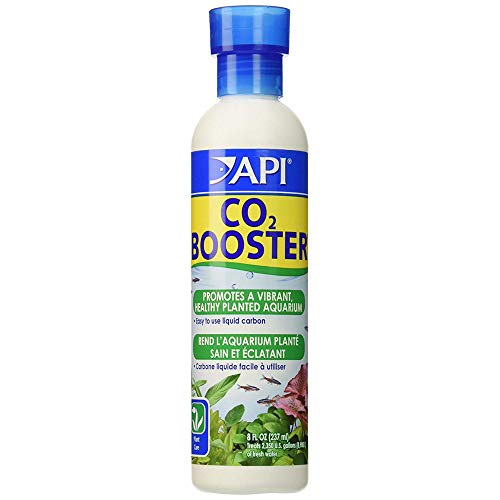
Best for: aquarium setups needing an easy, water-based carbon source. Contains one bottle that provides essential carbon in a form plants can absorb from the water, promoting growth in freshwater tanks. Caution: formulated for aquatic environments; not intended for soil-based indoor gardens.
CO2BAG M – Natural CO2 Generator

Best for: small grow tents and compact indoor spaces seeking a maintenance-free CO2 source. This bag provides a consistent CO2 supply for up to three months, without tanks or electricity. Caution: hang location matters; position above plant height to ensure downward distribution. Best used in conjunction with appropriate lighting for optimal results.
Exhale Homegrown CO2 365 – Self-Activated Bag

Best for: growers needing a long-lasting, maintenance-free CO2 source in grow rooms or tents. The 365 model self-activates and delivers CO2 for up to nine months, with a peak production period. Caution: performance depends on placement and room size; avoid placing directly over foliage to ensure even distribution.
CO2 Bags for Grow Tent by Nextera

Best for: passive CO2 generation in grow tents and indoor growing rooms when a simple, non-electric solution is preferred. The bag provides a gradual release of CO2 with a light-blocking outer layer to minimize external interference. Caution: slower release rate; best used as a supplementary source alongside proper lighting and nutrients.
Buying Guide
Which CO2 method fits your space and goals?
- Active emitters (such as CO2 dispensers or regulated cartridges) are better for precise, short-term boosts in small spaces.
- Passive bags are maintenance-free and ideal for growers who want ongoing CO2 without electrical needs, best in mid-sized tents.
- Aquarium-based CO2 boosters suit freshwater planted tanks but should not be used for soil-based indoor gardens.
Room size and plant density drive choice. For compact grow tents up to about 2 m², CO2BAG M and Exhale 365 offer straightforward, low-maintenance options. For growers seeking a stronger, immediate boost, TNB Naturals The Enhancer provides a natural CO2 burst. Passive bags like Nextera are convenient, but require longer lead times for full effect. In aquariums, API CO2 Booster integrates seamlessly with water-column carbon needs but is not intended for soil use.
How to maximize CO2 effectiveness?
- Sync CO2 delivery with appropriate lighting periods for peak photosynthesis.
- Ensure adequate airflow to distribute CO2 evenly without creating overly stagnant zones.
- Balance nutrient and fertilizer programs to support rapid growth without salt buildup or pH shifts.
Practical considerations
- Placement: keep CO2 sources above plant height where possible to favor downward distribution.
- Maintenance: maintain a schedule for bag replacements or refills to avoid gaps in CO2 supply.
- Safety: follow product guidelines to prevent excessive CO2 buildup in living or poorly ventilated spaces.
Frequently Asked Questions
- What is the best CO2 source for a small grow tent?
Answer: CO2BAG M or Exhale Homegrown CO2 365 are well-suited for compact spaces and offer maintenance-free operation. - Can I use aquarium CO2 boosters for soil plants?
Answer: No. Aquarium CO2 boosters are formulated for aquatic environments and are not intended for soil-based plant care. - How long do passive CO2 bags last?
Answer: They deliver CO2 over several weeks to months depending on bag type and environment; check product guidelines for exact durations. - Is a regulator or tank system necessary for indoor plants?
Answer: Not always. For many hobby setups, bag-based or cartridge-based systems provide sufficient CO2 without tanks. - Should I place CO2 sources near the top or bottom of the canopy?
Answer: Place sources slightly above plant height to promote downward CO2 movement toward the leaf surface.