Looking for an effective privacy screen with a compact, vertical form? This guide highlights top columnar trees ideal for creating tall, unobtrusive barriers. Best for dense screens in small yards, tight spaces, or along fences, these selections emphasize vertical growth, evergreen color, and low maintenance. The top picks are suited for homeowners who want year-round privacy without broad, spreading canopies. The table below compares five standout options from Amazon, detailing suitability, growth traits, and ideal use cases.
| Product | Best For | Why It Stands Out |
|---|---|---|
| Blue Italian Cypress 6-Pack | Tall privacy screens in compact spaces | Dense, silvery-blue foliage; upright silhouette |
| Brodie Southern Red Cedar | Low-maintenance windbreaks | Evergreen, drought-tolerant, easy care |
| Lombardy Poplar Cuttings (10) | Very tall privacy lines quickly | Rapid growth; dramatic vertical form |
| Italian Cypress (Extra Large) | Formal, long-lasting screening | Narrow, upright, fast-growing |
| Blue Arrow Juniper | Small-space screens with color | Blue-green year-round color; drought-tolerant |
6 Blue Italian Cypress Tree – Fast-Growing Privacy

Product overview: Six starter saplings in 3.5″ cubes with silvery-blue, dense foliage and upright form. Best for buyers seeking a fast-growing privacy screen in USDA zones 7–10. Natural size variation may occur.
Best for: Homeowners who want a tall, narrow evergreen silhouette that creates a formal vertical screen along borders or patios. This option is well-suited for creating a continuous hedge with minimal horizontal footprint.
Why chosen: Its classic columnar shape and evergreen color provide year-round privacy, especially useful for lined fences or property boundaries where visual height matters more than breadth.
Cautions/limitations: Expect seasonal color variation and potential size differences among plants; ensure consistent spacing for a uniform screen.
Brodie Southern Red Cedar Tree – Drought Tolerant Screen
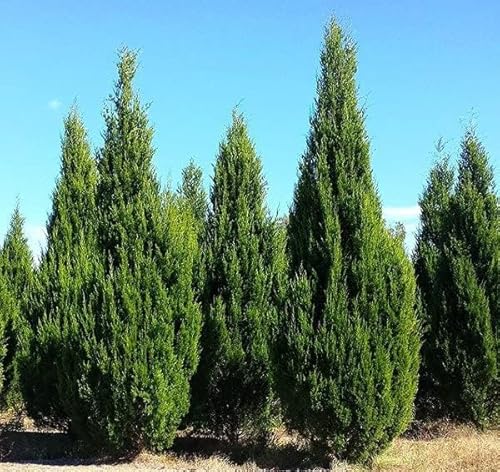
Product overview: Live evergreen with fast growth and drought tolerance. Designed as a columnar option for privacy screens, windbreaks, and low-maintenance landscapes.
Best for: Gardeners seeking a hardy, low-effort privacy plant that performs well in varied soils and dry periods.
Why chosen: Combines color stability with resilience, offering a reliable vertical privacy feature in challenging conditions.
Cautions/limitations: Growth rate and ultimate size can vary; ensure adequate root space and sun exposure for best results.
Lombardy Poplar Tree Cuttings – Fast Privacy

Product overview: Live hardwood cuttings ready to root, offering a tall, columnar form ideal for living fences and windbreaks. Sold in bundles of 50.
Best for: Large properties, farms, or homesteads needing dramatic vertical privacy quickly and affordably.
Why chosen: Lombardy Poplar cuttings are noted for rapid height, enabling fast establishment of a privacy line along open borders.
Cautions/limitations: Cuttings require proper rooting environment and care; results depend on successful propagation and seasonal timing.
Italian Cypress – Extra Large

Product overview: Narrow evergreen trees designed for long-lasting privacy with a formal, upright presence. Suitable for driveways and fences where vertical impact is desired.
Best for: Landscapes needing consistent, slender vertical elements that stay visually clean year-round.
Why chosen: Its narrow form makes it ideal for tight spaces, delivering a polished look without crowding adjacent plants.
Cautions/limitations: May require staking and protection from winter windburn in exposed locations; growth is steady but can take time to reach full height.
Blue Arrow Juniper – Narrow Screen

Product overview: Large, narrow, columnar juniper with dense blue-green foliage. Drought-tolerant and low maintenance, suited for year-round privacy in small spaces.
Best for: Gardeners wanting a reliable, low-effort privacy plant with color and vertical emphasis.
Why chosen: Combines visual appeal with practicality, offering a hardy option for low-water landscapes and restricted spaces.
Cautions/limitations: Junipers can be sensitive to overly wet soils; ensure well-drained conditions to prevent root issues.
Buying Guide: Key Considerations For Columnar Privacy Trees
- Space and layout: Measure the available width and desired height. Choose a truly columnar variety to maximize privacy without crowding.
- Climate compatibility: Check USDA zones and sun exposure. Some species thrive in zones 7–10, others tolerate drought or colder winters.
- Maintenance expectations: Consider growth rate, water needs, and pruning requirements. Low-maintenance options help busy households.
- Soil and drainage: Most columnar evergreens prefer well-drained soil. Poor drainage can lead to root issues and poorer health.
- Longevity and plan ahead: Some trees grow tall quickly but may require eventual replacement or heavy pruning to maintain shape.
- Aesthetics and color: Foliage color (blue-gray, dark green) affects year-round appearance and how the screen integrates with surrounding features.
- Purchasing and compatibility: Verify online vendor reliability, shipping viability for live plants, and any regional restrictions on plant shipments.
FAQ: Quick Answers For Buyers
- What is the best columnar tree for a tight space? Answer: Italian Cypress and Italian Cypress Extra Large are strong choices for upright screening without horizontal spread.
- Which option tolerates drought best? Answer: Blue Arrow Juniper and Southern Red Cedar offer good drought resilience with low water needs.
- Can Lombardy Poplar cuttings establish quickly? Answer: Yes, cuttings are designed for rapid height growth when properly rooted and cared for.
- Are these plants evergreen year-round? Answer: All listed options are evergreen and designed to retain foliage through seasons, with some color variation by species.
- Do I need professional installation? Answer: Not always; many are suitable for home planting, but ensure correct spacing and rooting conditions for best results.
- Which option is best for coastal areas? Answer: Drought-tolerant and deep-rooted varieties like certain junipers and cedars often perform well, but verify local salt tolerance.