Answering the need for efficient, durable lawn aeration, these commercial-grade or heavy-duty grass aerators are designed to penetrate compacted soil, improve air and water penetration, and boost root growth. This guide highlights five solid options for professional or serious home users, explaining who each is best for and why. Perfect for landscapers, property managers, or homeowners with large or high-traffic lawns seeking dependable performance.
| Product | Brand | Best For | Key Benefit |
|---|---|---|---|
| Agri-Fab 48 In Tow Behind Lawn Plug Aerator | Agri-Fab | Larger lawns and tractor users | Deep soil plugs up to 3 in; can improve root depth |
| SENVERT Rolling Lawn Aerator | SENVERT | Medium yards needing efficient rolling design | Roller design with adjustable weight up to 55 lb |
| Grenebo Lawn Aerator Manual | Grenebo | Quick, efficient manual aeration | 16 spikes in a 4×4 layout for many holes per step |
| Saker Manual Lawn Aerator | Saker | Budget-friendly, lightweight aeration | 15 spikes; easy soil penetration with adjustable height |
| Walensee Four-Row Spike Lawn Aerator | Walensee | Spot aeration in small yards | 20 spikes across four rows for targeted areas |
Agri-Fab 48 In Tow Behind Lawn Plug Aerator
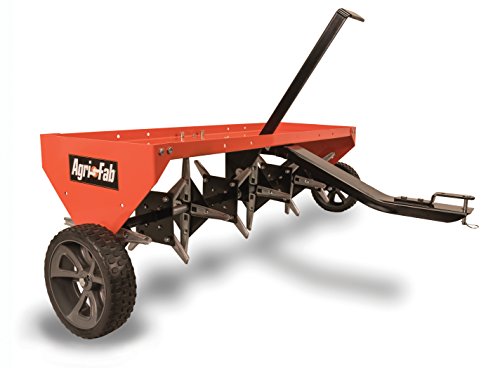
The Agri-Fab tow-behind aerator is built for tractor users tackling large lawns. It pulls plugs up to three inches deep to improve airflow, water absorption, and nutrient penetration. The design emphasizes ease of transport with flat-free tires and a cantilever transport handle for simple raising and lowering from the tractor seat. Best for homeowners with larger property layouts who need a robust, ready-to-work tool that integrates with common tractor implements.
Who it’s best for: Property owners with bigger plots and access to a lawn tractor seeking deep core aeration. Why selected: Deep-plug capability supports strong root systems and healthier turf. Caution: Requires a compatible tractor hitch and ample storage space.
SENVERT Rolling Lawn Aerator

The SENVERT rolling aerator uses a heavy-duty construction with a 32-pound base, designed to penetrate most soils effectively. Its weight can be increased (up to 55 pounds total) by adding sand or stones through the drum’s opening. This design delivers stronger soil penetration and a more uniform aeration pattern for medium-to-large lawns without requiring manual digging. Best for: Users who want a weight-assisted, efficient rolling aerator for frequent use. Caution: Do not add water to the drum, which can alter balance and performance.
Grenebo Lawn Aerator Manual

The Grenebo manual aerator features 16 sharp spikes in a stable 4×4 layout, delivering deep soil penetration with 3.1-inch spikes. It uses dual-layer rebound springs to shake off soil and debris, and self-locking nuts keep spikes secure for long-term use. Best for: Homeowners with smaller yards who still want efficient aeration and easier cleanup. Caution: Heavier use may require occasional tightening of spikes for optimal performance.
Sakerplus Aerator Lawn Tool

The Sakerplus aerator emphasizes effortless auto-return and self-cleaning tines. Its spring-loaded double-layer platform automatically pops back up after each step, which reduces bending and speeds up large lawn jobs. Self-cleaning tines eliminate manual scraping and maintain consistent performance. Best for: Large lawns or commercial-like workloads where operator fatigue is a concern. Caution: The mechanism relies on smooth operation; very wet or gummed soils may still require occasional manual clearing.
Walensee Four-Row Spike Lawn Aerator

The Walensee aerator is designed for small yards with a four-row spike setup containing 20 spikes total. It targets precise soil preparation, lawn edges, and spot aeration without disturbing larger lawn areas. Best for: Gardeners focusing on targeted aeration and lawn edge care. Caution: It may require more passes to cover larger areas efficiently compared to rollers or plug aerators.
Buying Guide
- Lawn size and equipment compatibility: Tow-behind aerators require a compatible tractor or ride-on mower; rolling or manual models suit smaller to medium yards and easier storage.
- Aeration depth and hole density: Deeper plugs (2–3 inches) with dense spike patterns improve root growth but require more effort or heavier machines.
- Weight and ease of use: Heavier units penetrate compacted soil more effectively, but can be harder to maneuver. Auto-return and self-cleaning features reduce fatigue and maintenance.
- Maintenance needs: Look for reinforced joints, rust-resistant finishes, and easily replaceable tines to maximize lifespan.
- Terrain and soil type: Sandy or loamy soils aerate easily; clay soils benefit from heavier equipment or multiple lighter passes.
- Storage and portability: Lightweight or foldable designs are easier to store in small spaces; consider transport handles for lifting onto a trailer or shed.
Frequently Asked Questions
- What is the main benefit of using a lawn aerator? Aeration creates holes in the soil to improve air, water, and nutrient penetration, which supports healthier root growth and a sturdier lawn.
- Should I aerate before or after overseeding? Aerate before overseeding to create better seed-to-soil contact and improve germination rates.
- How deep should aeration holes be? Typically 1.5 to 3 inches deep, depending on soil compaction and lawn needs.
- Can I use an aerator on wet soil? It’s best to aerate when soil is moist but not muddy, to avoid excessive compaction and clumping.
- Which aerator is best for small yards? For targeted or spot aeration in small yards, the Walensee four-row spike model or Snuggalux-style manual tools are convenient choices.
- Are tow-behind aerators worth it for homeowners? Tow-behind models are ideal for large lawns with compatible equipment, delivering deep, uniform aeration with less manual effort.