Answering the search intent, these outdoor compost containers are designed to turn kitchen scraps and yard waste into nutrient-rich soil efficiently. Each option targets different needs—whether you want faster turnover, larger capacity, or easier access. This guide highlights five top choices for American readers, with quick takes on who each is best for and why. Use the buying guide and FAQ to compare features like capacity, aeration, and access design before you buy.
| Product | Best For | Key Benefit |
|---|---|---|
| VIVOSUN Outdoor Tumbling Composter | Rotating bin fans and dual-chamber users | Continuous composting with 360° tumbling |
| SUPER DEAL 80 Gallon Bin | Large capacity, budget-conscious buyers | Four-way aeration for faster breakdown |
| Nazhura Dual Chamber 43 Gallon | Compact space with quick access | Easy to turn and access finished compost |
| REDMON 65 Gallon Bin | Durable, weather-ready for yard waste | Lift-off lid and four-door access |
| JupiterForce 80 Gallon Bin | All-weather use, high capacity | Four vents per side for airflow |
VIVOSUN Outdoor Tumbling Composter Dual Rotating Batch Compost Bin

The VIVOSUN tumbler uses two separate chambers to alternate composting, enabling a steady stream of finished material. The 360° tumbling design reduces manual turning, while deep fins and eight-panel aeration help break clumps and improve oxygen penetration. Best for: homeowners who want uninterrupted composting with minimal manual effort and a compact footprint. Caution: the dual-chamber setup may require more space than single-chamber models and can be heavier when full.
SUPER DEAL 80 Gallon Compost Bin

With an 80-gallon capacity, this bin emphasizes a large interior and sturdy BPA-free plastic. Four vents on each side support airflow for better breakdown. Best for: larger yards or gardeners who want to minimize emptying frequency. Caution: bulkier size may require more space and heavier handling when full.
Nazhura Compost Tumbler Bin Dual Chamber 43 Gallon
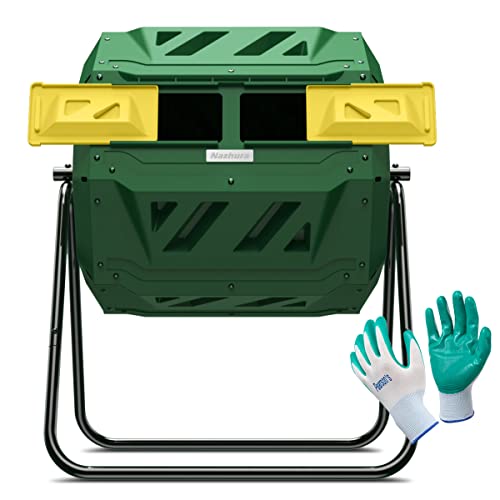
Nazhura’s dual-chamber tumbler focuses on quick turnover with rotating action and internal paddles to mix and aerate. Accessing finished compost is simple via a sliding door. Best for: growers who want faster maturation of compost and easy removal. Caution: bundled gardening gloves are a nice perk, but may not appeal to all buyers if gloves are not needed.
REDMON Outdoor Compost Bin with Lift Off Lid

This 65-gallon bin emphasizes durability with weather-resistant materials and a lift-off lid plus four-door access for easy checks and harvest. Best for: buyers seeking a robust, long-lasting bin that accommodates steady kitchen and yard waste flow. Caution: made from recycled materials, which may affect color consistency across batches.
JupiterForce Garden Compost Bin 80 Gallon

JupiterForce offers a large 80-gallon capacity with all-weather protection and four vents per side to promote airflow. Best for: households that produce substantial green and brown waste and need year-round composting. Caution: bulk and weight may challenge mobility for some users when moving or emptying.
Buying Guide: What To Look For In Outdoor Compost Containers
- Capacity vs. space: Choose a size that fits your yard and waste output. Larger bins reduce emptying frequency but require more space.
- Aeration and airflow: Look for built-in vents or rotating mechanisms that promote oxygen flow to speed decomposition.
- Access for turning and harvesting: Dual-chamber designs support continuous operation; easy doors or lift-off lids simplify removing finished compost.
- Material and durability: BPA-free plastics resist weather, while metal and composite options offer longevity but may be heavier.
- Maintenance and cleanliness: Smooth interiors and easy-to-clean surfaces help prevent odors and pests.
- Assembly and mobility: Consider bins that are simple to assemble and come with handles or wheels if you need to move them.
Frequently Asked Questions
- What is the best type of compost container for small yards? An outdoor tumbler with dual chambers or a compact bin is ideal for limited space and faster turnover.
- How many gallons should a home compost bin have? For most households, 60–80 gallons balances capacity with space, but larger families may opt for 100+ gallons.
- Do compost bins need ventilation? Yes, proper airflow speeds decomposition and reduces odor, especially in humid climates.
- Can you compost at home year-round? Yes, all-weather bins with good insulation and drainage work best in year-round setups.
- Is plastic compost bins safe? BPA-free plastics are commonly used and safe for yard and kitchen waste when used as designed.
- Should I mix greens and browns in my bin? Yes. A balanced mix (greens like fruit scraps and browns like leaves) improves microbial activity and compost quality.