Direct answer: If you need reliable, compostable bags for yard waste, choose 55–60 gallon or 33 gallon bags that are certified compostable and designed for heavy-duty outdoor use. The top picks here are best for large-volume yard cleanups, leaves, and food scraps, with options suited for homes, lawns, and even commercial settings. These selections balance tear resistance, capacity, and certification to ensure safe composting. This guide highlights five strong choices, explains who each is best for, and provides practical buying criteria to compare alternatives quickly.
Summary table of selected products
| Product | Size / Capacity | Key Benefit | Best For |
|---|---|---|---|
| TERRACOR 55–60 Gallon | 55–60 gal / 208.2 L | Heavy-duty 1.57 mil, leak-resistant | Large yard debris, commercial events |
| ECOLipak 33 Gallon | 33 gal / 124.9 L | Certified compostable; two rolls | Smaller yard bins, leaves |
| UNNI Compostable Lawn & Leaf | 30–33 gal / 124 L | Reinforced 1.1 mil; multi-certifications | Leaf & yard waste, home use |
| Necessia 30 Gallon Paper Bags | 30 gal | 2-ply paper; tear resistant | Small to mid-size yard tasks |
| Simply Bio 50–55 Gallon | 50–55 gal / 208.2 L | Heavy-duty; star-sealed bottom | Yard waste, food scraps |
Terracor 55–60 Gallon Compostable Trash Bags

Terracor’s 55–60 gallon liners are designed to fit large bins (about 42 x 48 inches) and come in a 12-bag roll. The 1.57 mil thickness provides tear resistance and leak-proof performance for heavy loads, making them suitable for commercial sites, events, and yard cleanups. They are independently certified compostable by BPI to ASTM D6400, ensuring compatibility with industrial and home composting streams.
Best for: Large yard debris and commercial-scale cleanup where capacity and durability matter most. Choose this if you routinely handle bulky compostables in big bins. Limitation: Not ideal for smaller bins or casual, light-duty use due to its large size and heft.
ECOLipak 33 Gallon Compostable Trash Bags
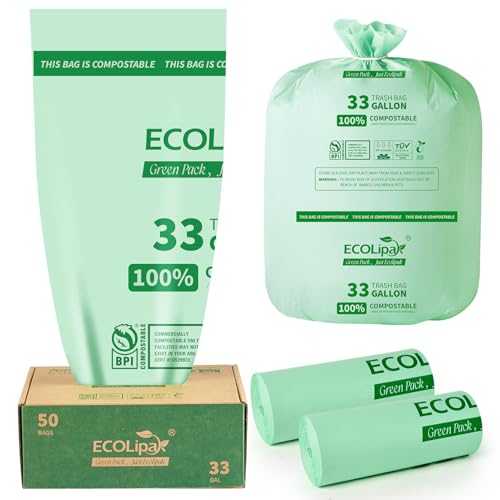
ECOLipak’s 33-gallon bags come in a two-roll pack, sized at about 33 x 39 inches with a 1 mil thickness. They are certified by BPI and OK Compost Industrial, suitable for home, industrial, and natural composting. They’re easy to tear, feature a bottom seal, and offer sturdy performance for outdoor bins and yard debris. Storage in a cool, dry place helps maintain shelf life of 10–12 months.
Best for: Home yard waste in medium bins or where a compact, certified compostable option is preferred. Caution: The 1 mil thickness may be less resilient for very heavy or sharp loads compared to thicker bags.
UNNI Compostable Lawn & Leaf Bags

UNNI offers 30–33 gallon bags with a 1.1 mil thickness, reinforced at the bottom for yard debris and kitchen scraps. The bags are certified by multiple bodies (BPI, CMA, OK compost HOME), highlighting broad compatibility with different composting streams. Each pack contains 20 bags, providing a practical balance of capacity and frequency of bag changes for mid-sized yards.
Best for: Home gardeners needing dependable bags that are certified for multiple composting standards. Choose this if you value broad certification coverage and reinforced strength. Limitation: 1.1 mil thickness may be less robust for extremely heavy loads compared with thicker alternatives.
Necessia 30 Gallon Paper Bags With Gloves

Necessia’s 30-gallon paper bags are a two-ply, tear-resistant option designed for yard waste. They hold up to 30 gallons and are paired with Necessia gardening gloves in some listings, highlighting a practical, ready-to-go package for yard cleanups. The paper construction makes them a biodegradable alternative for lighter to moderate yard debris, with a focus on ease of use and standing stability.
Best for: Those seeking easy-to-use, paper-based bags for moderate yard debris and a ready-to-use kit. Choose this if you prefer biodegradable paper bags and want self-standing convenience. Limitation: Paper bags generally offer less moisture resistance compared to plastic-based compostable liners.
RAYTID 55–60 Gallon Compostable Bags

The 55–60 gallon range by RAYTID offers a large-capacity option with 1.57 mil thickness for resilience. These bags are certified by BPI to ASTM D6400, and OK Compost Home, ensuring compatibility with various composting routes. The design emphasizes odor reduction and tear resistance for heavy, weekly yard waste collection in large bins.
Best for: Users who consistently manage bulky yard waste and want a robust, certified bag with strong odor control. Avoid this if you have smaller bins or lighter disposal needs, as the large size may be inconvenient for compact spaces.
ECOLipak 33 Gallon Compostable Bags (Single Roll)

Another ECOLipak option, this 33-gallon bag is sold as a single roll. It remains certified by BPI and OK Compost Industrial, suitable for home and industrial composting. The bag is easy to tear with a bottom seal and is designed for outdoor use in yards and leaves. Storage in a cool, dry place helps maintain shelf stability.
Best for: People who prefer a single-roll purchase with a compact footprint for yard waste. Limitation: Only 25 bags per package, which may require more frequent repurchases for larger cleanup tasks.
Necessia 30 Gallon Paper Bags With Gloves (Second Listing)

This Necessia listing combines 30-gallon paper bags with a set of gardening gloves, offering a practical yard cleanup solution for those who want an all-in-one start. The 2-ply paper construction provides reasonable tear resistance for leaves and grass, while the included gloves support cleanup tasks. Suitable for home use and lighter yard tasks.
Best for: Shoppers who want a ready-to-go kit for yard cleaning. Consider alternative larger or thicker bags for heavy, wet, or bulky debris.
Buying Guide: Key Considerations When Choosing Compostable Yard-Waste Bags
- Bag capacity: Match bag size to bin capacity and typical yard waste. Larger volumes benefit from 55–60 gallon bags, while smaller yards can use 30–33 gallon options.
- Material thickness: Thicker bags (around 1.57 mil) offer better tear resistance and leak protection for wet or heavy loads.
- Certifications: Look for BPI, ASTM D6400, and OK compost HOME or EN 13432 to ensure compostability and proper disposal paths.
- One-roll vs multi-pack: Consider how often you dispose waste; multi-roll packs save refills for frequent cleanup.
- Storage and shelf life: Some bags list shelf-life guidance; store in a cool, dry place to maintain integrity.
- Waste type compatibility: Home composting vs industrial composting, and whether the bag is suitable for yard leaves, kitchen scraps, or mixed refuse.
- Strength versus convenience: Paper bags offer ease of use and biodegradability in some cases, but plastics with compostable film provide higher moisture resistance and strength for heavy loads.
FAQ
- What size compostable bag should I choose for a standard yard bin?
– For standard yard bins, 30–33 gallon bags work well, while 55–60 gallon bags suit larger bins or heavy yard waste. - Are compostable bags truly compostable in home settings?
– Many are certified for industrial composting and some are OK Compost Home certified, which means home composting is possible if the facility accepts them; check local guidelines. - Will compostable bags keep smells down in the yard?
– Some bags promote odor control through tear resistance and multi-layer film; effectiveness varies by load moisture and contents. - Do I need different bags for leaves versus kitchen scraps?
– Leaves are typically dry and light; kitchen scraps are moist and heavier. Heavier, thicker bags are better for mixed waste, while lighter bags may suffice for dry leaves. - Is a paper bag a good alternative to plastic for yard waste?
– Paper bags are biodegradable and easy to handle, but they may tear more easily and are less moisture resistant than thicker compostable plastic bags.