For vegetable gardeners of all levels, durable fabric grow bags offer flexible, high-yield solutions that fit small spaces and poor soil. This guide highlights five top picks, explaining who each bag is best for and why it stands out. Each option emphasizes drainage, root health, and portability, making them suitable for patios, balconies, and backyards alike.
| Product | Size | Material | Best For |
|---|---|---|---|
| Cavisoo 5-Pack 10 Gallon | 10 Gallon | 300g non-woven fabric | Gardeners needing large, reusable bags |
| Jorvila 5 Pack 5 Gallon | 5 Gallon | 300G nonwoven fabric | Compact spaces; lighter weight |
| Land Guard 4-Pack 5 Gallon | 5 Gallon | Non-woven fabric | Easy mobility; sturdy handles |
| FEED GARDEN 10 Gallon 4 Pack | 10 Gallon | 300G thickened non-woven fabric | Heavy-duty, long-season use |
| Growia 2 Pack Tomato Planter | 56 inch trellis system | Metal trellis with planter | Vertical growing; climbing crops |
Selection reasoning: The five bags and planters below balance drainage, root health, and portability. They cover traditional bag gardening (5–10 gallon options) and a vertical solution for small spaces. Consider space, crop type, and how often you’ll move containers when choosing.
Cavisoo 10-Gallon Grow Bags
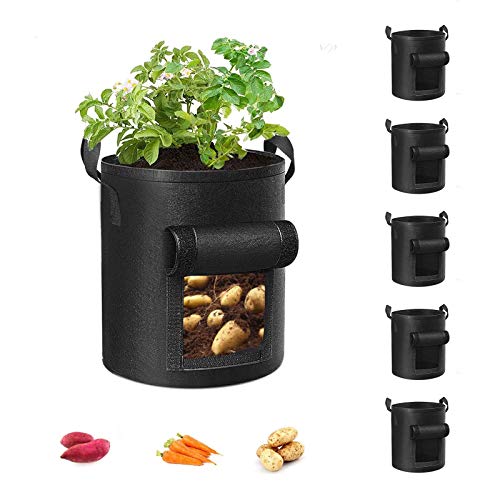
Materials and design: Made from 300g thick non-woven fabric for durability and reuse beyond three seasons. The breathable fabric ensures rapid drainage, creating a favorable environment for root development. Reinforced polypropylene handles with X-shaped stitching support heavy loads, including large tomato or potato crops. Best for gardeners seeking long-term, reusable bags with strong handles. Caution: The fabric, while durable, may need drying between seasons to prevent mold in very wet climates.
Jorvila 5-Pack 5-Gallon Grow Bags

What to know: These 5-gallon bags use 300G thickened nonwoven fabric, designed for wear resistance and reusability. The aeration features support self-pruning, improving root structure and plant health. Excellent drainage helps prevent overwatering, making them a solid pick for small-space veggie growing. Best for gardeners who want light yet sturdy bags that are easy to clean and store. Limitation: May not be ideal for very large root systems or perennial crops requiring deeper roots.
Land Guard 4-Pack 5-Gallon Grow Bags

Design advantages: These bags use sturdy non-woven fabric with heavy-duty handles for easy transport, even when full. They promote drainage and aeration to reduce overwatering and support vigorous growth. Best for gardeners who need reliable, portable containers for mid-size crops. Caution: Overpacking can stress handles; ensure even weight distribution when moving full bags.
FEED GARDEN 10-Gallon Grow Bags 4-Pack

Why choose this set: The 300G thickened nonwoven fabric provides excellent airflow and fast drainage to prevent root rot, supporting healthier root systems and higher yields. The reinforced double-stitched handles allow safe movement of full bags. Best for gardeners planning multi-season use and heavier crops like tomatoes and peppers. Limitation: Larger 10-gallon size can be heavier to relocate when full.
Growia Tomato Planter With Trellis

Vertical growing solution: This 56-inch planter uses a trellis system to train climbing vegetables, keeping vines organized and off the soil. Self-watering features help maintain steady moisture and reduce irrigation frequency. Best for urban spaces, patios, and balconies where vertical space is at a premium. Caution: Requires sturdy support surface and proper anchoring for tall vines; not suited for ground-level planting alone.
Buying Guide: Key Considerations For Choosing Vegetable Grow Bags
- Capacity and crop type: Choose 5-gallon bags for smaller vegetables and herbs; 10-gallon for larger crops like tomatoes or potatoes. For climbing plants, consider vertical planters with trellis.
- Fabric quality and durability: Look for 300G thickened nonwoven fabric or better, with reinforced handles for heavy loads and multi-season use.
- Drainage and aeration: Breathable material prevents root rot and supports healthier roots. Ensure bags have adequate drainage holes or perforations.
- Mobility and storage: Bags with sturdy handles simplify moving and winter storage. Consider whether you’ll store bags flat when not in use.
- Space and layout: Vertical systems maximize limited spaces; traditional bags suit larger patios or gardens. Plan for irrigation needs and sun exposure.
- Maintenance: Reusable bags require cleaning and drying between seasons. Some fabrics dry faster than others; consider climate and humidity.
Frequently Asked Questions
- What is the best material for grow bags?
Thickened nonwoven fabric (around 300G) offers durability, good drainage, and air circulation, which supports root health and higher yields.
- Do grow bags prevent root circling?
Yes, many bags promote air pruning and prevent circling roots, encouraging a healthier, massed root system.
- Are larger bags better for vegetables?
Larger bags hold more soil and moisture, supporting bigger plants, but they are heavier to move. Balance plant size with portability.
- Can I reuse grow bags after harvest?
Most 300G nonwoven bags are designed for multi-season use; dry thoroughly between uses to prevent mold and extend life.
- Is vertical gardening worth it for small spaces?
Yes, vertical setups maximize vertical space, improve air circulation, and can reduce disease pressure by keeping foliage off the ground.
- What should I consider when choosing a grow bag set?
Consider capacity, durability, drainage quality, handle strength, and whether you need a horizontal or vertical growing solution for your space.