Answer: Cypress trees are ideal for creating year-round privacy, defining borders, and adding vertical interest in American landscapes. This guide highlights five cypress varieties that balance fast growth, year-round greenery, and relatively low maintenance. Each entry explains who benefits most, why it’s a strong pick, and any practical caveats to consider before planting.
| Product | Best For | Key Benefit |
|---|---|---|
| Dwarf Italian Cypress Tree | Formal borders; narrow spaces | Elegant columnar form |
| Leyland Cypress | Large privacy screens | Fast-growing evergreen hedge |
| Carolina Sapphire Cypress | Year-round color; privacy | Silvery blue-green foliage |
| Italian Cypress (10 Live Trees) | Tall screens; driveways | Narrow, upright silhouette |
| Bald Cypress | Moist or varied soils; large shade | Adaptive moisture tolerance |
Dwarf Italian Cypress Tree

Best for compact spaces, the Dwarf Italian Cypress offers a refined columnar silhouette ideal for formal borders, vertical interest, or privacy screens in small to mid-sized gardens. Harvested from farm-grown stock, it promises healthy growth and a robust start. The tree tolerates drought and cold better than many broadleaf evergreens, and it adapts to a wide range of soils. This makes it suitable for entryways, narrow hedges, or foundation plantings where a clean, architectural line is desired.
Who it’s best for: homeowners seeking a durable, low-maintenance evergreen with a narrow profile for tight spaces. Why selected: it combines a classic Mediterranean look with practical resilience. Caution: even drought-tolerant evergreens need water during prolonged heat spells in the first growing season.
Leyland Cypress
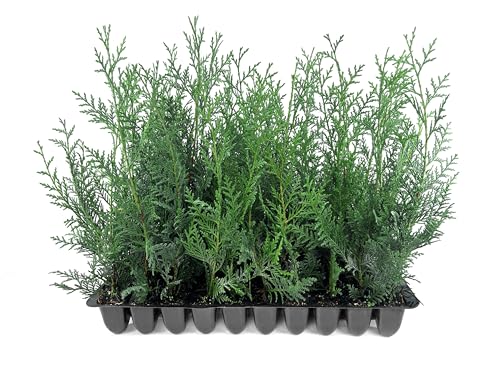
Best for large privacy screens and property borders, Leyland Cypress offers rapid vertical growth with dense evergreen foliage. It performs well in full sun and tolerates a variety of soils, making it a versatile option for establishing windbreaks or visual screens along driveways. This species is a good choice when the goal is quick enclosure or a broad, natural-looking fence without rigid structure.
Who it’s best for: customers needing a fast, scalable privacy solution. Why selected: its robust growth rate accelerates screening. Caution: rapid growth requires regular maintenance to manage shape and to monitor for pests or disease in dense plantings.
Carolina Sapphire Cypress

This variety shines with evergreen elegance and silvery blue-green foliage that maintains color through all seasons. Carolina Sapphire Cypress grows at a steady pace and requires modest maintenance, making it a reliable choice for year-round privacy or decorative focal points. Its versatility fits hedges, screens, or specimen plantings in coastal or inland landscapes.
Who it’s best for: gardeners who want color variation and a silver-toned tone year-round. Why selected: striking foliage that remains visually appealing in winter. Caution: slower initial growth means longer time to reach full screening compared with faster cultivars.
Italian Cypress (10 Live Trees)

Narrow upright growth makes this selection ideal for lining driveways, fences, or narrow walls where a formal, vertical accent is needed. The evergreen habit and uniform appearance create a refined, architecturally consistent landscape. It’s well-suited for creating a long, elegant privacy barrier with repeated, evenly spaced plantings.
Who it’s best for: landscapers or homeowners aiming for a tall, restrained vertical statement. Why selected: consistent columnar form supports formal designs. Caution: requires adequate spacing to allow air circulation and reduce disease risk in dense rows.
Bald Cypress

The Bald Cypress is a bold choice for landscape designers seeking a mature look with versatile moisture tolerance. It delivers shade and structure with a distinctive, feathery texture that shifts with the seasons. This tree adapts from wet to dry soils, making it a strong candidate for varied yards, pondsides, or rain gardens where moisture levels change over time.
Who it’s best for: properties with fluctuating moisture or plans for a substantial shade tree. Why selected: adaptable to different soils and climate conditions. Caution: deciduous behavior means it drops needles in fall, which might require seasonal cleanup in some settings.
Buying Guide
What to consider when choosing cypress trees for landscaping:
- Site conditions: Evaluate sun exposure, soil type, and moisture. Some varieties tolerate wet soils better, while others prefer dry, well-drained grounds.
- Growth rate and mature size: Fast-growing types offer quick screening but may require more pruning. Plan for eventual height and width to avoid crowding.
- Maintenance needs: Some cultivars are drought-tolerant; others need regular irrigation and pruning to maintain shape.
- Color and texture: Foliage color (green, blue-green) and needle texture influence overall landscape aesthetics and contrast with other plants.
- Climate resilience: Consider winter hardiness and frost tolerance for your region to ensure survival and vibrant growth.
- Purpose: Decide if you want a formal hedge, a natural screen, or a tall architectural accent to guide selection.
Frequently Asked Questions
- Q: Which cypress is best for a fast privacy screen? A: Leyland Cypress is often favored for rapid growth and dense foliage, ideal for quick screening.
- Q: Can I plant cypress trees in partial shade? A: Most cypress varieties prefer full sun but some tolerate light shade; expect slower growth in shade.
- Q: Do cypress trees require frequent pruning? A: Pruning helps maintain shape and health in many varieties, especially in tight spaces or formal landscapes.
- Q: Are cypress trees drought-tolerant? A: Several listed options show drought tolerance, but all benefit from established irrigation during hot periods.
- Q: Will bald cypress trees survive in wet soils? A: Yes, bald cypress is adaptable to wet or dry sites, making it a versatile choice for varied landscapes.
- Q: Should I plant multiple cypress species together? A: Mixing species can create visual interest, but ensure spacing and growth habits prevent crowding and disease spread.