Answering the question, these deck blocks provide stable, faster foundations for 4×4 posts without concrete. They’re ideal for DIYers and professionals seeking quick install, adjustable height, and reduced site disruption. The top options here suit different needs: portable sets for temporary decks, heavy-duty bases for long-term installations, and adjustable pedestals for level ground or uneven terrain. The following overview highlights who each product is best for, with a short comparison table of key features.
| Product | Best For | Key Benefit | Notes |
|---|---|---|---|
| TuffBlock Instant Foundation Block | DIY floating decks | High load, quick setup | Replaces concrete blocks |
| CAMO Block Heavy Duty Deck Block (4) | Uneven ground setups | Versatile post and joist compatibility | Lightweight, repositionable |
| CAMO Block Heavy Duty Deck Block (8 Pack) | Multi-post decks | Very light for transport | Nests for easy carrying |
| 50 Pack Deck Block Adjustable Pedestals | Raised or multi-level decks | Height adjustable | Plastic, UV-protected |
| Myard PNP153544 Block | Wood or composite decks | Stackable and lightweight | Capable of 1700 lbs per block |
TuffBlock Instant Foundation Block Deck Support System

The TuffBlock system is designed for floating decks and platforms using 4×4 posts and 2″ joists. It replaces heavy concrete blocks with an instant foundation that supports over 1700 lbs per block. This option is best for DIY builders creating lightweight, portable decks where quick setup and minimal site disruption are priorities. It offers a straightforward installation process and a compact footprint for transport and storage.
Best for: DIY homeowners building small to medium floating decks, or temporary platforms where speed matters. Why selected: its instant foundation approach reduces labor and time while maintaining solid support. Limitation: it may require precise leveling on uneven ground to achieve a perfectly level deck surface.
CAMO Block Heavy Duty Deck Block Foundation Base (4)

The CAMO Block 4-pack is designed for flexible post and joist configurations, accommodating 4×4 and 6×6 posts plus various joists. It’s lightweight yet capable of supporting up to 1800 lbs per block, and it’s repositionable after installation. This makes it well-suited for decks built on uneven surfaces or requiring reconfiguration without removing supports. The product emphasizes easy installation, even on uneven ground with some leveling.
Best for: projects where quick leveling and post versatility matter. Why selected: a strong, adaptable base that remains movable after setting. Limitation: lightweight design may need careful handling to prevent shifting before final leveling.
CAMO Block Heavy Duty Deck Block Foundation Base (8 Pack)
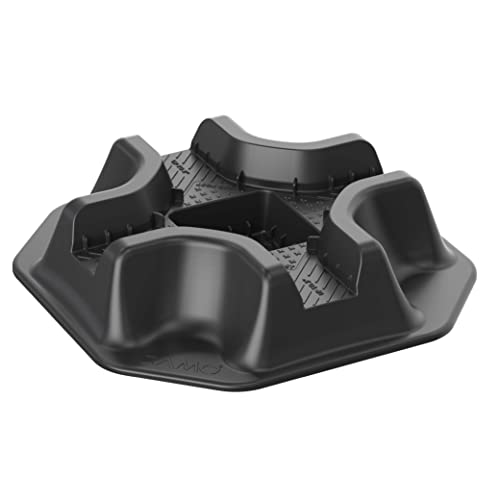
This eight-block kit emphasizes portability and efficiency, with blocks that are 18x lighter than traditional concrete blocks. It accepts 4×4 and 6×6 posts, a wide range of joists, and can be nested for compact transport. The pack is ideal for larger deck projects or multiple posts where reducing vehicle load and handling effort is important.
Best for: larger deck projects or jobs requiring multiple posts with easy transit. Why selected: superior transport convenience due to nesting design and minimal weight. Limitation: as with all lightweight bases, proper leveling and distribution are crucial to prevent rocking on soft soils.
50 Pack Deck Block Adjustable Pedestals

The 50-pack adjustable pedestals are designed for leveling elevated decks, sheds, and pathways. Height can be adjusted from 18 mm to 30 mm using a screw ring, enabling quick drainage and consistent beam alignment on uneven ground. These pedestals are UV-protected and made from durable polyolefin engineering plastic, making them a versatile choice for various outdoor projects beyond wood decks.
Best for: raised decks, pathways, and sheds where precise height adjustments are essential. Why selected: clear height range and vented design help prevent water buildup. Limitation: plastic pedestals may require a stable, compact subsoil to avoid sinking over time in soft soil.
Myard PNP153544 Deck Foundation Block

The Myard deck foundation block targets wood and composite floors with a 12″x12″ bearer pad and a four-way recess for standard 2″x4″ and 4″x4″ posts. It emphasizes easy shipping, stacking, and lightweight handling, with a per-block capacity of about 1700 lbs. The design includes optional holes for screws and ground anchors, offering added stability on inclined ground or windy sites.
Best for: projects using wood or composite joists that require a stable, stackable base. Why selected: robust capacity with simple installation and optional anchoring. Limitation: ensure top surface compatibility with the specific post sizes and screw holes for security on windy sites.
AXWHYS 4×4 Post Base 8 Pcs

AXWHYS offers a solid steel 4×4 post base kit with eight brackets, black powder-coated for rust resistance. These bases support various porch railings, pergolas, gazebos, fences, and deck brackets. A distinctive feature is the bottom partition designed to separate from the ground, reducing long-term wood rot risk. A central square helps stabilize the base on posts, making it a practical choice where long-term durability matters.
Best for: projects requiring durable metal post bases with added ground separation benefits. Why selected: robust steel construction combined with anti-rot ground separation design. Limitation: heavy metal components may require more effort during installation than plastic pedestal options.
U Shaped 4×4 Deck Post Concrete Anchor Spike (4 Pack)

The U-shaped deck post concrete anchor spikes provide a traditional method of anchoring 4×4 posts with zinc-plated steel components. This four-pack is designed for outdoor use, backing up wood posts with a corrosion-resistant coating to extend life in all weather conditions. It does not include fasteners, so compatibility with existing hardware should be confirmed before installation.
Best for: projects needing a concrete-like anchor with simple metal hardware. Why selected: a familiar, proven anchoring approach for exterior wood posts. Limitation: requires proper installation techniques and compatible fasteners to ensure performance in soft soils or high winds.
Buying Guide: Key Considerations For Deck Block Foundations
- Load capacity: Match block or pedestal capacity to the weight of the deck, live loads, and anticipated traffic. Always plan for a margin above expected loads.
- Soil and ground conditions: Uneven ground or soft soil benefits from adjustable pedestals or repositionable bases. In stable soil, simpler blocks can be sufficient.
- Post and joist compatibility: Ensure the product accepts your 4×4 posts and the specific joist sizes you plan to use. Some options support multiple post sizes or joist configurations.
- Drainage and water management: Pedestals and vented designs help prevent water accumulation and rot. Consider products with drainage-friendly profiles for longevity.
- Installation effort: Lightweight blocks and nestable designs reduce transport and setup time. Heavier metal bases offer durability but may require more labor.
- Maintenance and longevity: Materials like corrosion-resistant steel or UV-protected plastics extend deck life. Factor in weather exposure and regional climate.
- Reusability and relocation: If you expect future deck changes, choose bases that are repositionable or nestable for easier relocation.
Frequently Asked Questions
- What is a deck block used for? Deck blocks provide stable foundations for 4×4 posts, enabling floating or elevated decks without concrete.
- Are deck blocks suitable for uneven ground? Yes, adjustable pedestals and certain camo blocks are designed to compensate uneven surfaces.
- How much weight can deck blocks support? Most blocks listed are rated around 1700–1800 lbs per unit, depending on design and installation.
- Can I reuse deck blocks for future projects? Many lightweight bases are designed for relocation or stacking, but verify the manufacturer’s guidance for reuse.
- Do these blocks require fasteners? Some sets include holes for screws or anchors, while others rely on friction and gravity. Check each product’s details.
- Is it better to use concrete vs. blocks? Blocks offer faster installation and easier removal, but concrete provides long-term rigidity in some environments; choose based on project needs.