Deer netting is a practical, low-maintenance solution for gardeners seeking reliable protection for fruit trees, berries, vegetables, and ornamental plants. This guide highlights five top options that balance durability, ease of use, and safety for wildlife. It’s best for homeowners with small to mid-sized plots, allotments, and home gardens seeking reusable, weather-resistant barriers. A quick summary table of the featured products is provided below to help you compare at a glance.
| Product | Mesh Size | Typical Use | Best For |
|---|---|---|---|
| Feitore Deer Fence Netting | 3/4 inch | Deer, birds, small animals | General garden protection |
| FEED GARDEN Deer Fence Netting | 3/4 inch | Multi-pest protection | Larger plots needing sturdy kit |
| KLEWEE Bird Netting | 3/4 inch | Birds, small critters | Fruit trees and vegetables |
| ORIVOGAS Deer Fence Netting | 5/8 inch | Deer, birds, pets | Flexible outdoor uses |
| Mklsit Deer Netting Fence | 3/4 inch | Birds, deer, squirrels | Heightened protection |
Feitore Deer Fence Netting: Durable 7x100ft Garden Shield

The Feitore net offers a 7 ft by 100 ft coverage with a 3/4-inch square mesh. It is made from polypropylene, designed to be lightweight yet tough, and reusable for multiple seasons. The kit includes installation nails and zip ties for quick setup, making it suitable for gardeners who want a ready-to-assemble solution.
Best for: Home gardeners seeking a straightforward, reusable deer and bird barrier that installs quickly on varied terrain. It’s a solid choice for those who want a compact kit with simple accessories and predictable performance.
Caution: Since it relies on stakes and ties, uneven ground or strong winds may require additional securing measures.
FEED GARDEN Deer Fence Netting: Complete 7x100ft Protection Kit

This kit provides a full protection package: 7x100ft of 3/4-inch mesh plus 10 metal landscape staples and 50 zip ties. The material is UV-protected polyethylene designed for multi-season use, while maintaining good airflow and sunlight reach for plants.
Best for: Gardeners who want a complete setup with hardware included for quick installation and reliable barrier against deer, birds, rabbits, and squirrels.
Caution: Heavy-duty UV protection adds longevity but the kit’s full footprint may require more space for installation in compact gardens.
KLEWEE Bird Netting: 7.5×100 Ft Heavy Duty Net

The KLEWEE net measures 7.5×100 feet with a 3/4-inch mesh and includes installation accessories: 10 metal U-shaped staples and 50 zip ties. It emphasizes UV resistance and durability, designed to withstand weather and frequent use over seasons.
Best for: Gardeners protecting ripening fruit, strawberries, berries, and vegetables from birds and small animals while requiring strong, reusable netting with practical hardware.
Caution: Slightly larger roll may require more time to cut to size for irregular beds or curved trellises.
ORIVOGAS Deer Fence Netting: Reinforced 6.5x50ft Barrier

ORIVOGAS offers a 6.5x50ft net with reinforced 5/8-inch mesh and a 55 gsm HDPE weave for tear resistance and UV protection. It features upgraded edges with ropes for quick, tangle-free setup and versatile use as a temporary fence or plant protector beyond gardens.
Best for: Gardeners needing a flexible, heavier-duty barrier that can double as a temporary fence for pet safety or snow protection, while maintaining ease of installation.
Caution: Shorter length than some other options, so larger plots may require multiple runs or combined configurations.
Mklsit Deer Netting Fence: Taller 8x100ft Barrier
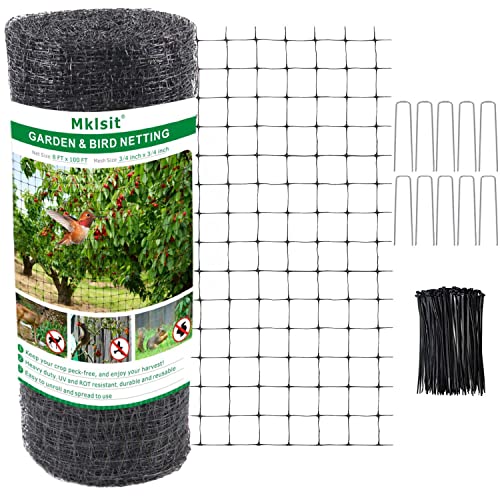
Mklsit raises height to 8 feet with a 100-foot length, using a 3/4-inch square mesh. This netting is designed to be tall and durable, minimizing crimping and tangling while keeping out birds, deer, rabbits, and squirrels. It’s UV-stabilized and lightweight for year-round use.
Best for: Larger or taller plantings where deer pressure is a concern and where a taller barrier reduces gaps that animals might exploit. Suitable for fruit trees, shrubs, and expansive beds.
Caution: Height adds weight and may require sturdy staking or posts in windy locations.
Buying Guide: Key Considerations For Choosing Deer Netting
- Mesh size: A 3/4-inch mesh is common and balances airflow with pest exclusion. Smaller mesh can deter smaller critters but may impede pollinators if used improperly.
- Height and length: Choose height based on deer pressure and plant height. Taller nets provide more protection for trees and tall shrubs.
- Material and durability: UV-stabilized polyethylene or polypropylene nets resist rot, rust, and weathering. Reusability reduces long-term costs and waste.
- Installation accessories: Kits with stakes, staples, and zip ties speed up setup. Verify compatibility with your garden layout (beds, rows, or fruit trees).
- Versatility: Some nets double as bird barriers, rabbit fences, or temporary yard enclosures, offering multi-season value.
- Care and placement: Ensure nets do not touch plant foliage tightly; allow airflow and light to reach the plants for healthy growth.
- Storage: When not in use, clean and dry nets before storing to maximize lifespan and reuse potential.
Frequently Asked Questions
- What mesh size is best to protect fruit trees without harming beneficial insects?
3/4-inch mesh is a common safe balance, allowing pollinators access while keeping out larger pests. - Should I buy a complete kit or individual components?
Complete kits ease setup with hardware; individual nets suit custom layouts or existing stakes. - Can deer nets affect plant growth or air circulation?
If installed correctly with space between canopy and net, airflow remains adequate and growth is not inhibited. - How long can a deer netting be used before replacement?
With UV protection and proper storage, most nets are designed for multiple seasons of use. - Is it necessary to layer nets for extra protection?
Layering is possible, but ensure adequate airflow and pollinator access; layering should be used strategically.