Drip emitters are a smart way to deliver water precisely where your potted plants need it most. This guide highlights five reliable options suitable for small containers, balcony planters, and garden pots, helping you choose the right flow and design for each plant type. The top picks are best for water-conscious growers, busy households, and DIY irrigation setups. Read on to find emitters that fit 1/4″ tubing, offer adjustable flow, and minimize clogging for consistent results.
| Product | Best For |
|---|---|
| Bonviee 20-Pack Drip Emitters | Thirsty plants and larger pots; wide coverage, adjustable 0–4 GPH |
| Spalolen 30PCS Drip Emitters | Quick install, 0–10 ft spray reach, leak-free connections |
| NRWRTY 50 PCS Drip Emitters | Small potted plants needing gentle, steady 0.5 GPH flow |
| Hakioi 50 PCS Drip Emitters | 8-hole, 360° spray for precise bedside or shelf planting |
| Rain Bird MBF4PKS Drip Micro-Bubblers | Exact spot watering in mixed plant beds with stake-style bubblers |
Bonviee 20-Pack Drip Emitters

Best for: Water-wisdom-focused gardeners with larger potted setups. The Bonviee emitters use a high-flow vortex design that distributes water evenly across wider areas, making them suitable for thirsty plants and bigger planter arrangements. The adjustable flow (0–4 GPH) lets you tailor output to plant type, from herbs to fruiting shrubs. Quick, tool-free installation suits busy gardeners who want a reliable plug-and-play solution. Note: performance depends on consistent tubing connections to avoid leaks.
Spalolen 30PCS Push-to-Fit Emitters

Best for: Quick installs and adjustable coverage on mixed plantings. Spalolen emitters feature a push-to-fit connection that snaps onto 1/4″ tubing in seconds, with adjustable spray up to 10 feet. The design emphasizes leak-free performance and broad reach for lawn edges, flower beds, or larger container clusters. Choose this if you prioritize rapid setup and broad spray control; caution: ensure tubing is clean to prevent clogs.
NRWRTY 50 PCS Drip Emitters
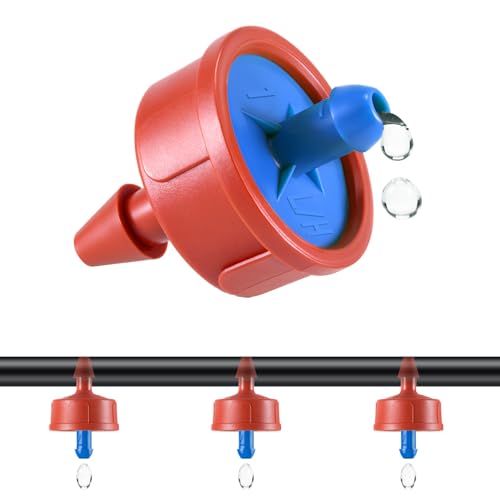
Best for: Small potted plants needing gentle, consistent watering. NRWRTY’s 0.5 GPH flow is designed for daily hydration without overwatering, using a self-contained (anti-clog) design to keep water moving smoothly. The pressure-compensating feature helps maintain steady output across varying system pressures. A limitation: it is best used with clean water sources and appropriate filtration to minimize blockages.
Hakioi 25/50 pcs Adjustable Emitters

Best for: Plants that benefit from adjustable 360° spray and easy cleaning. Hakioi emitters offer an adjustable flow and a cap that can be opened for cleaning, with a locking design that reduces leaks. These are suitable for herb gardens, compact flowering plants, or balcony setups where precise water control matters. Limitation: tubing is not included, so you’ll need compatible 1/4″ tubing to complete the system.
Rain Bird MBF4PKS Drip Micro-Bubbler on Stake

Best for: Potting setups that require precise, circular watering around each plant stem. The micro-bubbler on a stake delivers eight spray streams, distributing water evenly around the base. Spray distance is adjustable from 0 to 3 feet, making it suitable for a range of potted configurations—from small succulents to mid-sized decorative plants. Consider multiple stakes for larger clusters to avoid dry spots.
Hakioi 50 Pcs Adjustable Drip Emitters

Best for: Versatile use across various small pots and herb gardens. This Hakioi set features eight-hole spray options and 360° coverage with a self-flushing design to maintain reliability. The weathering note is that the cap is removable for cleaning; ensure routine maintenance to prevent clogs in outdoor environments where debris can accumulate.
Buying Guide: Key Considerations For Choosing Drip Emitters
- Flow rate alignment: Match emitter flow (GPH) to plant size, soil type, and pot volume. Higher flows suit larger pots or fast-drying media, while lower flows fit succulents and herbs.
- Coverage pattern: Decide between spot watering, 360° spray, or vortex patterns. Wider patterns reduce manual adjustments but can water non-target areas if misaligned.
- Connection compatibility: Confirm tubing size (1/4″) and barbed connections. Push-to-fit and locking designs help prevent leaks but require clean tubing ends.
- Clog resistance: Look for anti-clog or self-cleaning features, especially in outdoor setups with mineral-rich water or debris.
- Maintenance needs: Consider ease of cleaning, caps that open for inspection, and whether emitters are removable for clearing clogs.
- Durability and materials: Durable plastics withstand sun exposure; note whether units require replacements or accessories for extended seasons.
- System scale: For multiple pots or small gardens, plan how many emitters you’ll need and whether to group by plant type or water needs.
Frequently Asked Questions
- What flow rate is best for potted herbs? Answer: A lower to moderate flow (around 0.5–1.5 GPH per plant) helps prevent overwatering while delivering adequate moisture over time.
- How do I prevent leaks at the connection point? Answer: Use properly sized tubing, ensure barbs are clean, and press fittings firmly; consider locking or push-to-fit designs for a secure seal.
- Are adjustable emitters better for mixed plantings? Answer: Yes, adjustable emitters allow tailoring output to diverse plant needs in one container or bed.
- Can these emitters be used indoors? Answer: Yes, many emitters work with indoor pot setups; ensure adequate lighting and a stable water source to avoid spills.
- Do I need filtration with these emitters? Answer: A basic filter or regularly cleaned water helps prevent clogs, especially with hard minerals or debris in the water.
- How many emitters should I install per pot? Answer: Start with one emitter per large plant or cluster; add more if soil dries quickly or if plant size increases.