Direct answer: For lime applications, choose a drop spreader with a sturdy hopper, wide yet precise spread control, and good traction. The top picks below are best for mid to large lawns and ease of use, with options suited for homeowners and commercial users. This guide highlights five drop spreaders ideal for lime, explaining who they’re best for, why they were selected, and any limitations to consider.
| Product | Capacity | Spread Width | Best For | Notes |
|---|---|---|---|---|
| VEVOR Broadcast Spreader | 50 lb | 18 in | Medium lawns, DIY gardeners | Lightweight, easy assembly |
| Yard Commander 60 lb | 60 lb | 22 in | Smaller-to-medium lawns | Compact, precise drop rate |
| Agri-Fab 175 lb | 175 lb | 42 in | Large properties | Wide coverage, fewer refills |
| EarthWay 75 lb | 75 lb | 22 in | Residential to small commercial | Adjustable flow for lime blends |
| Spyker P70-12010 | 120 lb | Not specified | Heavy-duty applications | Solid steel frame |
VEVOR Broadcast Spreader, 50LBS

The VEVOR spreader offers a 50-pound hopper with an 18-inch spread width and 30 adjustable settings. It enables precise seeding and fertilizer distribution, which is useful when lime needs to be applied evenly across a lawn or turf area. The powder-coated steel frame and UV-resistant wheels enhance durability on varied terrains, including grass and gravel. A key advantage is its simple assembly, making it accessible for users who prefer quick setup. Best for small to medium lawns or garden beds where accurate lime coverage matters. A limitation is the 50-pound hopper, which may require more refills for large properties.
- Best for: small to medium lawns that require precise lime distribution.
- Why selected: reliable construction, adjustable settings for even coverage.
- Caution: may require frequent refills on larger properties.
Yard Commander 60 LB Walk-Behind

The Yard Commander spreader holds up to 60 pounds and can cover up to 15,000 square feet with a 22-inch spread pattern. It offers a durable composite hopper that resists corrosion and is designed for even coverage, reducing the risk of over- or under-application. This makes it well-suited for lime applications over medium to large lawns where consistent product distribution is essential. Best for: homeowners with sizable lawns who want a balance of capacity and maneuverability. Caution: actual capacity depends on material type, so plan refills accordingly.
- Best for: medium to large lawns needing steady lime distribution.
- Why selected: wide coverage with a precise spread pattern.
- Caution: material type affects usable capacity.
Agri-Fab Tow Behind Lawn Spreader
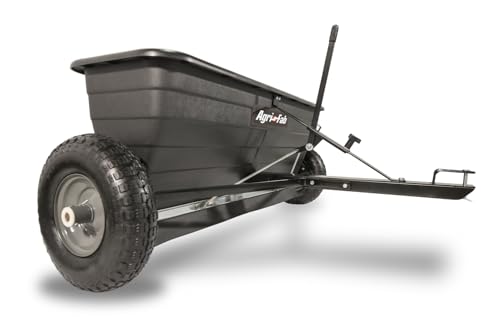
Agri-Fab offers a 175-pound hopper with a 42-inch spread width, designed for larger lawns and properties. The wide area coverage helps minimize refilling, making it suitable for lime applications on bigger parcels. This model is best for users who need quick, uniform coverage across substantial spaces. Choose this if you manage expansive lawns or grounds. Limitation: heavy to tow and may require a compatible vehicle or ATV for use.
- Best for: large properties requiring extensive lime coverage.
- Why selected: highest capacity among listed options, wide spread.
- Caution: heavier to tow and store.
EarthWay 7312 Red 75LB Drop Spreader
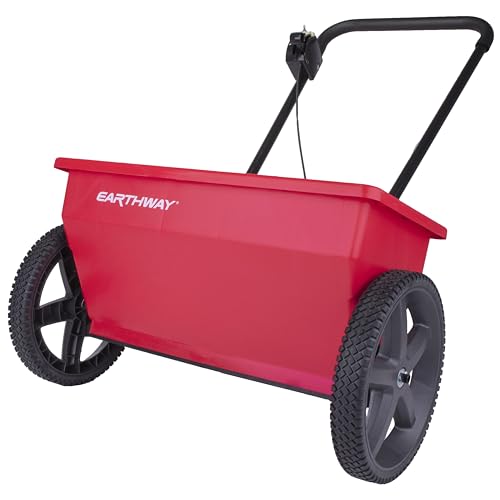
The EarthWay 75-pound hopper spreader provides a 22-inch coverage width with adjustable flow. This makes it a versatile choice for lime distribution on home lawns and small commercial properties. Its durable construction supports repeated seasonal use. Best for: residential users who want reliable, adjustable lime application. Caution: ensure the flow rate is calibrated for lime blends, as some products may require different granular sizes.
- Best for: precise lime spreading on smaller properties.
- Why selected: adjustable flow for targeted application.
- Caution: calibrate for lime blends to avoid over-application.
Spyker P70-12010 Commercial Drop Spreader

The Spyker P70-12010 is a heavy-duty option with a 120-pound hopper and a powder-coated steel frame. It’s designed for commercial-grade lime and fertilizer applications, offering robust performance for extensive properties. Best for: professionals or larger lawn services needing high-capacity, durable equipment. Limitation: heavier and potentially less maneuverable on small yards.
- Best for: professional use or very large properties.
- Why selected: high capacity and rugged build.
- Caution: heavier and harder to maneuver in tight spaces.
Buying Guide: Key Lime Spreading Considerations
- Property size and spread width: larger properties benefit from wider spread widths to reduce refills.
- Hopper capacity vs. refill frequency: balance between effort and downtime for lime applications.
- Material compatibility: lime granules vary in size; ensure the spreader’s flow rate accommodates your blend.
- Portability vs. tow capability: hand-push vs. tow-behind models suit different lawn layouts and vehicle access.
- Durability and terrain: select models with sturdy frames and tire types suitable for your lawn surface.
- Calibration and controls: precise flow adjustments help avoid over-application of lime.
Frequently Asked Questions
- What size spread width is best for lime on most lawns? – A spread width around 18–42 inches is common; wider means fewer passes on large areas, but you’ll need a model with adequate flow control to maintain even coverage.
- Do I need a dedicated lime spreader? – Not necessarily; many spreaders handle multiple products, but lime’s particle size and buffering may require careful calibration.
- How often should I refill the hopper during lime spreading? – It depends on hopper capacity and lawn size; larger properties may require more frequent refills.
- Is a tow-behind spreader better for big properties? – Yes, for very large areas a Tow Behind model can cover more ground quickly with fewer trips.
- How can I avoid lime over-application? – Calibrate the flow rate to match lime particle size and use slow, steady walking speed during spreading.
- What maintenance is needed after lime spreading? – Clean the hopper and nozzle, inspect for corrosion, and coat metal parts to resist moisture damage.