Direct answer: for pond lovers seeking reliable, predator-aware duck houses, this guide highlights five practical options that balance safety, weather tolerance, and easy access for ducklings. Each choice targets different buyers—from casual pond hobbyists to wildlife enthusiasts managing larger wetlands. The following table summarizes the standout picks, with quick notes on who they’re best for and why.
| Product | Best For | Why It Stands Out |
|---|---|---|
| Amcortn Duck House | Casual backyard duck owners | Classic 17x10x10 design with drainage, duckling ladder, durable wood |
| Amcortn Mallard Nesting Box | Mallard-focused nests | Dual entrances, predator guards, robust wood construction |
| Amcortn 2 Pack Duck House | Dual pond setups or multiple species | Two identical boxes, same strong features, great value |
| Vercraft Wood Duck Nesting Box | Wetland habitats with larger ducks | Spacious interior, easy setup, durable pine |
| Nalwort Duck House | Versatile hanging or mounting near water | Dual mounting options, natural wood, ready for immediate use |
Amcortn Duck House

Best for tree-nesting ducks in compact spaces. This 17x10x10 inch wood duck house features drainage holes to keep interiors dry and hygienic. The entrance opening is 3×4 inches, designed to attract North American ducks while limiting larger predators. It is built from high-quality wood, weather-resistant, and free of chemicals. The design includes duckling-friendly grooves under the entrance, acting as a ladder for ducklings to climb out when ready. Choose this if you want a sturdy, straightforward nesting box that fits traditional pond edges and small wetlands.
Who it’s best for: backyard pond owners with limited space who want a reliable, predator-conscious nesting option for wood ducks and hooded mergansers. Why selected: classic dimensions, practical drainage, and a duckling-friendly exit. Caution: avoid placing in direct line of heavy wind corridors where the entrance could face constant drafts; ensure mounting is secure to reduce wobble in high winds.
Amcortn Mallard Nesting Box

Best for mallard-focused nesting in ponds or wetlands. This hexagonal, large duck house features dual 4-inch entry holes that enhance airflow, safety, and escape routes for nesting mothers. It uses professional-grade wood designed to withstand harsh weather and prevent chemical exposure. Its enclosed angles and elevated entry points act as a predator guard, protecting eggs and hatchlings from snakes and small mammals. Choose this if you need a robust predator-resistant option with multiple entry points for better nest dynamics. Caution: the design emphasizes predator safety; ensure it suits your local predator profile and avoid settings with excessive debris that could clog the holes.
Amcortn 2 Pack Duck House

Best value option for multiple pond zones or diverse species. This pack includes two identical wooden duck houses with the same nesting-friendly features as the single-unit model: 17x10x10 dimensions, drainage, secure wood construction, and a duckling-friendly ladder under the entrance. It’s ideal for expanding habitat coverage without sacrificing design quality. Recommend this if you manage more than one nesting site or want redundancy for seasonal use. Caution: check whether two boxes are feasible in your space and ensure they are placed with adequate distance to avoid competition between nesting ducks.
Vercraft Wood Duck Nesting Box

Best for larger duck species and longer-term wetlands. This 11x12x24 inch box provides a spacious interior suitable for multiple ducks, making it a good fit for wood ducks, pond ducks, and other wetland species. The box ships ready to place with no assembly required, simplifying setup after purchase. Durable wooden construction is designed to withstand weather with a straightforward layout that favors easy cleaning. Choose this if you need a larger interior and quick deployment, but be aware that its bigger size requires more pond space and appropriate predator considerations.
Nalwort Duck House
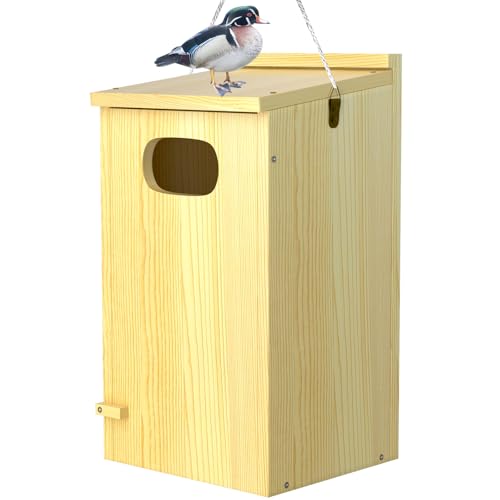
Best for flexible mounting near ponds or wetlands. This solid wood duck house supports hanging or tree-mounting with a included rope and pre-drilled screw holes. The interior is roomy for nesting wood ducks and other tree-nesting species, and nesting pads are not included (allowing users to customize). The natural solid wood construction resists outdoor wear. Choose this if you want mounting versatility—hang it above water or mount to a tree trunk. Limitation: the absence of nesting pads means you’ll need to add your own for best results.
Buying Guide: Duck Box Choices For Ponds And Wetlands
What size and shape work best?
Size should balance duck comfort with predator protection. Smaller boxes (around 17x10x10 inches) suit tree-nesting ducks and regions with limited space. Larger boxes (like 11x12x24 inches) support multiple birds and bigger species but require more room and stronger predator defenses. Consider hexagonal or traditional rectangular shapes to influence entry behavior and airflow.
What features improve safety and nest health?
Important features include predator guards, elevated entries, drainage holes, venting, and ladder-like interior grooves for ducklings. Dual entrances can ease mother duck movement and reduce stress. Avoid boxes with rough finishes or toxic treatments—look for untreated wood or certified safe coatings.
How should you position duck boxes?
Place boxes near water with a clear flight path but shielded from direct wind. Mount height should reduce access by ground predators while still allowing ducklings to exit. Peg in place or use a robust hanging rope to minimize movement in wind. Ensure enough distance between boxes to avoid competition during nesting.
What maintenance is needed?
Look for easy-clean designs with accessible clean-out panels or doors. Seasonal cleaning improves hatch success and reduces parasite risks. If nesting pads are not included, plan to add appropriate bedding or pads to support comfortable nesting.
Which option fits your budget and habitat?
Single boxes offer focused features and predictable performance. A two-pack provides value and flexibility for larger properties or multiple zones. For dense wetlands or larger species, a larger box with predator guards and ample ventilation is preferable. Consider local predator pressure, climate, and pond layout when choosing.
Quick FAQ
- What is the best box for small ponds?
- Do duck houses require nesting pads?
Is predator protection essential in all areas?
How often should I clean the nest boxes?
Can I hang a duck box from a tree or must it be mounted?
FAQ answers: The best box for small ponds is typically a compact model with good drainage and a secure entrance. Nesting pads are helpful but not always included; add them if needed for comfort. Predator protection is important in many regions, especially where snakes or mammals are common. Cleaning frequency depends on use, typically seasonal; check and wipe out debris after breeding seasons. Both hanging and mounting options work, but ensure stability against wind and predators.