Fabric grow bags offer better airflow, faster drainage, and healthier root systems for vegetables, herbs, and ornamental plants. This guide highlights five top choices that balance durability, ease of use, and value. Ideal buyers include urban gardeners with limited space, container gardeners seeking easier root pruning, and anyone looking for reusable, washable options. The table below summarizes the five picks to help you compare at a glance.
| Product | Size / Pack | Best For | Notes |
|---|---|---|---|
| Jorvila 5 Pack 5 Gallon | 5 gal × 5 | Tomatoes, potatoes, vegetables; frequent movers | 300G fabric; emphasizes air pruning |
| Gardzen 10-Pack 5 Gallon | 5 gal × 10 | Moderate-size space gardens; bulk buyers | 300G fabric; reinforced handles |
| Land Guard 4-Pack 10 Gallon | 10 gal × 4 | Greater soil capacity; heavier plants | High-strength weave; easy to move |
| Gardzen 10-Pack 10 Gallon | 10 gal × 10 | Balcony or patio setups | 300G fabric; strong handles |
| Songrey 10-Pack 10 Gallon | 10 gal × 10 | Vegetables, flowers, herbs with extra space | BPA-free; air pruning |
Jorvila 5 Pack 5 Gallon Grow Bags

Best for compact setups and frequent replanting. The Jorvila bags use 300G thickened nonwoven fabric to resist wear and enable easy cleaning after harvest. Self Air Pruning encourages healthy root structure by preventing tangling, which can improve overall plant vigor. The breathable material supports better drainage, helping prevent overwatering. Choose this if you need compact, washable bags that travel well between balcony and garden plots. Caution: folding and storage are easiest when completely dry to prevent mold growth.
Gardzen 10-Pack 5 Gallon Grow Bags

Best for bulk projects and larger container layouts. The 300G thickened nonwoven fabric provides moderate permeability for root respiration and BPA-free material supports safe organic gardening. Superior drainage and airflow support air pruning to prevent root circling, encouraging stronger root systems. Reinforced X-shaped stitching on handles offers durability when transporting loaded bags. Choose this if you need multiple bags for a larger garden or community plot. Limitation: the bulkier 10-gallon size may be less practical on very small balconies.
Land Guard 4-Pack Fabric Grow Bags 10 Gallon
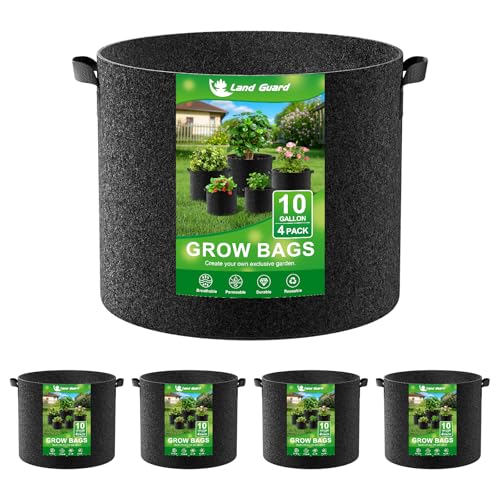
Best for larger plants and heavier soil loads. Land Guard emphasizes sturdy nonwoven fabric and high-strength weaving to maintain lightness while bearing weight. Excellent drainage reduces over-watering and promotes vigorous growth. Heavy-duty handles and rugged material allow easy relocation of full bags. Choose this if you need substantial capacity in a manageable kit. Caution: heavier bags may require careful handling to avoid tearing during movement.
Gardzen 10-Pack 10 Gallon Grow Bags

Best for balconies with ample space or ground-level patios. The 10-gallon bags from Gardzen offer similar 300G fabric with breathable design to support air pruning and prevent root circling. Strong handles and reinforced stitching provide durability when moving full bags. Choose this if you want large containers for tomatoes, peppers, or sprawling vegetables. Limitation: larger volume bags can be heavier to transport when fully loaded.
Songrey 10-Pack 10 Gallon Grow Bags

Best for multipurpose plantings and larger garden beds. Songrey uses BPA-free, tear-resistant nonwoven fabric with fast drainage and efficient air pruning. The reinforced, tightly stitched handles support lifting and moving even when the bags are full of soil. Choose this if you want a durable, eco-friendly option with strong ventilation to prevent root issues. Caution: ensure adequate setup space to accommodate multiple 10-gallon bags.
Buying Guide: Fabric Grow Bags For Plants
- Material and thickness: Look for 300G thickened nonwoven fabric for durability and good root ventilation. Thicker fabrics resist tearing but may be heavier to move.
- Drainage and aeration: Breathable fabric and proper drainage prevent overwatering and root rot. Air pruning helps create a robust root system.
- Handles and construction: Reinforced stitching and sturdy handles matter for moving full bags. Cross-stitched or serged handles offer extra durability.
- Size and capacity: Match bag size to plant type and space. Ten-gallon bags suit larger vegetables; five-gallon bags fit compact herbs or tomatoes.
- Reuse and care: Washable bags extend life. Dry completely before storage to avoid mold.
- Safety and materials: BPA-free fabric is preferable for organic gardening and edibles.
- Space and layout: Consider balcony, patio, or raised-bed configurations to choose the right quantity and arrangement.
Frequently Asked Questions
- Are fabric grow bags better than plastic pots? Fabric grow bags provide superior drainage and air pruning, which can promote healthier roots and reduce circling compared to traditional plastic pots.
- How many bags do I need? It depends on plant type and space. For tomatoes and peppers, 4–6 bags in a medium-sized garden is common; for balconies, 3–5 bags may suffice.
- Can I reuse fabric grow bags for multiple seasons? Yes. Rinse, dry, and store in a dry place to extend life. Fabric robustness and stitch integrity are key to longevity.
- Do grow bags require special soil? Use well-draining potting mix suitable for containers. Avoid heavy garden soil that can retain too much moisture.
- What plants are ideal for 5-gallon bags? Bush beans, determinate tomatoes, basil, peppers, and small root crops like potatoes can perform well in 5-gallon bags.
- How do I prevent root circling? Choose fabric bags with air pruning features and avoid planting in soil that remains overly saturated.