Answering your search for reliable pool equipment fencing, these options prioritize privacy, wind resistance, and easy installation. Best for homeowners needing quick concealment of pool gear, trash cans, or A/C units around outdoor spaces. The top picks below are selected for durability, ease of setup, and compatibility with various surfaces—from soft ground to hard patios.
| Product | Best For | Why It Stands Out |
|---|---|---|
| VEVOR Outdoor Privacy Screen | Medium yards, flexible layouts | Three-panel vinyl design with ground stakes; 90° or 180° configurations + expandability. |
| Kozyard 50″ W x 48″ H Aluminum Post Panels | Solid yard enclosures | Wood-like polyethylene, configurable with multiple layouts; high privacy and easy assembly. |
| Kozyard 50″ W x 48″ H For Hard Surfaces | Patios and concrete areas | No-dig install, aluminum posts, adaptable to straight or Z/T/L shapes. |
| Enclo Privacy Screens 42in H x 38in W | Compact spaces, no-dig setups | No-dig required; wood aesthetic for natural look. |
| CLEASO 2 Panels No-Dig Metal Privacy Fence | Rustproof, quick install | Thick steel with rustproof coating; no-dig system; hides clutter while ventilating. |
VEVOR Outdoor Privacy Screen, 50in H x 50in W

Best for flexible layouts and medium-yard use, this 3-panel vinyl fence conceals pool equipment, trash bins, or A/C units while maintaining a neat look. The 50 x 50 inch panels form a low-profile barrier that blends with most backyards. Best for buyers who want a ready-made, wind-stable enclosure with easy snap-in assembly. A potential limitation is that vinyl can warp in extreme heat if not properly installed.
Who this is best for: homeowners seeking a simple, expandable enclosure around pool equipment with straightforward installation and HOA-friendly dimensions. Why selected: it offers a balanced combination of coverage, wind resistance via ground stakes, and configurability for L-shape or straight layouts.
Key details:
– Panels: 50 x 50 inches; 3 panels
– Ground stakes: 27.56 inches (70 cm) for stability
– Installation: Slide-in grooved design; screws secure panels
– Configurability: 90° L-shape or 180° straight; add more panels to expand
Caution: ensure adequate soil depth (into ground) for wind and rain resistance; install at least 20 inches into the ground for best performance.
Kozyard 50″ W x 48″ H Aluminum Post Panels
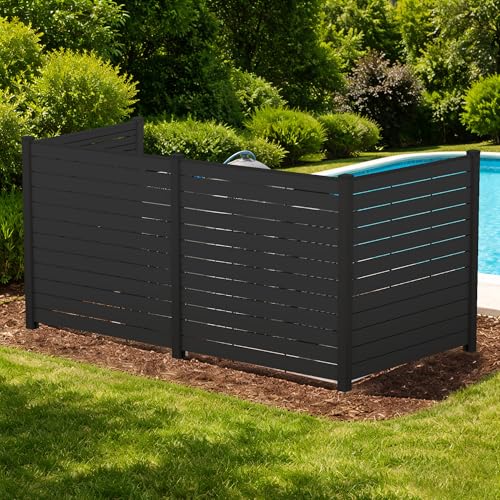
Better for wide visibility and strong privacy, these panels use a wood-like polyethylene finish with 3/16-inch gaps for ventilation. The aluminum post system supports multiple configurations, including straight, Z, and L shapes. Best for larger yards or patios around pool equipment where a natural, wood-like look is preferred while resisting water and corrosion. Limitation: the wood-like finish is synthetic; some buyers prefer real wood aesthetics.
Who this is best for: homeowners wanting a robust, adaptable privacy screen that stays visually attractive and integrates with various outdoor themes. Why selected: long-term moisture resistance and multiple installation methods increase versatility for pool equipment enclosures.
Key details:
– Material: Medium-Density Polyethylene (wood-like)
– Height/Width: 50″ x 48″
– Configurations: Straight, Z, L, T, and U shapes
– Privacy: Visible without sacrificing ventilation
– Assembly: Includes hardware for easy setup
Caution: the non-wood finish may require periodic cleaning to maintain the wood-like appearance; confirm hardware compatibility for your space.
Kozyard 50″ W x 48″ H For Hard Surfaces

Best for patios and concrete areas where digging is not possible, this panel set includes a hard surface installation kit and flexible layout options. The system is designed to install without digging, using stake-based support. Choose this if you need a dependable enclosure around pool equipment on a solid base. Limitation: not ideal for very uneven ground without pre-hole adjustments.
Who this is best for: homeowners with hard surfaces or concrete patios seeking a no-dig solution that still delivers strong privacy. Why selected: no-dig design reduces ground disruption and installation time while providing stable support for pool equipment enclosures.
Key details:
– Surface type: Hard surfaces (patios, concrete)
– Installation: No digging required
– Configurations: Straight-Line, plus Z, T, L shapes
– Material: Aluminum posts with privacy panels
– Coverage: 50″ W x 48″ H panels
Enclo Privacy Screens 42in H x 38in W

Best for compact spaces where a natural wood look is desired, this no-dig enclosure provides a stylish privacy solution for pool equipment or trash can screens. Wood appearance adds a warm aesthetic, and installation is straightforward. Limitation: smaller panels may require more pieces to cover larger equipment units.
Who this is best for: buyers prioritizing natural wood aesthetics and a simple, no-dig install for small to medium pool equipment areas. Why selected: combines easy setup with a classic wooden feel that blends with garden and deck spaces.
Key details:
– Height/Width: 42″ x 38″
– Material: Wood (FSC-certified)
– No-dig design: Ground stakes included
– Installation: About 45 minutes
– Aesthetic: Natural wood grain
CLEASO 2 Panels No-Dig Metal Privacy Fence

Best for rustproof, heavy-duty needs, this metal privacy fence uses thick steel with a premium powder coating. The no-dig installation is quick, and the slatted design provides ventilation for pool equipment while concealing clutter. Limitation: steel can be heavier to handle during installation than some vinyl options.
Who this is best for: buyers wanting high durability with low maintenance and quick no-dig setup around pool equipment or trash bins. Why selected: the rustproof steel construction ensures longevity in outdoor conditions.
Buying Guide: Key Considerations For Pool Equipment Enclosures
What should I consider when choosing pool equipment fencing?
- Material durability: For outdoor pool areas, weather resistance (rain, sun, wind) matters. Vinyl and powder-coated metals resist moisture; wood provides a natural look but may need more upkeep.
- No-dig vs. dig installations: No-dig systems are quicker and less disruptive but may have limitations on soil type or stability. Dig installations can be more permanent but require soil work.
- Ventilation vs. privacy: Pools need air circulation to prevent moisture buildup. Slatted designs offer ventilation while concealing equipment; solid panels maximize privacy.
- Surface compatibility: Hard surfaces like concrete support easy no-dig or screw-in methods; soft soils may benefit from deeper ground stakes.
- Configuration flexibility: Look for options that allow straight or curved layouts and expandable panels to fit irregularly shaped spaces near pool equipment.
- Maintenance needs: Wood and vinyl vary in cleaning needs; metal panels may require periodic rust protection depending on coating.
How to Choose The Right Enclosure For Your Space
- Assess the area around your pool equipment: measure width, height, and any obstacles to determine panel count and layout.
- Decide on installation type: prefer no-dig for quick setup on patios or grass, or dig-based for maximum stability on uneven ground.
- Consider aesthetics: match with deck or backyard style—wood-like panels for natural looks or metal/vinyl for a modern appearance.
- Check ventilation needs: ensure panels provide airflow to avoid overheating pool components.
- Plan for expansion: if you expect growth or space changes, choose systems that allow adding more panels later.
FAQ
- Q: Are these enclosures safe for pool equipment? A: Yes, they conceal equipment while allowing ventilation and access for maintenance.
- Q: Do installation methods require expertise? A: Most options are designed for DIY with provided hardware and instructions.
- Q: Can panels be used on hard surfaces? A: Several models include no-dig or easy-screw methods suitable for patios or concrete.
- Q: Will these enclosures withstand wind? A: Ground stakes and sturdy frames help resist wind; always follow depth guidelines for stability.
- Q: Do the fences affect HOA rules? A: Many options are designed to be HOA-friendly; verify height and material requirements with your HOA.