Answering the question for azalea owners: choose a fertilizer formulated for acid-loving plants to boost blooms, foliage, and overall health. This guide compares five reliable options, highlighting who each product is best for and why it stands out. Whether you prefer water-soluble feeds for rapid uptake or slow-release formulations for steady nourishment, there is a suitable choice for both indoors and outdoor azalea care.
Summary table of selected products:
| Product | Best For | Form | Notes |
|---|---|---|---|
| Miracle-Gro Water Soluble Azalea Food | Busy households with quick nourishment | Water-soluble | Instant feeding for acid-loving plants |
| GARDENWISE 8-4-8 | Soil acidification and robust growth | Granular | Iron-rich; eco-friendly bio-solid |
| Schultz ACR 14-7-7 | Slow-release, low-effort feeding | Slow-release granules | Simple, no mixing |
| Espoma Azalea-Tone 4-3-4 | Organic options for eco-conscious gardeners | Organic fertilizer | Ready-to-use; spring & fall feeding |
| Jobe’s Garden Fertilizer Spikes | Low-maintenance spiking for acid-loving plants | Spikes | Low runoff; easy application |
Miracle-Gro Water Soluble Azalea, Camellia, Rhododendron Plant Food

Best for rapid uptake and indoor-to-outdoor versatility. Miracle-Gro’s water-soluble azalea food feeds acid-loving plants immediately, making it ideal for azaleas, camellias, rhododendrons, gardenias, and other acid-loving species. Use this when you want quick improvements in color and growth for container or garden plantings.
- Best for: gardeners who want fast results and easy mixing for outdoor or indoor plants.
- Why chosen: Instant availability of nutrients helps plants recover and bloom quickly after transplanting or dry spells.
- Limitation: Requires regular reapplication based on label instructions; not a long-term slow-release option.
GARDENWISE 8-4-8 Acidic Fertilizer

Best for soil acidification and comprehensive nutrient support. GARDENWISE 8-4-8 not only feeds azaleas and other acid-loving plants but also helps prevent chlorosis with magnesium, iron, and manganese. It’s a strong choice for improving soil pH influence and promoting vibrant blooms.
- Best for: gardeners needing robust iron supplementation and soil acidification.
- Why chosen: Iron-rich formula targets chlorosis-prone plants in neutral to alkaline soils.
- Limitation: Uses a bio-solid technology; some gardeners may prefer simpler granules.
Schultz Azalea, Camellia, Rhododendron ACR 14-7-7
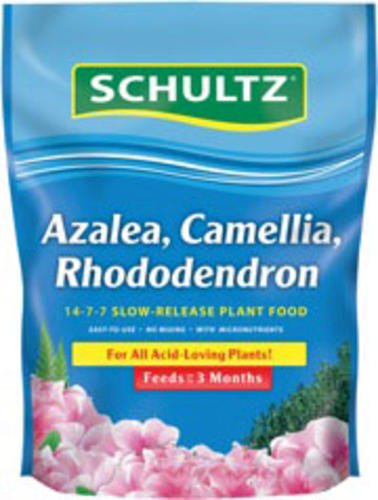
Best for steady, low-effort feeding. Schultz ACR 14-7-7 is a slow-release option that provides a balanced nutrient profile over time, reducing the need for frequent applications. It’s suitable for established azaleas and other acid-loving shrubs.
- Best for: gardeners who prefer a simple, less frequent feeding schedule.
- Why chosen: Slow-release formula minimizes fertilizer burn risk and maintenance.
- Limitation: Not ideal for rapid greening; results are spread over weeks to months.
Espoma Azalea-Tone 4-3-4 Organic Fertilizer

Best for eco-conscious growers seeking organic options. Azalea-Tone combines natural ingredients with Bio-tone beneficial microbes for soil health. It’s ready to use and requires no mixing, making it convenient for spring and fall feeding of azaleas, rhododendrons, camellias, and gardenias.
- Best for: organic gardeners and those avoiding synthetic inputs.
- Why chosen: Environmentally safe with no sludges or toxic ingredients; promotes soil biology.
- Limitation: Organic products often release nutrients more slowly; expect gradual improvements.
SouthernGRO Azaleas, Camellia, Gardenia Fertilizer 04-08-08

Best for a balanced NPK blend tailored to acid-loving shrubs. SouthernGRO’s 04-08-08 formula emphasizes phosphorus and potash to support flowering and deep roots. It’s suitable for azaleas, camellias, and gardenias in lawns, beds, or containers.
- Best for: gardeners wanting a generalized formula tuned for acid-loving shrubs.
- Why chosen: Balanced nutrients aid bloom maintenance and foliage vigor.
- Limitation: Not specialized for iron or chlorosis prevention; consider a separate iron supplement if needed.
HiThrive Azalea Fertilizer – Liquid 16 oz

Best for high-value liquid nutrition with a long shelf life. HiThrive’s azalea fertilizer is designed to boost blooms and leaf color through a balanced mix of macronutrients and micronutrients, including calcium and zinc. It’s ideal for frequent feedings or when rapid response is needed.
- Best for: gardeners who prefer liquid formulas and can apply on a schedule.
- Why chosen: Liquid format allows quick nutrient uptake and flexible dosing.
- Limitation: Requires more frequent feeding to maintain soil nutrition, compared to slow-release options.
Jobe’s Garden Fertilizer Spikes for Azaleas

Best for hands-off feeding with minimal runoff. Jobe’s spikes are formulated with a 9-8-7 NPK ratio tailored for acid-loving plants. They’re easy to use every 4-6 weeks during the growing season and reduce mess compared to granular blends.
- Best for: gardeners who want a simple, seasonal feeding method with limited maintenance.
- Why chosen: Spikes deliver consistent nutrients directly to the root zone.
- Limitation: Spikes may not provide the rapid nutrient surge some plants need after transplanting or drought stress.
Buying Guide: Key Considerations For Azalea Fertilizers
- Form vs. schedule: Do you want quick uptake (water-soluble or liquid) or long-lasting feed (slow-release or spikes)?
- Soil pH and iron needs: Acid-loving plants often struggle with chlorosis in neutral soils; choose formulas with iron or soil acidifiers if needed.
- Organic vs. synthetic: Organic options support soil biology but may release nutrients more slowly; synthetics provide quicker bloom responses.
- Plant age and size: Young plants may benefit from lighter feeds, while established shrubs may tolerate stronger formulas.
- Application site: Container azaleas can require different nutrient strategies than garden beds; consider formulary fit.
- Maintenance: Some formulas require seasonal spring/fall feeding; others are continuous or spike-based for convenience.
Frequently Asked Questions
- What is the best fertilizer for azaleas in alkaline soil? Look for products labeled as soil acidifiers or iron-rich formulas designed to lower pH and prevent chlorosis.
- Should I use organic or synthetic fertilizer for azaleas? Both work; organic options support soil biology, while synthetic options offer rapid nutrient availability. Your choice depends on your gardening goals and soil conditions.
- How often should azaleas be fed? It varies by product—some are slow-release for a season, others require monthly or seasonal applications; follow the label for best results.
- Can I mix different azalea fertilizers? Mixing is generally not recommended; use the product as directed and avoid combining formulations that may over-fertilize.
- Are fertilizer spikes safe for indoor azaleas? Yes, when used as directed, but ensure consistent root access and avoid over-concentration near indoor plant stems.
- Do azaleas need fertilization every year? Most established azaleas benefit from annual feeding in spring, with possible second feed in summer depending on soil and plant vigor.