Answering the question “What fertilizer is best for evergreen shrubs?” with clear options you can buy today. This guide highlights five evergreen-focused fertilizers that support steady growth, deep green foliage, and vibrant color. Ideal for homeowners, landscape professionals, and DIY gardeners, these products target evergreen trees and shrubs, including pines, spruces, junipers, and acid-loving evergreens like rhododendrons. The summary table below compares each option at a glance to help you choose quickly.
| Product | Best For | Form |
|---|---|---|
| Miracle-Gro Tree & Shrub Plant Food Spikes | Deciduous, Flowering & Evergreen Trees, Hydrangeas, Acid-Loving Plants | Spikes |
| Scotts Evergreen Flowering Tree & Shrub Continuous Release | Evergreens, Hydrangeas, Magnolias | Pellets |
| Espoma Evergreen-Tone 4-3-4 | All Needle Leaf and Broadleaf Evergreens | Granular |
| Miracle-Gro Shake ‘N Feed Flowering Trees & Shrubs | Flowering Trees & Shrubs, Acid-Loving Plants | All-Purpose Granules |
| SimplyGro Fertilizer Spikes For Evergreen Trees & Shrubs | Evergreens, Pines, Fir, Cedar | Spikes |
Miracle-Gro Tree and Shrub Plant Food Spikes

Best for: Home landscapes with mixed planting including evergreen trees and acid-loving plants. These slow-release spikes feed roots directly, supporting steady growth and vibrant color over time. The formula is designed for trees and shrubs, including acid-loving varieties such as hydrangeas and magnolias, making it a versatile option for diverse yard layouts.
Why chosen: Easy-to-use spikes reduce the risk of over- or under-fertilizing. They feed gradually, promoting root health and steady nutrient delivery to the root zone where evergreens thrive. Use these to maintain evergreen color and overall vigor in established landscapes.
Caution: Spikes should be planted around the drip line of the tree or shrub; avoid hitting the trunk and follow application guidelines to prevent root damage.
Scotts Evergreen Flowering Tree & Shrub Continuous Release
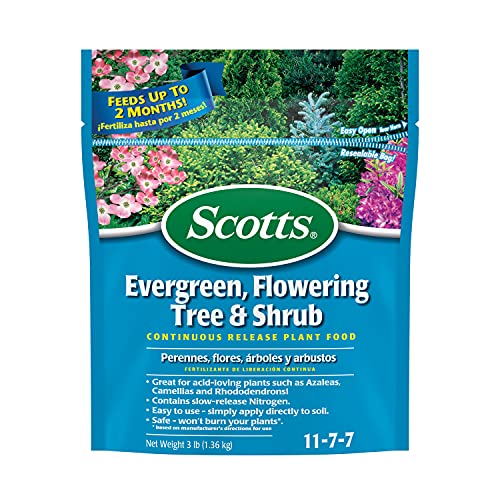
Best for: Evergreens, dogwoods, hydrangeas, magnolias, and many acid-loving trees and shrubs. Designed to feed for up to two months, it helps promote root growth and lush foliage, making it suitable for mid-season maintenance and longer feeding intervals.
Why chosen: Its continuous-release formulation simplifies feeding schedules and provides predictable nutrient delivery. This option suits gardeners who prefer longer intervals between applications and want steady green growth.
Caution: Because it feeds over a period, timing is important. Apply as directed to avoid a nutrient surge that could stress sensitive plants during extreme weather.
Espoma Evergreen-Tone 4-3-4

Best for: Needle leaf and broadleaf evergreens, including pine, fir, spruce, juniper, azaleas, rhododendron, camellias. This ready-to-use organic fertilizer blends natural ingredients with beneficial Bio-tone microbes for soil health.
Why chosen: Its organic and environmentally safe profile supports long-term soil biology while providing a balanced nutrient mix. This makes it a solid choice for gardeners prioritizing soil health and sustainable feeding practices.
Caution: As with all granular fertilizers, water after application to help nutrients reach the root zone; avoid over-application to prevent burn on sensitive plants.
Miracle-Gro Shake ‘N Feed Flowering Trees & Shrubs

Best for: Flowering trees and shrubs, including acid-loving plants. This formula supports deep green foliage and colorful blooms, with natural ingredients like kelp, earthworm castings, bone meal, and feather meal.
Why chosen: The inclusion of organic components and a multi-month feeding window helps maintain vigor in evergreen species while also benefiting flowering varieties. It’s a versatile option for mixed borders and container plantings.
Caution: Shake well to distribute evenly and follow feeding intervals to prevent fertilizer concentration in a single burst, especially in containers with limited drainage.
SimplyGro Fertilizer Spikes For Evergreen Trees & Shrubs

Best for: Evergreens, pines, firs, and other coniferous trees and shrubs. The 12-3-3 spike formula feeds gradually for up to three months, aligning with spring and fall feeding windows.
Why chosen: Pre-measured spikes help prevent over-fertilizing and nutrient runoff, a common concern with heavy applications. This makes it a practical, low-effort option for busy gardeners and landscape managers.
Caution: Spike placement is crucial; insert around the drip line, not against the trunk, to ensure nutrients reach active roots without risking trunk damage.
Buying Guide: Choosing The Right Evergreen Fertilizer
- Form matters: Spikes and pellets release nutrients slowly near the roots, while liquids offer quick uptake. Choose based on your maintenance style and plant size.
- N-P-K balance: Evergreen-focused formulas typically emphasize balanced nitrogen for green growth and sufficient potassium for resilience. Look for sums around 6-4-6 to 12-3-3 in spikes.
- Soil health: Organic or enriched formulas with beneficial microbes support soil biology, which helps evergreen roots absorb nutrients more efficiently.
- Application timing: Early spring and late fall are common for evergreens, aligning with active growth and energy storage cycles. Some products offer month-long feeds; plan accordingly.
- Container vs. in-ground: For potted evergreens, liquids or soluble formulas can provide quicker responses; in-ground plant foods suit landscape beds and large shrubs.
- Environmental impact: Pre-measured spikes reduce nutrient runoff risk. If you have sensitive waterways nearby, prefer formulations designed to minimize leaching.
FAQ
- What is the best fertilizer type for evergreen shrubs? A balanced, evergreen-specific formula (like 6-4-6 or 12-3-3) used according to package directions, with attention to soil health and proper placement around the drip line.
- Should I fertilize evergreen shrubs in containers? Yes, choose a formula suitable for containers or a liquid/fertilizer with quick uptake to support root growth in confined soil.
- How often should evergreen trees be fertilized? Most evergreens benefit from a couple of feeds per year—early spring and late fall—though some continuous-release products extend feeding through a couple of months.
- Can fertilizing harm evergreen shrubs? Over-fertilization can burn roots and foliage. Always follow label directions and apply the correct amount for plant size and soil conditions.
- Are organic fertilizers better for evergreens? Organic options support soil biology and long-term health, which can improve nutrient uptake and drought resilience in evergreens.