Answering the common buyer intent, these fertilizers are chosen to boost flowering beds while keeping soil balanced. The top picks include products that feed for multiple months, promote vibrant color, and support both container and in-ground plantings. This guide helps gardeners decide which option best fits their flower beds, from all-purpose feeds to bloom-focused formulas. The table below summarizes five standout products and their key strengths.
| Product | Best For | Formulation Type | Notes |
|---|---|---|---|
| General flower beds and mixed borders | Slow-release granular | Up to 3 months of feeding | |
| Miracle-Gro Water Soluble All Purpose Plant Food | Quick results for mixed beds | Water-soluble liquid | Instant feeding, versatile indoors/outdoors |
| Scotts All Purpose Flower & Vegetable Continuous Release | In-ground beds with annuals and veggies | Continuous release granules | Up to 2 months of steady feeding |
| Miracle-Gro Water Soluble Bloom Booster | Colorful blooms in containers and beds | Water-soluble bloom booster | High phosphorus for more blooms |
| Burpee Organic All-Purpose Granular | Organic beds and vegetable/flower plots | OMRI-listed organic granules | Up to 3 months feeding |
Miracle-Gro Shake ‘N Feed All Purpose Plant Food
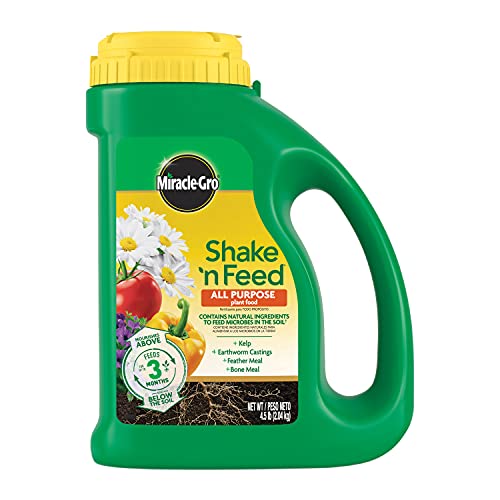
Best for general flower beds and mixed borders, this granular feed nourishes above and below soil for up to three months. It includes micronutrients to help plants grow stronger, more productive, and vibrant. Suitable for outdoor in-ground and container plants, including flowers, vegetables, and herbs. Choose this if you want a long-lasting, all-purpose option that covers diverse plantings.
Limitation: It covers a broad range of plants, but it may be less tailored to highly specific bloom-heavy needs than a bloom-focused formula.
Miracle-Gro Water Soluble All Purpose Plant Food

This water-soluble option feeds all outdoor and indoor plants, including roses, flowers, and trees. It starts working quickly to promote bigger, more beautiful plants. With an NPK of 24-8-16, it provides key nutrients rapidly for rapid color and growth changes. Best for gardeners who want visible results fast, or who need flexibility for varied bed plant selections.
Caution: Avoid overuse on drought-stressed soil; follow label directions to prevent nutrient runoff or fertilizer burn.
Scotts All Purpose Flower And Vegetable Continuous Release

Best for in-ground beds with a mix of flowers and vegetables, this continuous-release formula provides steady nitrogen feeding for up to two months. It supports a broad range of plants, including annuals, perennials, vegetables, tomatoes, peppers, trees, and shrubs. Choose this when you want reliable, ongoing nutrition without frequent applications.
Limitation: The two-month window may require reapplication during long growing seasons in large beds or hot climates.
Miracle-Gro Water Soluble Bloom Booster Flower Food

Best for enhancing color and blooms, this 10-52-10 formula focuses on phosphorus to boost flowering and color intensity. It works well for containers, in-ground beds, and borders with a high emphasis on flowers. Use when swapping in or adding flowering annuals and perennials to maximize blooms.
Limitation: High phosphorus content may not be ideal for every bed; consider soil testing if bloom response is weak or if phosphorus-sensitive plants dominate the area.
Burpee Organic All-Purpose Granular

Best for organic flower beds and vegetable plots, Burpee’s granular blend is OMRI-listed and designed for long-term feeding up to three months. It delivers essential nutrients and beneficial microbes that support soil health alongside plant growth. Choose this if organic gardening is a priority or if you want a more natural-feeling soil food web.
Limitation: Organic blends can have slower visible results than synthetic formulas; plan for gradual improvements over time rather than immediate color boosts.
Buying Guide: Key Purchase Considerations
Choosing the right fertilizer for flower beds involves both plant needs and garden conditions. Consider these factors when deciding among the options above.
- Feeding duration: Do you want month-to-month convenience or longer intervals between applications?
- Target outcomes: Are you prioritizing bloom color, overall plant vigor, or soil health?
- Plant mix: Do your beds host mostly annuals, perennials, vegetables, or a mix?
- Application method: Do you prefer granular, slow-release feeds or quick-acting liquids?
- Organic vs. synthetic: Is organic certification important for your garden goals?
- Soil health: Consider a soil test to tailor fertility to existing nutrient levels.
Practical comparison tips
- For rapid bloom response, choose water-soluble bloom boosters or all-purpose feeds with higher phosphorus.
- For low-maintenance beds, use continuous-release granules that feed gradually over months.
- Organic options are ideal for soil biology and long-term health, though adjustments may be slower.
- In mixed beds, an all-purpose feed is often sufficient, but consider bloom-focused formulas near display borders or containers.
FAQ
- What fertilizer is best for flower beds with mixed annuals and perennials?
– An all-purpose fertilizer with a balanced NPK and slow-release properties generally works well for mixed beds. - Should I use organic or synthetic fertilizer for flower beds?
– Organic options support soil biology and long-term health, while synthetic formulas can deliver quicker results. Your choice depends on goals and soil health needs. - How often should I fertilize flower beds?
– Follow product directions; many options offer feeding for 1–3 months. Reapplication may be needed during peak growing seasons. - Can I use fertilizer near vegetables in the same bed?
– Yes, but choose formulations suitable for both flowers and vegetables and avoid excessive nitrogen that promotes foliage over fruit. - Do bloom-focused feeds improve color in containers as well as beds?
– Yes, high-phosphorus formulas generally boost blooms in containers and in-ground beds. - Is soil testing necessary before fertilizing?
– It can help tailor your fertilizer to existing nutrient levels and prevent over-fertilization.
This guide highlights five fertilizers geared toward flower beds, with practical guidance on when to choose each. The selections balance long-lasting feeding, bloom emphasis, and organic options to fit varied garden styles. Use the Buying Guide to align your choice with plant types and bed conditions, and refer to the product sections for clear, side-by-side considerations.