The best fertilizer for flowering shrubs supports vibrant blooms, strong root systems, and lasting foliage color. This guide highlights five Amazon offerings that are well-suited for acid-loving and ornamental shrubs, whether planted in-ground or in containers. Each product targets flowering shrubs specifically or broadly covers shrubs, evergreens, and acid-loving plants. The selections balance slow-release formats, easy application, and reliable nutrient delivery to help you choose confidently for your yard or balcony garden. Ideal buyers include homeowners maintaining flowering shrubs, landscapers tending acid-loving species, and container gardeners seeking steady feeding without frequent applications.
Summary of selected products
| Product | Brand | Type | Best For |
|---|---|---|---|
| Miracle-Gro Shake ‘N Feed Flowering Trees & Shrubs | Miracle-Gro | All-purpose granular plant food (3 months) | Acid-loving flowering trees and shrubs; in-ground or containers |
| Scotts Evergreen Flowering Tree & Shrub 3-Pound | Scotts | Continuous-release granular | Evergreens and acid-loving shrubs; root growth and foliage |
| Miracle-Gro Tree & Shrub Plant Food Spikes (12 Count) | Miracle-Gro | Fertilizer spikes with slow release | Deciduous, flowering & evergreen trees; acid-loving plants |
| Miracle-Gro Water Soluble All Purpose Plant Food | Miracle-Gro | Water-soluble powder (NPK 24-8-16) | All plants, indoors or outdoors, including shrubs |
| BioAdvanced Shrub Care Protect & Feed | Bayer Advanced | Granules with pest protection | Shrubs needing health and pest protection |
Miracle-Gro Shake ‘N Feed Flowering Trees and Shrubs

Best for: Acid-loving flowering trees and shrubs in-ground or containers. This plant food uses natural ingredients like kelp, earthworm castings, bone meal, and feather meal, delivering nutrients for up to three months. It supports deep green foliage and vibrant blooms. It’s particularly suitable for gardeners who want an easy, slow-release option with plant-based ingredients.
Why selected: The formulation targets flowering shrubs and acid-loving plants, offering extended feeding without frequent application. The inclusion of organic ingredients aligns with readers seeking a more natural-feeling option while still delivering reliable results.
Caution: Not all shrubs may respond equally to organic components; results depend on existing soil pH and existing nutrient levels. Follow label directions for application timing around new growth or stress periods.
Scotts Evergreen Flowering Tree & Shrub 3-Pound
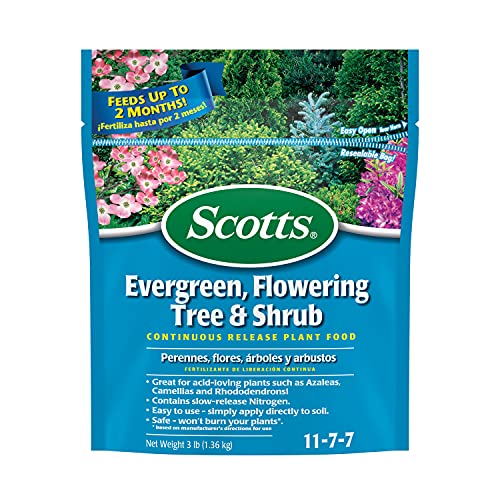
Best for: Evergreens and acid-loving shrubs, including hydrangeas and azaleas, with a focus on steady root nutrition and foliage fullness. This continuous-release formula feeds for up to two months, promoting robust growth between applications.
Why selected: Its evergreen and acid-loving emphasis covers many common flowering shrubs that prefer lower pH soils. The two-month feed window can be advantageous for mid-season care in cool or humid climates.
Caution: It’s a time-release product; for soils with high leaching or heavy rainfall, reapplication timing may be needed to maintain consistent nutrition.
Miracle-Gro Tree & Shrub Plant Food Spikes

Best for: Trees and shrubs that prefer direct root feeding. The spikes deliver slow-release nutrients directly to the roots, supporting color and foliage in deciduous and evergreen selections, as well as acid-loving plants like hydrangeas and magnolias.
Why selected: Spikes simplify feeding for large shrubs and established trees, reducing soil disturbance and providing consistent nutrition over time. They’re especially convenient for containerized shrubs where surface-feeding is impractical.
Caution: Spike placement is key; place away from trunk bases to avoid root burn, and avoid using with plants that require heavier soil mixing before uptake.
Miracle-Gro Shake ‘N Feed All Purpose Plant Food
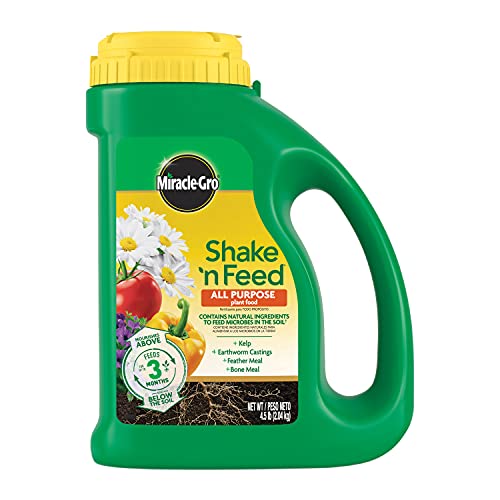
Best for: All plants, indoors or outdoors, including shrubs. This all-purpose formula feeds for up to three months and supports above- and below-ground growth.
Why selected: Its versatility makes it a strong, all-around option for mixed plantings that include flowering shrubs. The extended feeding period reduces maintenance while promoting vigorous growth across a range of plant types.
Caution: Because it covers many plant types, ensure you apply the correct amount for shrubs to prevent overly rapid growth or nutrient imbalance in sensitive species.
BioAdvanced Shrub Care Protect & Feed

Best for: Shrubs needing protection against pests and diseases along with nutrition. This granular formula provides up to six weeks of protection and root nutrition, combining feeding with insect protection.
Why selected: For gardeners facing common shrub pests, this product delivers integrated care. The systemic protection helps reduce pest pressure while maintaining healthy growth and blooms.
Caution: Not all pests are listed; verify compatibility with specific shrub species and local pest regulations. The product is not a substitute for targeted disease management in severe cases.
Buying Guide: Choosing The Right Fertilizer For Flowering Shrubs
What nutrient balance do flowering shrubs need?
Most flowering shrubs benefit from balanced nitrogen, phosphorus, and potassium (NPK). Look for formulas labeled for flowering plants or shrubs with balanced NPK (such as 10-10-10 or similar ratios) to support healthy growth and blooms.
Should you favor slow-release or quick-acting products?
Slow-release products reduce the risk of fertilizer burn and provide steady nutrition over weeks. Quick-acting formulas may be useful for addressing nutrient deficiencies or boosting growth during a growth surge, but require more frequent applications.
How important is soil pH and acid-loving plant compatibility?
Many flowering shrubs thrive in slightly acidic soils. Choose products explicitly designed for acid-loving plants (like hydrangeas or azaleas) if your soil pH is higher or you notice dull blooms and green foliage lacking vibrancy.
What about combination products with pest protection?
Combining nutrition with pest and disease protection can be convenient for busy gardeners. However, ensure the product matches your shrub species and pest pressures, and follow label directions to avoid overuse or chemical interactions.
How to apply and space applications?
Follow product-specific directions for application rates, timing, and placement. For surface feeds, water after application to help nutrients reach the root zone. For spikes, place at the correct distance from trunks and roots as indicated by the label.
Container vs. in-ground considerations
Container plants may require more frequent feeding due to leaching and limited rooting volume. In-ground shrubs generally benefit from longer intervals between feeds, with adjustments for rainfall and soil texture.
Top tip: plan a feeding schedule
Create a seasonal feeding plan aligned with your shrub types. For many flowering shrubs, feeding in early spring and again mid-summer helps sustain bloom cycles without promoting excessive vegetative growth.
FAQ
- Which fertilizer is best for acid-loving shrubs? Choose products specifically labeled for acid-loving plants, such as shrubs and hydrangeas, to support soil pH and uptake.
- Can I use all-purpose plant food on flowering shrubs? Yes, but monitor for overfeeding and adjust the amount based on shrub size and soil conditions. All-purpose formulas are versatile but may be less targeted.
- Are fertilizer spikes better than granular formulas? Spikes offer targeted root feeding and less surface soil disruption, while granules provide broader coverage. Choose based on planting density and ease of use.
- How often should I fertilize shrubs? Many shrubs respond well to feeding every 6–8 weeks during the growing season, with adjustments for climate and plant type. Always follow label directions.
- Should I fertilize shrubs in containers differently? Container shrubs may require more frequent feeding due to limited soil volume and drainage. Use balanced formulas and water thoroughly after application.
- Can fertilizer protect shrubs from pests? Some products include pest or disease protection. If pest pressure is high, combine nutrition with targeted pest management strategies recommended for your plant species.