Answering the question: which fertilizer is best for fruit trees depends on your trees, growing method, and your preference for organic versus synthetic nutrients. This guide highlights five reliable options suited for common fruit trees, whether you garden in-ground or in containers. Each choice is described with who it’s best for, why it stands out, and any important caveats.
Top picks at a glance (quick reference):
- Miracle-Gro Fruit & Citrus Plant Food Spikes – Best for hands-off seasonal feeding of citrus, apple, orange, lemon, lime, and avocado trees.
- Miracle-Gro Shake ‘N Feed Citrus, Avocado, Mango – Best for long-lasting, balanced nutrition for container or in-ground fruit trees.
- Dr. Earth Natural Wonder Fruit Tree Fertilizer – Best for organic gardeners seeking non-GMO, plant-safe formula.
- Down To Earth All Natural Fruit Tree Fertilizer – Best for organic production and soil health with OMRI-listed suitability.
- Jobe’s Organics Granular Fruit & Citrus Fertilizer – Best for organic gardening with a convenient granular application.
Miracle-Gro Fruit & Citrus Plant Food Spikes
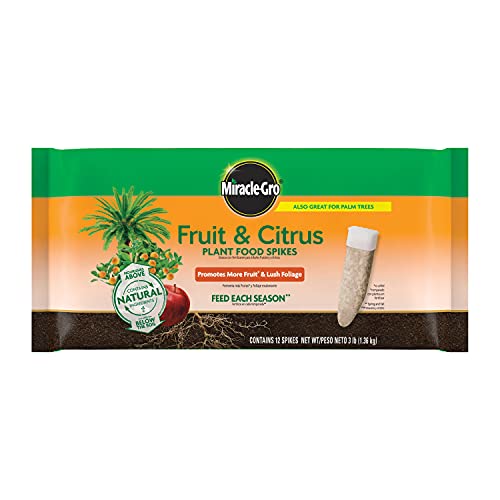
Best for: Home orchardists who want a simple, twice-a-year feeding schedule. These spikes are designed for citrus and fruit trees such as apple, orange, lemon, lime, avocado, and even some palms. The formulation emphasizes fruit production and lush foliage with minimal effort.
Why selected: The product offers a straightforward application method and a seasonal feeding cadence, making it ideal for buyers who prefer a predictable plan without weekly or monthly dosing.
Caution: Spikes are concentrated; follow the recommended spacing to avoid over-fertilizing. Not ideal for quick, weekly adjustments to nutrient levels.
Miracle-Gro Shake ‘N Feed Citrus, Avocado, Mango

Best for: Containers and in-ground plants that need up to three months of steady nutrition, including citrus, avocado, and mango trees. This formula provides micronutrients beyond the primary NPK mix to support overall plant health.
Why selected: Its long-lasting release reduces feeding frequency while delivering broad-spectrum nutrients, helpful for busy gardeners or those managing multiple trees.
Caution: While versatile, it’s still a fertilizer product; avoid application during periods of heat stress or drought without adjusting irrigation.
Dr. Earth Natural Wonder Fruit Tree Fertilizer

Best for: Gardeners seeking organic, plant-safe nutrition with non-GMO verification. This organic mix is formatted for fruit trees to support a healthy growth cycle from early growth through fruit set.
Why selected: It emphasizes organic ingredients and soil-friendly nutrients, suitable for environmentally conscious buyers and those growing fruit trees near edible gardens.
Caution: Organic blends may release nutrients more slowly; results can depend on soil biology and moisture levels.
Down To Earth All Natural Fruit Tree Fertilizer

Best for: Home orchards seeking an OMRI-listed organic option that adds calcium for fruit development and overall tree vigor. The 6-2-4 formula targets essential nutrients while supporting organic production practices.
Why selected: The OMRI listing signals suitability for organic uses, and the calcium addition supports proper fruit development alongside traditional macronutrients.
Caution: As an organic option, feeding may be slower to show visible growth responses compared with synthetic blends.
Jobe’s Organics Granular Fruit & Citrus Fertilizer

Best for: Organic gardeners who favor granular applications with steady nutrient delivery. The 3-5-5 NPK ratio supports fruit and citrus plant needs while remaining USDA-OMRI listed for organic gardening.
Why selected: Its organic composition and granular format make it convenient for wide-area feeding and compatibility with organic garden practices.
Caution: Granular fertilizers can burn if overapplied or used in poorly watered soils; follow label directions to prevent damage.
Buying Guide
What should you consider when choosing fertilizer for fruit trees?
- Growing method: Do you garden in-ground or in containers? Some formulas are formulated for container use with slower release, while others are designed for soil in-ground feeding.
- Organic vs synthetic: Organic options support soil biology and may appeal to organic gardeners. Synthetic blends often provide quicker, highly controlled nutrient delivery but require careful application to avoid salt buildup.
- Tree type and growth stage: Fruit trees have different nutrient needs during dormancy, bloom, fruit set, and maturity. Look for formulations aligned with those stages or apply according to a seasonal schedule.
- NPK balance: Common fruit tree fertilizers emphasize balanced NPK ratios (e.g., 3-5-5 or 6-2-4) and may include micronutrients like calcium or magnesium to support fruit development and foliage health.
- Application method: Some products are spikes or liquids, others are granules. Choose based on your preferred routine and weather conditions to minimize nutrient loss.
Practical application tips
- Follow label directions precisely to avoid over-fertilization, which can harm trees or pollute soil and water.
- Water adequately after application to help nutrients reach the root zone.
- For container trees, ensure potting mix is well-draining and choose a fertilizer compatible with containers.
- Consider a soil test if you suspect specific nutrient deficiencies or if growth appears stunted despite feeding.
FAQ
- What fertilizer is best for fruit trees in containers?
– A balanced or citrus-specific formula designed for containers, such as Shake ‘N Feed variants, is often ideal because it provides steady nutrients without overloading the soil. - How often should fruit trees be fertilized?
– Many growers opt for biannual feeding—early spring and mid-fall—but always follow product directions and consider the tree’s age and vigor. - Are organic fertilizers better for fruit trees?
– Organic fertilizers are favored by organic gardening practices and can improve soil health over time, though they may release nutrients more slowly. - Can I use any fertilizer on all fruit trees?
– Not all fertilizers suit every tree; citrus-focused or fruit-specific blends often yield the best results for their respective species. - Should I fertilize during dormancy?
– Generally, feeding begins when trees exit dormancy and start active growth; avoid heavy fertilization during deep dormancy or extreme heat. - What is the risk of over-fertilizing fruit trees?
– Over-fertilization can cause leaf burn, poor fruit set, and soil nutrient imbalances, potentially harming tree health.
Buying guide takeaway: Match your choice to your growing method, preference for organic versus synthetic nutrients, and the growth stage of your trees. The five selections listed here cover a spectrum—from easy “spike” and long-lasting granular options to organic blends—so you can tailor feeding to your fruit trees’ specific needs.