Choosing the right fertilizer can help nectarine trees develop strong roots, vibrant foliage, and sweeter, more abundant fruit. This guide highlights five top options from trusted brands, explains how they work, and compares their application methods. Each product below is suited for nectarine and other stone fruits, emphasizing balanced nutrition, micronutrients, and ease of use for home gardeners in the United States.
| Product | Brand | Key Benefit |
|---|---|---|
| Peach Tree Fertilizer for All Peach, Nectarine and Stone Fruit Trees | TPS NUTRIENTS | Targeted for stone fruits with balanced macro and micronutrients |
| Farmer’s Secret Fruit Tree Booster Fertilizer | Farmer’s Secret | Phosphorus-rich formula supports early growth and fruit set |
| 16oz Peach Plant Fertilizer | HiThrive | Fuels growth and sweetness with nitrogen, phosphorus, potassium |
| Miracle-Gro Tree and Shrub Plant Food Spikes | Miracle-Gro | Convenient root feeding for deciduous trees and shrubs |
| 16oz Tree and Shrub Plant Food | HiThrive | Liquid formula for year-round growth and resilience |
Note: Nectarine trees benefit from a fertilizer plan that supports active growth in spring, fruit development in summer, and root health year-round. The products listed here cover a range of delivery methods—from liquids to spikes—allowing you to choose based on your tree size, soil conditions, and watering routine.
Peach Tree Fertilizer for All Peach, Nectarine and Stone Fruit Trees

This liquid fertilizer is designed for peach, nectarine, and stone fruit trees, providing a balanced blend of macro nutrients and essential trace minerals. The formulation targets healthy leaf growth, robust root systems, and improved fruit quality. The product’s compatibility with multiple stone fruits helps simplify care for mixed orchards or home gardens with several fruit varieties.
Farmer’s Secret Fruit Tree Booster Fertilizer

This 32-ounce concentrate is phosphorus-rich and formulated to support early growth through bud development. It targets all fruit trees, including peaches and nectarines, with a emphasis on strong initial growth after dormancy. A little goes a long way due to its concentrated formula, making it a cost-effective option for larger trees or yard spaces with several fruit-bearing specimens.
16oz Peach Plant Fertilizer
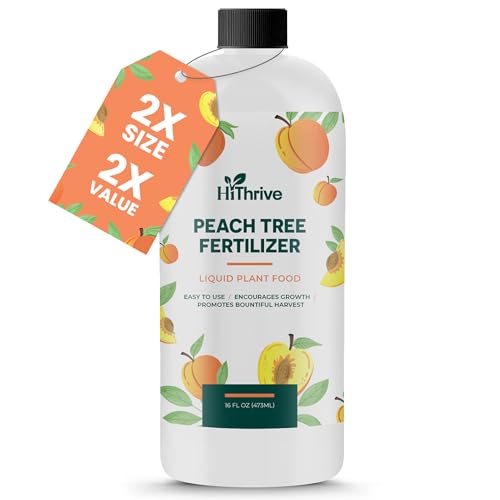
HiThrive’s 16-ounce formula makes up to 16 gallons of liquid fertilizer, delivering nitrogen for lush leaves, phosphorus for roots, and potassium to boost fruit size and sweetness. This product also includes micronutrients like calcium, iron, and zinc to strengthen overall tree health, resilience, and fruit quality. Its liquid form allows for quick uptake through the root zone when applied at the drip line.
Miracle-Gro Tree and Shrub Plant Food Spikes

Spikes feed directly at the tree’s root zone, delivering nutrients deep into the soil where roots can access them easily. Suitable for deciduous, flowering, and evergreen trees, these spikes are convenient for homeowners who prefer a low-effort feeding method. Regular use during the growing season can promote vibrant foliage and steady growth for nectarines and other stone fruits.
16oz Tree and Shrub Plant Food

This 16-ounce liquid plant food covers up to 16 gallons, offering a balanced mix of macronutrients and micronutrients to support year-round growth. The formula emphasizes strong roots, lush foliage, and resilience to environmental stress. It’s suitable for multiple tree varieties, including nectarines, in home orchards or backyard groves.
Buying Guide
Key considerations when selecting a fertilizer for nectarine trees:
- Nutrient balance: Look for products with nitrogen for leaf growth, phosphorus for root development, and potassium for fruit quality. Some formulas also include calcium, zinc, and iron for stronger trees and better disease resistance.
- Delivery method: Liquids are fast-acting and easy to apply via watering cans, while spikes offer a lightweight, hands-off approach. Concentrates require dilution but can be more economical for larger trees.
- Tree size and age: Young trees benefit from balanced nutrients that support root establishment, while mature trees may need boosters during flowering and fruit set. Follow label directions for dilution and frequency.
- Soil health: Conduct a basic soil test to determine pH and nutrient levels. Nectarines prefer slightly acidic to neutral soil; amendments may be needed to optimize nutrient uptake.
- Application timing: Apply fertilizers just before the growing season or at the start of dormancy break, with additional applications during fruit development as recommended by the product label.
- Compatibility: If you have other fruit trees, choose a fertilizer suitable for stone fruits to avoid imbalances that could affect nectarines differently from apples or peaches.
- Water management: Ensure consistent watering after application to help dissolve nutrients and prevent salt buildup in the root zone.
- Environment and safety: Opt for products with clear instructions, child-and-pun-safety considerations, and non-burning formulations to protect your yard and garden beds.
For most home gardeners, a combination approach works well: use a liquid fertilizer in early spring to jumpstart vegetative growth, apply spikes or a second liquid dose during flowering to support fruit set, and schedule a fall or early winter feeding to support root health and winter hardiness. Always follow the specific product directions regarding dilution, frequency, and application proximity to the drip line of the tree.