Looking for the best fertilizer for pond plants? This guide evaluates five reliable options that support vibrant foliage, stronger roots, and spectacular blooms in ponds and water gardens. The selections cater to different setups—from slow-release tabs for container ponds to liquid formulas for weekly dosing. Best for beginners: simple, fish-safe tablets. Best for large ponds: long-lasting, low-maintenance capsules. Best for delicate ecosystems: balanced formulas that avoid excess nutrients. Below, find clear comparisons, who each product is best for, and practical buying tips.
| Product | Format | Best For |
|---|---|---|
| CrystalClear Thrive Aquatic Pond Plant Food (30 tablets) | Tabs | Container ponds, beginners |
| Pondtabbs (60 ct) | Tabs | Medium to large ponds, regular feeding |
| Aquascape Once-A-Year Pond Plant Fertilizer Capsules (6-pack) | Capsules | Low-maintenance, long-term feeding |
| Pond Plant Fertilizer – Liquid (8 oz) | Liquid | Frequent dosing, flexible use |
| VitaPlant Pond Plant Fertilizer – Liquid (500 mL) | Liquid | Weekly dosing, balanced nutrients |
CrystalClear Thrive Aquatic Pond Plant Food

Format: 30 tablets. This product provides a blend of essential nutrients to support vigorous leaves and beautiful blooms. It includes 10% nitrogen, 14% phosphate, and 8% potash to encourage robust root development and vibrant flowers. Easy monthly application makes it suitable for container ponds and smaller water gardens, with safety for fish and other aquatic life.
Best for: Home aquariums and small to medium outdoor ponds where quick, visible growth is desired. Choose this if you prefer a simple, tab-based feeding schedule that minimizes maintenance while keeping plants healthy.
Limitation: Tablet-based feeding may require precise placement to ensure even nutrient distribution in larger water volumes. Use as directed to avoid over-fertilization.
Pondtabbs 60ct

Format: 60 tablets. Enriched with a balanced mix of macro and micronutrients, delivering essential nourishment for aquatic plants. High nitrogen, phosphorus, and potassium content promotes vigorous growth and lush color, contributing to a balanced pond ecosystem for plants and aquatic animals alike.
Best for: Ponds needing steady, reliable nutrient delivery to support a wide range of plants. Suitable for more established ponds where regular, ongoing feeding is desired.
Limitation: Tablets require placement near root zones; misplacement can reduce effectiveness in larger water bodies.
Aquascape Once-A-Year Pond Plant Fertilizer Capsules

Format: 6-pack capsules with an 11-3-14 NPK ratio. This time-released formula is designed to promote healthy growth and flower production for up to 180 days. It emphasizes low nitrogen to avoid stressing plants and reduces phosphorus to curb algae growth, providing long-lasting results while supporting plant health.
Best for: Low-maintenance pond setups where users want annual feeding without frequent reapplication. Choose this if you prioritize steady growth with minimal intervention and a focus on algae control.
Limitation: Less flexibility in dosing for seasonal weather fluctuations; optimized for a stable regime rather than rapid bursts of growth.
Pond Plant Fertilizer – Liquid (8 oz)

Format: 8 oz liquid for easy weekly dosing. Provides a balanced nutrient profile suitable for water lilies, lotus, and submerged plants. Designed to support vibrant foliage and robust root systems in ponds and water gardens without harming aquatic life when used as directed.
Best for: Ponds that benefit from flexible, adjustable feeding schedules. Ideal for users who want quick adjustment of nutrient levels in response to plant growth or seasonal changes.
Limitation: Requires regular dosing, which can be more hands-on than tablet-based products for busy setups.
VitaPlant Pond Plant Fertilizer – Liquid
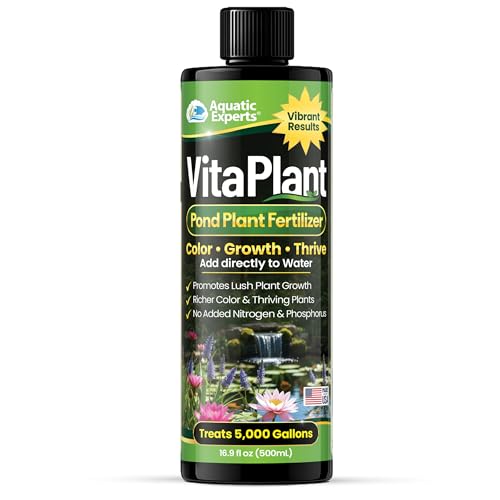
Format: 500 mL liquid concentrate. A professional-grade fertilizer that supports lush growth, vibrant color, and thriving pond plants. Notably, it avoids added nitrogen or phosphorus to help balance plant intake and minimize excessive algal blooms.
Best for: Ponds where balanced nutrition is preferred and users want weekly dosing with precise control over nutrient inputs. Suitable for water lilies, lotus, marginals, and other aquatic plants.
Limitation: Absence of nitrogen and phosphorus requires careful monitoring to ensure plants receive enough nutrients for long-term growth.
Buying Guide: How To Choose The Right Pond Fertilizer
- Feeding style: Do you prefer tablets, capsules, or liquids? Tablets and capsules offer convenient, low-maintenance feeding, while liquids allow flexible dosing and rapid nutrient adjustments.
- Frequency: Are you aiming for annual maintenance or weekly dosing? Capsules and tablets generally need less frequent application than liquids.
- NPK balance: Look for a formula that matches your plant types. Water lilies and lotuses benefit from balanced nutrients; some formulas emphasize lower phosphorus to reduce algae risk.
- Fish and ecosystem safety: If your pond holds koi, goldfish, or tadpoles, select products explicitly labeled safe for aquatic life.
- Size and dosing guidance: Larger ponds require products with longer-lasting effects or higher concentrations. Check recommended application rates to avoid under- or over-fertilizing.
- Plant selection: For lilies, lotuses, and marginals, choose fertilizers formulated for aquatic plants or ponds; some products are optimized for container ponds, others for in-ground ponds.
- Algae considerations: Some low-nitrogen or low-phosphorus formulations help minimize algae growth while still supporting plant health.
Frequently Asked Questions
- Q: How often should I fertilize pond plants? A: It depends on the product; tablets or capsules are often monthly, while liquids may be weekly or as directed.
- Q: Can I use fertilizer for edible pond plants? A: Most pond fertilizers are designed for ornamental aquatic plants; verify suitability for edible species if applicable.
- Q: Will fertilizer make algae worse? A: Excess nutrients can promote algae. Choose low-phosphorus or nitrogen-balanced formulas for algae-prone ponds.
- Q: Are these products safe for fish? A: Reputable pond fertilizers listed as fish-safe generally are; follow directions and avoid concentrated dosing near fish habitats.
- Q: Can I combine different fertilizers? A: It’s best to avoid mixing products with different NPK ratios unless explicitly advised by the manufacturer.
- Q: How do I know which product is best for my pond size? A: For small containers, tablets or capsules work well; for large ponds, consider liquids or concentrated capsules with longer intervals between applications.