Keeping barns free of nuisance and disease-carrying flies is essential for animal health, equipment care, and worker comfort. The following selections emphasize long-lasting repellents, traps, and electronic solutions suitable for American barn settings. This guide compares options across sprays, traps, baited systems, and electric zappers to help you pick the right approach for your operation.
| Product | Brand | Type | Best For |
|---|---|---|---|
| Revenge Barn & Stable Fly Spray | Bonide | Premise and on-animal spray | Precision fly control on animals and in barns |
| RESCUE Outdoor Fly Trap | RESCUE! | Disposable trap | Outdoor fly population management at entry points |
| Catchmaster Fly Glue Trap | Catchmaster | Adhesive fly trap roll | Large-area, low-maintenance fly catching |
| Waterbury Flying InsectKill System | Waterbury | Metered insect control | 24-hour automatic release in barns |
| Flowtron Bug Zapper | Flowtron | Outdoor electric fly zapper | Wide-area insect elimination |
When selecting fly control for a barn, consider the type of flies common to your region, the presence of animals, and weather conditions. Forms range from topical sprays that protect animals and stalls to traps and zappers that reduce adult populations. The right mix often combines a residual product for surfaces and animals with traps or electronic attractants to intercept new generations before they settle in.
Bonide Revenge Barn & Stable Fly Spray

The Revenge Barn & Stable Fly Spray offers a versatile option for both premises and on-animal use. Key attributes include:
- Premise and on-animal applicability, providing broad protection across stalls and livestock.
- Target range includes flies, spiders, fleas, ticks, and more, helping to reduce multiple pests in one application.
- Designed for use on horses, beef and dairy cattle, goats, sheep, swine, poultry, and dogs.
- Long-lasting action with potential residual effects to limit re-infestation between applications.
Placement considerations include applying to animal coats as directed and treating barn surfaces where flies congregate, such as stall corners and feed areas. For best results, follow label directions for frequency and safety guidelines around animals and humans.
RESCUE Outdoor Fly Trap

This disposable outdoor trap is designed for quick, mess-free deployment. Notable features include:
- Easy fly control with disposable traps that catch hundreds of flies before discarding.
- Fast-acting attractant bait that lures flies inside, where they drown in water.
- Simple setup: expose the trap entrance, add water to activate bait, and hang away from living spaces.
This option is well-suited for barn perimeters, pastures, and feeding areas where flies enter the property. Regular replacement helps maintain effectiveness and reduces adult fly pressure in key zones around the barn.
Catchmaster Giant Fly Glue Trap 3-Pack
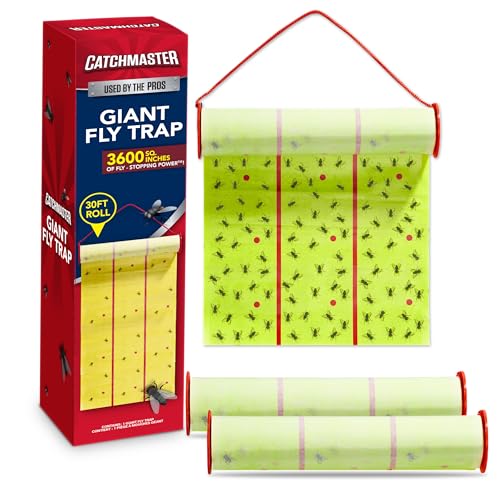
Capture a large number of flies with an adhesive-based approach. Key points:
- Ready-to-use traps without bait, ideal for immediate deployment indoors and outdoors.
- Designed to last under typical outdoor conditions for up to a year, depending on climate and exposure.
- Economical giant roll with a broad catching surface, allowing large-area coverage and flexibility.
Best used near entryways, barns, and sheds where flies cluster. Replace or refresh the traps as needed to maintain high capture rates and minimize fly activity inside the barn.
Waterbury Flying InsectKill System

The Waterbury system focuses on continuous, automatic release to deter gnats and small moths. Highlights include:
- Country Vet-brand dispenser that operates 24 hours a day, providing constant pest suppression.
- Targeted control for gnats and small flying moths, common in barns and feed areas.
- Metered, automatic delivery minimizes manual intervention while maintaining coverage.
This option suits barns with consistent fly pressure but limited time for manual spraying. It complements surface treatments and traps by reducing adult populations around stalls and feed storage locations.
Flowtron Bug Zapper

The Flowtron Bug Zapper provides wide-area electrical control for barns, corrals, and outdoor workspaces. Key capabilities include:
- 1-acre outdoor coverage with a high-powered 40W UV bulb and 5600V kill grid for fast insect elimination.
- Two attraction methods: UV light plus octenol attractant cartridge to lure more insects.
- rugged, USA-made construction designed for outdoor use and continuous operation.
Place the zapper away from livestock and human traffic to maximize capture while minimizing exposure. It pairs well with traps and sprays to reduce the overall fly population across the barn environment.
Buying Guide: Key Purchase Considerations And Comparisons
- Fly species and lifecycle: Different products target adults, larvae, or both. Growth regulators (IGRs) help break life cycles, while traps reduce adult populations.
- Location and application: Premise sprays work inside stalls and equipment, while outdoor traps and zappers address perimeter sites and open areas.
- Safety and livestock considerations: Non-toxic or low-toxicity options are essential where animals are present. Follow label instructions for usage around feed and water sources.
- Maintenance and labor: Traps and zappers require less frequent attention than daily sprays. Consider automation or long-lasting baits to reduce labor hours.
- Longevity and weather tolerance: Outdoor devices should withstand wind, rain, and sun. Glue traps and disposable traps offer long-term shelf stability but require periodic replacement.
- Integrated pest management (IPM) approach: Combine reserve measures—sprays for immediate relief, traps for ongoing control, and zappers for broad suppression—to achieve consistent barn fly reduction.
When building your barn fly-control plan, start with an assessment of fly pressure, animal density, and areas with high waste or moisture. A layered approach—a residual spray for stalls, paired with outdoor traps and a central yard zapper—often yields the most durable results. Regular monitoring and adjusting products based on seasonal activity can maintain a cleaner, healthier barn environment.