If you’re growing fruit trees, you want reliable nutrition that supports strong roots, lush foliage, and abundant fruit. This guide highlights top picks that are easy to use and suitable for common backyard fruit trees. It covers spikes, granular mixes, and concentrated formulas to match different feeding preferences and planting situations. Whether you grow apples, citrus, avocados, mangoes, or peaches, these products help sustain growth through the growing season.
| Product | Best For | Format | Notes |
|---|---|---|---|
| Miracle-Gro Fruit & Citrus Plant Food Spikes | Citrus and fruit trees | Spikes | Twice-year feeding; easy placement around the root zone |
| Miracle-Gro Shake ‘N Feed Citrus, Avocado, Mango Plant Food | Container or in-ground fruit trees | Granular | Up to 3 months of nourishment |
| Down To Earth All Natural Fertilizers Organic Fruit Tree | Organic garden and home orchards | Granular 5 lb | OMRI-listed for organic use |
| Farmer’s Secret Fruit Tree Booster Fertilizer (32oz) | All fruit trees needing concentrated nutrition | Liquid concentrate | Highly concentrated; dilute before use |
| Farmer’s Secret Fruit & Bloom Booster Fertilizer (32oz) | Boosting flowering and yield | Liquid concentrate | Concentrated formula for rapid uptake |
Miracle-Gro Fruit & Citrus Plant Food Spikes
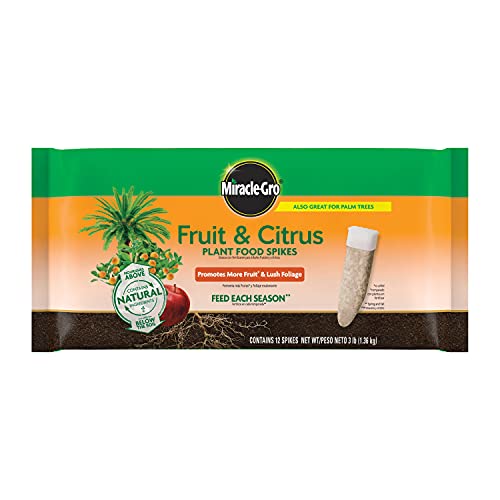
Best for: Fruit and citrus trees that prefer a simple, seasonal feeding approach. The spikes are formulated for trees like apple, orange, lemon, lime, and avocado, promoting fruit production and lush foliage. Ideal for homeowners who want a low-effort feeding schedule—apply once in early spring and again in mid-fall.
Why selected: The Spike format concentrates nutrients near the root zone, simplifying application and reducing waste. It supports ongoing fruiting cycles with two annual feedings. A potential limitation is that spikes require correct placement to ensure nutrient distribution, especially in larger trees.
Caution: Do not over-apply or damage root growth; follow package directions for spacing and quantity.
Miracle-Gro Shake ‘N Feed Citrus, Avocado, Mango Plant Food

Best for: Trees and plants grown in containers or in-ground that can benefit from steady, long-lasting nutrition. This product feeds for up to three months and includes micronutrients to address common deficiencies.
Why selected: It provides a balanced blend ideal for citrus, avocado, and mango varieties, and supports above- and below-ground nourishment. Choose this if you want a versatile, all-purpose plant food that works in multiple settings. A limitation is that frequent recalibration may be needed for large, mature trees with heavy fruit loads.
Down To Earth All Natural Fertilizers Organic Fruit Tree

Best for: Backyard fruit trees in organic gardens that require OMRI-listed nutrition. The 6-2-4 formulation includes added calcium for fruit development, supporting healthy fruit set and flavor.
Why selected: Its organic designation and calcium addition help with stable fruit development without synthetic inputs. A caution is that results depend on other cultural practices like watering and pruning; soil health matters for optimal uptake.
Farmer’s Secret Fruit Tree Booster Fertilizer (32oz)

Best for: Fruit trees that need a strong early-season nutrition boost after dormancy. This product is highly concentrated, designed to deliver robust growth with a small dose.
Why selected: The concentrated formula minimizes application volume while delivering nutrients where they are most needed. Use caution to dilute properly and follow recommended rates to avoid nutrient burn.
Farmer’s Secret Fruit & Bloom Booster Fertilizer (8oz)

Best for: Boosting flowering and fruit yield across a wide range of fruit, vegetable, and flowering plants. The product supports root health and nutrient uptake for better blooms and fruit formation.
Why selected: It’s a versatile booster with strong concentration. A limitation is that you must dilute properly to avoid over-fertilization; calculate dilution rates based on plant size and age.
Buying Guide: Key Purchase Considerations
- Fertilizer type: Choose spikes for simple, targeted feeding; granular formulas for steady, long-term nutrition; or liquid concentrates for rapid uptake and customizable dosing.
- Organic vs. synthetic: Organic options (like Down To Earth) are preferred for organic gardens, while synthetic options can offer quick bursts of growth or convenience.
- Tree stage and needs: Young trees may benefit from balanced, steady nutrition; established trees with heavy fruiting may require higher phosphorus or potassium. Consider calcium-containing formulas for fruit development.
- Container vs. in-ground: Container-grown trees often need more frequent feeding due to limited soil volume; ensure the product is labeled for container use if applicable.
- Application method and safety: Follow label directions for dosage, timing, and dilution. Some products require soil before feeding or placement around the root zone.
- Longevity and convenience: If you prefer less time on maintenance, opt for products labeled to feed for multiple weeks or months.
Frequently Asked Questions
- What’s the best fertilizer for fruit trees in containers? – Look for formulations designed for container use, often with balanced NPK and micronutrients, plus ease of application.
- When should I feed fruit trees? – Generally apply in early spring as growth resumes and again in mid-fall; follow product-specific timing to align with dormancy and fruiting cycles.
- Can I mix different fertilizers? – It is usually not recommended to mix products. Use one product at a time according to its label instructions unless a compatible guide states otherwise.
- Are organic fertilizers better for fruit trees? – Organic options support long-term soil health and may be desirable for organic gardens, but they can act more slowly than synthetic fertilizers.
- How do I know if my tree needs fertilizer? – Look for slow growth, pale leaves, or poor fruit set. Soil testing can help determine specific nutrient deficiencies.
- Can over-fertilizing harm fruit trees? – Yes. Excess nitrogen or phosphorus can cause lush foliage with reduced fruiting and may burn roots. Always follow label directions.