Answering the need for reliable indoor lighting for tomato plants, these full spectrum grow lights are designed to mimic natural sunlight and support healthy fruiting. Best for indoor gardeners, small home greenhouses, or starter seedlings who want steady, controlled light. The top picks below include options with timers, dimming, and adjustable stands to fit varying spaces and tomato growth stages. The summary table helps compare core specs at a glance.
| Product | LED Count | Timer Options | Adjustability | Best For |
|---|---|---|---|---|
| LBW Grow Lights for Indoor Plants (Standing Lamp) | 214 LEDs | 4/8/12H | 75″ tripod | Tall, spaced tomato setups |
| LBW Latest Grow Light (Dual-Head) | 428 LEDs | 3/6/12H | 75″ tripod | Broader coverage for floor plants |
| Briignite A19 Full Spectrum Grow Bulbs (2-Pack) | 11W per bulb (equiv 100W) | None | Standard E26 bases | Seed starting and small tomato beds |
| GooingTop LED Grow Light (Clip Lamp) | 84 LEDs total (10 Red, 74 White) | 4/8/12H | Clip/Gooseneck | Compact setups and desktops |
| LEOTER Grow Light (80 LEDs) | 80 LEDs | 3/9/12H | Adjustable gooseneck | Flexible spectral modes for tomatoes |
LBW Grow Lights for Indoor Plants Full Spectrum with Stand

Best for tall indoor tomato setups and spaces requiring height-adjustable lighting. This model uses 214 LEDs (124 cold white, 58 warm white, 24 red, 8 natural light) to mimic natural sunlight with strong PPFD for consistent photosynthesis. The 75″ adjustable tripod provides a wide footprint for larger pots or staggered tomato rows. The built-in 4/8/12H timer makes daily lighting routines automatic, promoting steady growth and fruit set. Six brightness levels let you tailor intensity to seedling or mature plant needs.
Best for: gardeners with a dedicated indoor growing corner and taller plants. Choose this if you need a stand-alone unit that can fill a large space without wall mounting. Caution: high-output LEDs may require sensible distance from plant canopies to avoid light burn on tender new growth.
LBW Latest Grow Light Dual-Head Full Spectrum

Best for broader coverage in floor-level setups or larger tomato flats. This dual-head design provides more uniform light distribution across multiple plants, with the same 214-LED panels per head and strong PPFD data to support vegetative growth and flowering. The 3/6/12H timer and ability to switch between modes save energy and adapt to different growth stages. Six dimming levels help keep light intensity appropriate for seedlings versus established tomato plants.
Best for: growers needing expanded coverage in a single unit. Limitations: the tripod height may be less flexible in tight spaces; ensure enough clearance above pots to avoid overheating foliage.
Briignite A19 Full Spectrum Grow Light Bulbs (2-Pack)

Best for compact tomato starts or windowsill gardens. These A19 bulbs provide a full spectrum with red and blue elements, delivering 1000 lumens per bulb while consuming only 11 watts. The 4000K white appearance is comfortable to the eye and pairs well with natural daylight. The higher output PPF supports photosynthesis, making them a practical option for small spaces or supplemental lighting. A caveat: these are bulbs, not fixtures, so you’ll need compatible sockets and fixtures to use effectively.
Best for: small-scale tomato starts or experimental setups. Better for: supplementary lighting in existing fixtures. Avoid if you need an all-in-one stand or integrated timer system.
GooingTop LED Grow Light (Clip Lamp)

Best for compact desk or bench tomato setups needing flexible positioning. The GooingTop unit uses a 6000K white light with 10 red and 74 white LEDs, delivering a color-rendering index near 95 for bright, natural-looking illumination. It includes a timer with 4, 8, or 12-hour options and a gooseneck plus clamp for versatile angling. Powered by USB or AC, making it convenient for varied workspaces. A limitation: the smaller coverage area is better suited for a few plants rather than dense rows.
Best for: small spaces or single-plant focus. Choose this if you want easy placement and quick setup on a desk or shelf. Avoid if you need multi-plant, full-coverage lighting on the same fixture.
LEOTER Grow Light (80 LEDs)
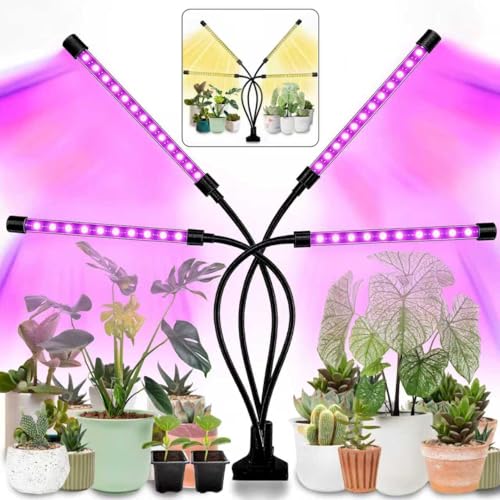
Best for flexible spectral control in medium-sized tomato setups. This upgraded LED lamp provides full spectrum light with red-blue components for flowering and fruiting, plus white LEDs for overall brightness. The 3/9/12-hour timer cycles support consistent daily lighting, and 10 dimmable levels let you adjust intensity across growth stages. The gooseneck and adjustable height enhance positioning precision to cover plant canopies evenly.
Best for: growers who want varied spectral modes and precise dimming. Caution: timer settings may reset if power is disconnected, so re-check after power interruptions.
Buying Guide
What should you consider when choosing a tomato-friendly grow light?
- Light spectrum and PPFD: Look for full-spectrum LEDs that cover red and blue bands essential for tomato growth. High PPFD values support robust photosynthesis in seedlings, vegetative growth, and fruiting stages.
- Coverage and placement: For tomato plants, wider coverage helps reach multiple leaves or clusters. Adjustable tripods or goosenecks improve targeting and reduce shading within dense foliage.
- Timer and dimming: Timers automate day/night cycles, promoting consistent growth. Dimmable options prevent light burn on young transplants and let you scale intensity for flowering stages.
- Power and heat management: Efficient heat dissipation extends lifespan. Fanless designs or aluminum heat sinks help keep temperatures stable around plants.
- Space and setup: Choose between standalone stands, clip-on lamps, or bulbs depending on space, pot size, and whether you need wall-mounted options.
Frequently Asked Questions
- What light spectrum is best for tomatoes indoors?
A full-spectrum light with balanced red and blue wavelengths supports germination, vegetative growth, and fruiting. Look for spectra labeled as full spectrum with explicit red and blue components. - How far should grow lights be from tomato plants?
Generally, place lights 12–24 inches above seedlings or young tomato plants, adjusting higher as plants grow taller. Monitor leaves for signs of light stress. - Do I need a timer for indoor tomato lighting?
Timers help maintain consistent daily light exposure, which supports steady growth and fruit production, especially during seedling and flowering phases. - Can I mix different brands of grow lights?
Mixing lights is possible if spectra and intensities are compatible, but it can complicate scheduling. Prefer consistent spectrum and timing when possible. - Are LED grow lights energy-efficient for tomatoes?
Yes. LEDs typically consume less power while delivering adequate light output for photogenesis, helping lower electricity use over time.