Protecting trees from harmful fungal diseases is essential for vibrant, productive landscapes. This guide highlights five effective fungicides that cater to organic and conventional needs alike. Each option addresses common tree diseases such as blight, powdery mildew, leaf spots, and rusts, while offering practical application notes and safety considerations. Read on to compare products, their active ingredients, and how they fit into a comprehensive tree care plan.
| Product | Brand | Active Focus | Best For |
|---|---|---|---|
| Bonide Captain Jack’s Copper Fungicide, 32 oz | Bonide | Copper-based fungicide; organic approved | Organic gardening; broad disease prevention |
| Bonide Captain Jack Copper Fungicide, 16 oz | Bonide | Copper-based fungicide; organic approved | Organic gardening; day-of-harvest use |
| Southern Ag Liquid Copper Fungicide, 32 oz | Southern Ag | Copper-based; suitable for multiple diseases | Wide disease control; hose-end spray compatibility |
| Atticus Gravex 20 EW | Atticus | Myclobutanil systemic control | Broad-spectrum fungal suppression |
| Atticus Gunner 14.3 MEC | Atticus | Propiconazole systemic prevention | Reliable protection with easy mixing |
Bonide Captain Jack’s Copper Fungicide, 32 oz Ready-to-Use Spray

Bonide Captain Jack’s Copper Fungicide is a ready-to-use liquid copper solution designed to control a wide range of diseases without requiring mixing. It is approved for organic gardening, making it suitable for trees in edible landscapes. The product helps suppress diseases such as blight, black spot, powdery mildew, and peach leaf curl, delivering protective and curative action when sprayed on foliage. It is a convenient option for homeowners who want quick, reliable results with minimal preparation. Application timing is flexible, and the product remains effective up to harvest in many situations, provided label instructions are followed.
Bonide Captain Jack’s Copper Fungicide, 16 oz Ready-to-Spray

This ready-to-spray version offers the same copper-based protection in a smaller bottle, making it ideal for smaller trees or targeted applications. It provides broad disease control with copper fungicide’s inherent preventive and curative properties. As with the larger bottle, it is suitable for organic gardening and can be used up to the day of harvest under appropriate conditions. Users should follow label directions for dilution, coverage, and reapplication intervals tailored to tree species and climate.
Southern Ag Liquid Copper Fungicide, 32oz
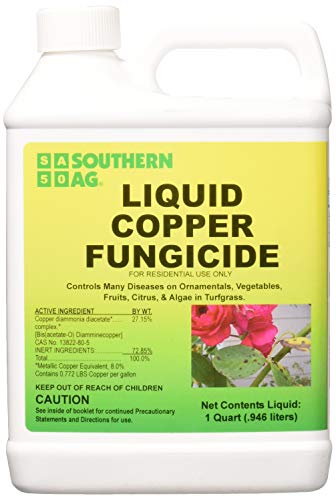
Southern Ag’s Liquid Copper Fungicide offers a versatile option with copper as the active ingredient, marketed for disease control on vegetables, ornamentals, and fruit crops, as well as algae control in turf. The 32-ounce size is convenient for treating multiple trees in a yard or small orchard. Its formulation supports hose-end sprayers, simplifying broad coverage. While copper-based products are generally safe for organic use, proper handling and weather-aware application protect plant tissue and environmental health.
Atticus Gravex 20 EW (16 oz)

Gravex 20 EW combines systemic myclobutanil with a user-friendly formulation designed for lawns, landscapes, and greenhouses. The product’s systemic action helps stop existing infections and suppress new growth by moving within the plant tissues. Gravex 20 EW boasts a broad spectrum, covering many common turf and ornamental fungi. It is particularly noted for its dual action: curative and preventive, which can be advantageous in trees experiencing ongoing fungal challenges. It is essential to follow label directions for dilution, spray coverage, and re-entry intervals.
Atticus Gunner 14.3 MEC Propiconazole Fungicide

Gunner 14.3 MEC is a propiconazole-based fungicide designed for durable fungal prevention and control. The microemulsion concentrate (MEC) formulation improves mixing ease and stability, reducing re-dosing and ensuring consistent coverage. It is designed to resist wash-off after drying and remains effective through typical rainfall or irrigation events. The product is compatible with tank mixes, enabling customizable rotations with other fungicides to address varying fungi. Users should consult the label for specific tree species and disease targets, as well as withholding periods and application timing.
Buying Guide: Key Purchase Considerations
When selecting a tree fungicide, consider disease pressure, tree type, and whether you prefer organic or conventional products. Copper-based fungicides offer broad protection and organic approval but may cause phytotoxicity on sensitive species if misapplied. Systemic fungicides like myclobutanil and propiconazole deliver deeper protection but require careful timing and adherence to label directions to minimize resistance development.
- Active ingredient and coverage: Copper products provide broad-spectrum protection and are often suitable for organic gardening. Systemics offer longer-lasting protection and may be more effective for severe infections but require precise timing.
- Tree species and harvest considerations: Some crops and ornamental trees may be sensitive to certain copper formulations. Always test on a small area if unsure and follow harvest-related guidelines for organic products.
- Application method: Hose-end sprayers simplify coverage for large trees, while ready-to-use sprays are convenient for smaller trees. Ensure even distribution across the canopy and avoid drift to non-target plants.
- Resistance management: Rotate products with different active ingredients to reduce the risk of resistance in fungal populations. If using copper, balance with systemic fungicides to maximize disease control.
- Safety and disposal: Follow label directions for protective gear, mixing, and disposal. Store products in a cool, dry place away from children and pets.
Additional Considerations
Integrated pest management (IPM) can augment chemical controls. Pruning of infected wood, improving air circulation, and watering at the base rather than overhead can reduce disease pressure. Always read product labels for compatible plant materials and re-entry intervals to minimize risk to people and wildlife.