Answering common buyer questions, these fungicide sprays are designed to prevent and control powdery mildew, black spot, rust, and other fungal diseases in home gardens. They’re suited for home gardeners aiming to protect roses, vegetables, ornamentals, and houseplants. The list focuses on ready-to-use products that offer simple application and organic-friendly options when available. Below, compare each product’s strengths, best uses, and any practical limitations.
| Product | Best For | Notes |
|---|---|---|
| Bonide Captain Jack’s Copper Fungicide (32 oz Ready-to-Use) | Organic gardeners seeking broad disease prevention | Approved for organic gardening; can be used up to harvest day |
| Garden Safe Fungicide 3 (32 oz Ready-to-Use) | Home gardens needing multi-surface spray | Triple-action: fungicide, insecticide, miticide |
| Bonide Captain Jack’s Neem Oil (32 oz Ready-to-Use) | Integrated pest and fungal control | Three-in-one: fungicide, insecticide, and miticide |
| Garden Safe Fungicide3 (1 Gallon) | Larger gardens or frequent spraying need | Contains neem oil extract for broader protection |
| BioAdvanced 3-in-1 Insect, Disease & Plant Mite Control Spray | Pest-and-disease combo for outdoor plants | Ready-to-use, provides broad-spectrum protection |
Note: All products are listed with their stated features. Check label directions for use on specific crops and local regulations regarding organic certification where applicable.
Bonide Captain Jack’s Copper Fungicide

Best for: Organic gardeners seeking a copper-based fungicide. This ready-to-use formula helps prevent and control diseases like blight, black spot, and powdery mildew. It’s suitable for use up to harvest day, aligning with organic production goals. The copper-based action provides a broad defense against common garden ailments.
Why chosen: It offers straightforward application, organic compatibility, and a broad disease-control scope. The ready-to-use format reduces handling steps for busy gardeners. Copper fungicides are a reliable option for ongoing disease prevention in many edible and ornamental crops.
Limitation: Copper products can accumulate in soil over time; avoid excessive repeated applications in the same season and monitor soil health. Not ideal for all sensitive plants or very light-colored foliage due to possible leaf damage in some cases.
Garden Safe Fungicide 3 32 Oz Ready-to-Use

Best for: Home gardeners seeking an all-purpose spray that tackles multiple fungal diseases and also provides insect and mite control in one product. Suitable for a broad range of garden situations, including roses and vegetables.
Why chosen: The three-in-one functionality simplifies shopping and application by combining fungicide, insecticide, and miticide effects. This makes it convenient for seasonal disease management where pests and fungal threats co-occur.
Limitation: The product label specifies use in specific plant groups; verify compatibility with delicate ornamentals or edible crops before spraying. Avoid spraying during pollinator activity windows if possible.
Bonide Captain Jack’s Neem Oil
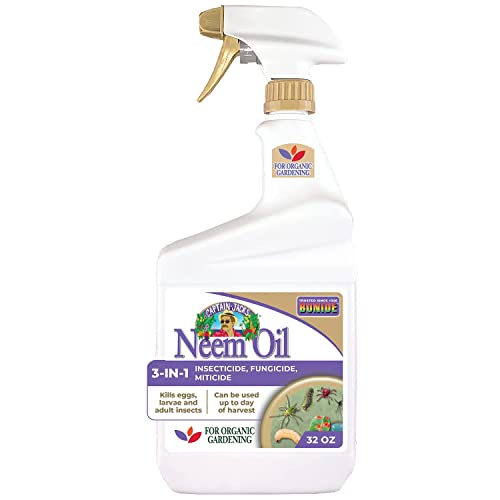
Best for: Gardeners seeking a versatile oil-based spray that targets pests and fungal growth. Ideal for combining pest suppression with fungal disease prevention in mixed-use spaces like vegetable gardens and ornamentals.
Why chosen: Neem oil’s multi-purpose action makes it a practical choice for integrated pest management. The ready-to-use format helps ensure quick deployment during routine garden care.
Limitation: Oil-based sprays can leave a residue on leaves and may affect pollinators if misapplied during bloom. Use with care on flowering plants and under recommended weather conditions.
Garden Safe Brand Fungicide3 With Neem Oil Extract

Best for: Gardens that want a neem-based alternative to copper or oil-based sprays. Good for preventive disease control and for use around plants sensitive to copper.
Why chosen: Neem oil extract helps inhibit disease development while offering insect and pest deterrence. The formulation supports organic gardening goals and broad-spectrum plant protection.
Limitation: Neem-based products are not as fast-acting as some synthetic fungicides for severe outbreaks; repeat applications may be required for ongoing protection.
BioAdvanced 3-in-1 Insect, Disease & Plant Mite Control Spray

Best for: Outdoor plants that require simultaneous pest and disease management, including common garden pests and fungal threats. Useful for roses, ornamentals, and vegetable crops.
Why chosen: This product combines three modes of action in one spray, offering convenient protection across multiple threat types. The ready-to-use format simplifies routine maintenance.
Limitation: Broad-spectrum formulations can impact beneficial insects if used without caution; follow label timing to minimize pollinator disruption.
Buying Guide: Key Considerations When Choosing a Fungicide Spray
- Target diseases and pests: Match the product to the common diseases in your region (powdery mildew, black spot, rust) and pests you encounter (aphids, mites, beetles).
- Organic vs. conventional: If organic gardening matters, prefer fungicides labeled for organic use, and note any harvest-day restrictions.
- Formulation and usage: Ready-to-use sprays are convenient but check the area they cover and any re-entry or harvest restrictions after application.
- Plant compatibility: Some ingredients can burn tender growth or affect certain plants; always test on a small area or consult label guidance for sensitive crops.
- Environmental impact: Consider products with lower accumulation in soil and minimal impact on pollinators when possible. Neem and plant-based formulations can be gentler alternatives.
- Rotation and resistance: Avoid over-reliance on a single active ingredient. Rotate products with different modes of action to reduce resistance development in pathogens.
Frequently Asked Questions
- Q: Are these sprays safe on edible crops? A: Many are labeled for edible crops or allow applications up to harvest; always follow the product label and local regulations.
- Q: Can I use multiple sprays together? A: Do not mix products unless the label explicitly permits tank mixing. Combining products may cause phytotoxicity or reduced effectiveness.
- Q: How often should I spray for best protection? A: Follow label directions; some products require initial applications and periodic reapplication during favorable conditions for diseases.
- Q: Do these sprays require withholding periods before harvest? A: Yes, organic and conventional labels often specify a harvest window after application. Check the exact timing on the label.
- Q: Will these sprays harm pollinators? A: Apply when pollinators are not active, and avoid broad sprays during flowering if possible, especially with oil-based or broad-spectrum products.
- Q: Do I need to test soil health after using copper products? A: Copper can accumulate in soil with repeated use; monitor soil health and use sparingly according to label guidance.