Answering the common question “What’s the best fungus treatment for grass?” this guide compares top fungicides that target lawn diseases while explaining who each product is best for. This selection focuses on ease of use, broad disease coverage, and suitability for common turf types. Ideal buyers include homeowners with active lawn diseases, new seedings, or those seeking a preventive plan against seasonal fungal threats.
| Product | Best For | Coverage | Notes |
|---|---|---|---|
| BioAdvanced Fungus Control for Lawns (Ready-to-Spray) | Small-to-medium lawns needing quick, ready-to-use spray | 5,000 sq ft | Ready-to-use hose-end spray; protects up to 30 days |
| Scotts DiseaseEx Lawn Fungicide | Prevention and first-sign treatment for diverse diseases | Up to 5,000 sq ft | Broad disease coverage; starts working within 24 hours |
| Spectracide Immunox Fungus Plus Insect Control | Combo fungus and insect control for proactive care | 32 oz concentrate | Rainproof in hours; bi-action treatment |
| BioAdvanced Fungus Control for Lawns (Granules) | Granular option for larger or established lawns | 5,000 sq ft | Granular formulation; broad disease control |
| Jonathan Green Lawn Fungus Control | Broad-spectrum control for multiple soil-borne diseases | Up to 5,000 sq ft | Granular; works on cool and warm-season grasses |
Each product below is evaluated for typical American lawns, emphasizing ease of use, mode of application, and disease coverage. Consider your grass type, climate, and whether you need preventive protection or curative treatment when choosing.
BioAdvanced Ready-To-Spray Fungus Control For Lawns

This ready-to-spray formulation provides both cure and prevention for listed lawn diseases. It is designed for use on all lawn types and offers protection for up to 30 days after application. Best for homeowners seeking a simple, fast-action solution with hose-end ease. Cautions include following label directions for watering and coverage. This option is especially suitable for lawns that require quick relief from red thread, brown patch, or other common turf diseases.
Scotts DiseaseEx Lawn Fungicide
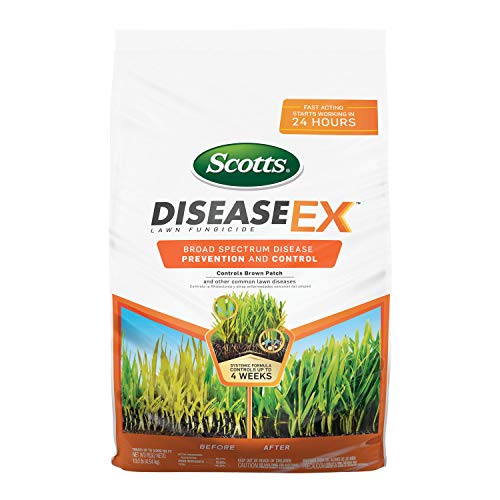
Scotts DiseaseEx Fungicide focuses on both prevention and control across 26 listed lawn diseases. It’s designed to work quickly—often noticeable within 24 hours—and can continue protection for up to four weeks. Best for gardeners wanting broad systemic coverage and compatibility across most grass types when used as directed. Choose this if you’re dealing with proactive disease prevention or early symptoms like brown patches, red thread, or powdery mildew.
Spectracide Immunox Fungus Plus Insect Control For Lawns

Immunox Fungus Plus combines fungal disease control with insect suppression. The dual-action formula targets major lawn diseases while also killing listed lawn-damaging insects on contact. It is rainproof in hours, helping ensure lasting protection despite weather. Best for lawns facing both fungal stress and insect pressure, especially in warm seasons. A limitation to note is that timing matters; apply before heavy pest activity or disease onset for best results and follow label guidance for lawn type compatibility.
BioAdvanced Granular Fungus Control For Lawns

This granular product covers a broad range of lawn diseases and provides up to 30 days of protection. It’s suitable for all lawn types and is designed to be spread over 5,000 square feet. Best for larger or established lawns where a granular method fits your maintenance routine. Choose this if you prefer less frequent applications or want a soil-contact approach. Caution: avoid applying on stressed or drought-affected turf without sufficient irrigation.
Jonathan Green Lawn Fungus Control

Jonathan Green’s Fungus Control targets more than 20 soil-borne diseases and serves as both a preventive and curative solution. It works across cool and warm-season grasses and is designed for use during dry yard conditions. Best for lawns that require broad-spectrum soil disease protection and compatibility with seedings. One limitation: it’s a granular product, which may require more even distribution and watering after application to activate.
Buying Guide: Key Purchase Considerations
What disease types are common in your region? Look for products that cover red thread, brown patch, dollar spot, and powdery mildew if these are prevalent where you live.
What is your lawn size and application preference? Hose-end sprays are quick for small yards; granular formulations suit larger areas or established lawns.
Is your lawn in active growth or maintenance mode? Preventive products are ideal before symptoms appear; curative treatments help when symptoms are visible.
Do you have pets or children nearby? Consider safer formulations with clear safety guidance and low residue, especially in yards used for play.
Can you tolerate weather constraints? Some products are rainproof within hours, while others require reapplication after rainfall or irrigation.
FAQ
- Q: Should I treat preemptively or wait for symptoms? A: If your lawn has a history of fungal disease, preventive applications can reduce risk; otherwise, treat at first signs of disease.
- Q: Can I mix products? A: Some formulations allow tank mixing; always consult the label for compatibility and safety.
- Q: How often should I reapply? A: Most products provide protection for 2–4 weeks; follow the label’s recommended interval.
- Q: Is there a product better for all grass types? A: Several products are labeled for all lawn types; check your grass species and follow the label.
- Q: Do these products kill existing damage? A: Fungicides typically prevent new growth and limit spread; they do not repair damage already done.
- Q: Are natural options available? A: Some products emphasize safer, plant-friendly ingredients; verify claims on the label and safety data.