Answering the question, which fungus treatments for plants are best for home gardens and potted plants? This guide highlights five proven options suited for common fungal issues like powdery mildew, blight, and black spot. Each product section explains who benefits most, why it’s a good pick, and any notable limitations. Use these picks to protect edible crops, ornamentals, and houseplants alike.
| Product | Best For | Key Benefit |
|---|---|---|
| Garden Safe Fungicide 3 | Organic gardeners needing a versatile spray | Three-in-one fungicide, insecticide, miticide |
| Bonide Captain Jack’s Copper Fungicide 32 oz | Broad disease control for outdoor gardens | Copper-based, organic gardening approved |
| Bonide Fung-onil Multi-Purpose Fungicide | Broad-spectrum disease protection | Chlorothalonil-based, wide coverage |
| Grower’s Ally Fungicide | Copper-free option for sensitive setups | Citric acid, OMRI listed |
| Earth’s Ally Disease Control | Natural, citric acid-based control | No harsh chemicals, safe for edible crops |
Garden Safe Fungicide 3 32 Oz. Ready to Use Trigger Spray

Best for organic-minded gardeners needing an all-around fungicide. Garden Safe Fungicide 3 provides prevention and control of diseases such as black spot, rust, and powdery mildew while also offering protection as an insecticide and miticide. The ready-to-use spray is convenient for quick applications around roses, flowers, vegetables, and fruiting plants. Use this when you want a single product that addresses multiple threats without additional mixing. Limitations include potential crop sensitivity with certain plants; always test on a small area first.
Bonide Captain Jack’s Neem Oil, 32 oz Ready-to-Use
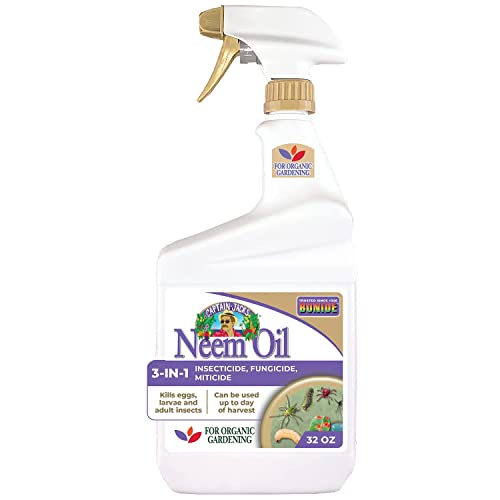
Best for gardeners seeking a multi-purpose solution that also tackles insects. This neem oil spray acts as a fungicide, miticide, and insecticide, making it suitable for mites, mildews, and other pests. It’s ready to use and can be applied up to harvest in many cases. Choose this if you want a single product that reduces pest pressure while helping to prevent fungal tissue damage. A potential limitation is that neem oil can cause leaf burn on some tender plants if applied in hot sun or full midday heat.
Bonide Captain Jack Copper Fungicide, 32 oz Ready-to-Use Spray

Best for broad outdoor disease control with organic-certified credibility. Copper fungicides help prevent a wide range of plant diseases, including blight and powdery mildew, and can be used up to harvest. This product is well-suited for vegetables, fruiting plants, and ornamentals that tolerate copper. A caution: copper-based products may accumulate in soil over time, so avoid frequent use on sensitive soils or if soil copper is already high.
Bonide Captain Jack Copper Fungicide 16 oz Concentrate

Best for gardeners who prefer a concentrate to tailor mixing ratios and coverage. This liquid copper fungicide concentrate is suitable for organic gardening and can be used up to harvest. It’s effective against a broad set of diseases like blight and powdery mildew. Choose this if you want flexible packaging and cost-per-use savings, but be mindful of handling concentrated copper and following label directions to minimize plant stress.
Grower’s Ally Fungicide for Plants

Best for copper-free, plant-friendly disease control. This food-grade citric acid formula prevents powdery mildew and other diseases without copper or synthetic pesticides. It’s OMRI listed and safe for edible crops, bees, and beneficial insects. Use this when copper sensitivity or soil concerns are present. Limitation: natural acids may be less persistent than copper or synthetic fungicides in heavy disease pressure.
Earth’s Ally Disease Control Concentrate

Best for a natural, citric-acid-based approach that emphasizes safety for people, pets, and the planet. This concentrate is designed to tackle powdery mildew, blight, black spot, and leaf spots. It’s a practical pick for gardeners prioritizing non-synthetic options and edible crops. A limitation is that citric-acid-based products may require more frequent application in high-disease conditions.
Buying Guide: Fungus Treatments for Plants
What should you consider when choosing a fungus treatment for plants?
- Active ingredient and mode of action: Copper fungicides provide broad, long-lasting protection but may affect soil copper; organic and copper-free formulas reduce soil impact.
- Target diseases: Powdery mildew, blight, leaf spots, and rust respond differently to copper, copper-free, or multi-purpose products. Match the product to the disease profile you see.
- Plant type and crop safety: Some plants are sensitive to oils or acids. Always check label directions and perform a spot test on a small leaf area.
- Usage practicality: Ready-to-use sprays are convenient for quick applications, while concentrates offer cost efficiency and tailored mixing.
- Environmental impact: Favor formulations that minimize non-target effects on beneficial insects when possible, especially in pollinator-rich areas.
- Harvest timing: Some products allow application up to harvest; others require a waiting period. Consider produce timelines when treating edibles.
FAQ
- Q: Can I use a copper fungicide on edible crops? A: Yes, many copper-based products are approved for organic gardening and can be used on edible crops, but follow label directions and consider soil copper levels.
- Q: Is copper safe for flowering ornamentals? A: Generally yes when used as directed, but prolonged use can cause phytotoxicity on sensitive varieties.
- Q: Are copper-free options as effective as copper products? A: Copper-free formulas like citric-acid-based products can control many common fungi, though they may require more frequent applications under heavy disease pressure.
- Q: Can I mix these products with fertilizers? A: Do not mix unless the label explicitly permits it. Some combinations can cause phytotoxicity or reduce effectiveness.
- Q: How soon can I expect visible results? A: Fungicidal action varies by product and disease; some show improvements after a few days, others require repeated applications per label guidance.
- Q: Should I treat the soil as well as the plant? A: Fungicides primarily protect plant tissues; soil impact depends on the product. Copper compounds can accumulate in soil over time, while copper-free options minimize this risk.