Looking for durable, low-maintenance garden beds to grow your vegetables? This guide reviews five popular options suited for urban and suburban plots, patios, or balconies. Each bed is evaluated for setup ease, growing depth, and suitability for different vegetable types. The list targets buyers seeking sturdy, long-lasting beds that can handle heavy soil loads and varying climates. Read on to find the best fit for your space and gardening goals.
Summary of Selected Products
- Land Guard Galvanized Raised Garden Bed Kit — Best for long-lasting, low-maintenance metal beds with quick assembly.
- Best Choice Products 6x3x2ft Outdoor Metal Raised Garden Bed — Best for deep-root vegetables and high soil capacity.
- zizin 2 Pack Galvanized Raised Garden Bed — Best for versatile, multi-bed setups with durable galvanized steel.
- DIIYIV 2PCS Galvanized Raised Garden Bed with Legs — Best for elevated, accessible gardening with a strong frame.
- Keter Urban Bloomer Raised Garden Bed — Best for built-in irrigation cues and compact herb growing with a modern look.
Land Guard Galvanized Raised Garden Bed Kit
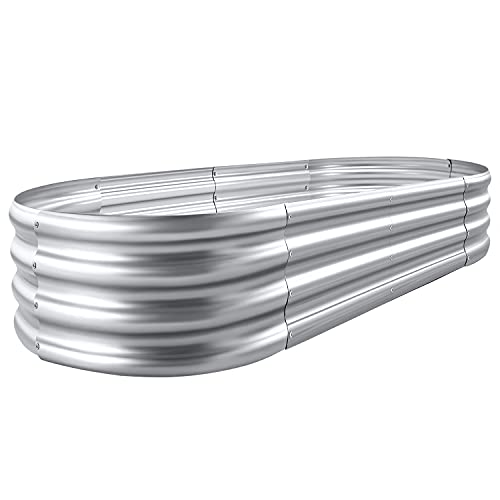
Best for: Gardeners who want a sturdy, corrosion-resistant bed with an oval shape and quick setup. This bed uses a Q195 galvanized metal sheet with double-layer galvanizing to resist rust and maintain form at the joints. Depth and width provide a solid growing area for medium to large vegetables. The design emphasizes long-term reuse and a neat appearance in outdoor spaces.
Why selected: It offers durable construction plus a simple assembly process, enabling quick deployment for immediate planting. The oval design adds visual appeal for patios or garden borders.
Caution: As with metal beds, surface temperature may rise in strong sun, potentially affecting root warmth; consider shading or mulch to protect shallow-root crops.
Best Choice Products 6x3x2ft Outdoor Metal Raised Garden Bed
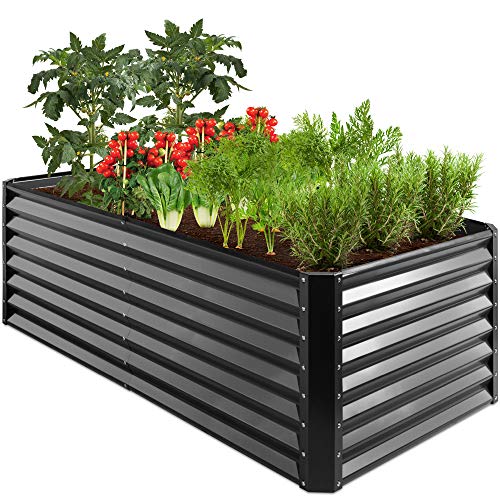
Best for: Deep-root vegetables and crops that require substantial soil volume, such as broccoli or beans. With 24 inches of growing depth, it holds up to 269 gallons of soil in a sizable footprint, favoring larger plantings in dedicated garden beds.
Why selected: This bed supports robust root systems and offers a bottom-panel omission that can simplify drainage or customization. It uses non-toxic materials, aligning with safe gardening practices.
Caution: The absence of a bottom panel means extra care is needed to prevent weed intrusion or soil loss if placed on non-stable ground.
zizin 2 Pack Galvanized Raised Garden Bed (6x3x1FT)

Best for: Settings that favor multiple beds for diverse crops or layered planting. The 6x3x1FT size per bed provides a balanced soil volume while allowing two units to be used together for contiguous garden areas.
Why selected: The two-pack setup increases planting flexibility and overall garden footprint without taking up excessive space. A multi-corrugated design and galvanized finish boost durability against weathering.
Limitation: Each bed is relatively shallow compared to deeper units, so it’s best suited for shallow-root or frequently harvested crops unless additional soil is added.
DIIYIV 2PCS Galvanized Raised Garden Bed With Legs

Best for: Accessibility-focused gardening where bending or kneeling is less desirable. The elevated design with legs makes planting easier for seniors or anyone needing reduced strain.
Why selected: A solid 300-pound capacity and protective corner pads improve safety. The two-piece assembly is straightforward, and the legs raise the bed for improved drainage and soil visibility.
Caution: Assembly may require alignment of legs and panels; ensure stable, level placement to prevent wobble on uneven surfaces.
Keter Urban Bloomer Raised Garden Bed

Best for: Small-space herb and vegetable growth with built-in irrigation cues. The design supports efficient water management via a self-watering gauge and a drainage system.
Why selected: This unit combines practical irrigation controls with a compact footprint, making it suitable for balconies or patios where space is at a premium.
Caution: The bed’s smaller overall height may limit root depth for larger vegetables; pair with shallow-root crops for best results.
Buying Guide: Key Considerations For Choosing Garden Beds
- Growing depth and soil capacity: Choose beds with sufficient depth for the vegetables you plan to grow. Deep-root crops require more soil volume and support.
- Material and durability: Galvanized metal beds resist rust and last longer under outdoor conditions. Wood beds are affordable but may require more maintenance.
- Elevation and accessibility: Elevated beds reduce kneeling and bending, which benefits users with mobility concerns. Consider leg height and wheel options for mobility.
- Drainage and bottom design: Open-bottom and bottomless options improve drainage but may need ground preparation to prevent weed intrusion. Closed bottoms reduce soil loss but require proper drainage planning.
- Assembly and maintenance: Look for clear instructions and modular parts. Quick assembly saves setup time, especially for first-time gardeners.
- Space and layout: For urban spaces, measure the available area and plan beds to maximize sun exposure and plant compatibility.
- Safety and non-toxicity: Ensure materials are free from harmful metals or coatings, especially if growing edible crops close to the surface.
Frequently Asked Questions
- What depth is best for vegetables in raised beds? Generally, 12-24 inches supports most common vegetables; deeper beds work well for root crops like carrots and potatoes.
- Are galvanized beds safe for growing food? Yes, galvanized steel is durable and commonly used for raised beds, though ensure coatings are food-safe and weather-appropriate.
- Do raised beds require liners? Not always. Open-bottom or open-side designs can rely on ground contact for drainage, while sealed beds may need liners to control soil loss.
- Is elevated gardening better for seniors? Elevated beds reduce bending and knee strain, making gardening more accessible for older adults or people with mobility challenges.
- How do I prevent weed growth in raised beds? Use weed barrier at the bottom when appropriate, fill with quality soil, and mulch the top layer to suppress weeds and retain moisture.
- Can I mix crops in the same bed? Yes, companion planting within a single bed can improve yields, but be mindful of plant size, root depth, and water needs to avoid competition.