Looking for reliable garden cameras that capture wildlife without fuss? This guide highlights five top choices designed for outdoor use, long battery life, and clear wildlife imagery. Each pick is suited to different needs—from solar-powered, remote hotspots to WiFi-enabled models for quick viewing. Use this overview to choose the best garden camera for your yard, farm, or forest edge, with practical notes on who benefits most from each option.
Summary table of selected products:
- MAXDONE Solar Trail Camera WiFi Bluetooth – 4K, 64MP, solar-powered, long battery life
- KJK Trail Camera 36MP 2.7K – compact, fast trigger, strong night vision
- Misstech 4K UHD Solar Trail Camera – 4K video, 64MP, IP66, solar powered
- KJK Trail Camera 4K 64MP WiFi Bluetooth – remote app control, 4K video
- Punvoe Trail Camera 64MP 4K – wide angle, long-range night vision, IP67
MAXDONE Solar Trail Camera WiFi Bluetooth
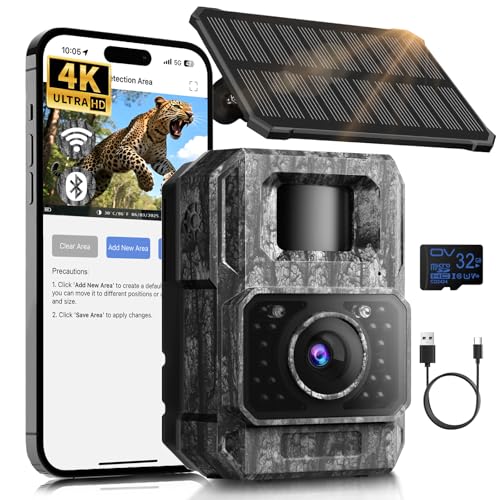
Best for off-grid surveillance and long-term yard monitoring. This camera creates its own short-range Wi‑Fi hotspot for setup and file download, with no monthly fees. It features a large 6000mAh battery and three charging modes (solar, USB-C, rechargeable power), making it ideal for remote locations where power is scarce. The included 32GB SD card supports local storage. Note: It does not connect to home Wi‑Fi or support remote viewing, so expect on-site access only.
Who it’s best for: Garden owners who want a self-contained, low-maintenance camera that works without a home network and prioritizes long-term solar-powered operation.
Why selected: It maximizes uptime with solar charging, a generous battery, and a rugged IP66 enclosure suitable for outdoor climates. Its standalone operation reduces the need for Wi‑Fi coverage in remote areas.
Limitations: No remote viewing or home Wi‑Fi integration, which may limit real-time monitoring from afar.
KJK Trail Camera 36MP 2.7K

Best for compact setups with strong night performance. This trail cam delivers 36MP stills and 2.7K video, aided by 850nm low-glow LEDs and a 130° wide-angle lens. A fast 0.1s trigger minimizes missed activity and the 2.0” TFT screen helps on-site framing and playback. The camera uses internal storage and does not require constant Wi‑Fi connectivity, though it does provide a 2.0” display for immediate viewing.
Who it’s best for: Wildlife watchers who need high-quality daytime imagery in a compact form, plus quick on-site checks without relying on a network.
Why selected: It balances image quality, trigger speed, and a broad field of view, making it versatile for forests, fields, and yards where remote access isn’t a priority.
Limitations: Not designed for home Wi‑Fi streaming; best used with local memory and on-site reviews.
Misstech 4K UHD Solar Trail Camera

Best for full-sun outdoor properties with no-worry power. This solar-powered trail camera records 4K video and 64MP images, with 0.1s motion-activated triggering and local storage. The IP66 rating adds weather resistance, making it suitable for farms, yards, and woodland borders. It emphasizes a solar-centric design that keeps maintenance low and uptime high.
Who it’s best for: Property owners seeking high-resolution wildlife footage without ongoing battery replacements or network requirements.
Why selected: The 4K capability and large image sensor deliver crisp wildlife detail, while solar power supports extended deployments in remote areas.
Limitations: Requires sun exposure for optimal solar charging; cloudless days maximize performance but heavy shade reduces runtime.
KJK Trail Camera 4K 64MP WiFi Bluetooth

Best for remote monitoring via app control. This 4K 64MP trail camera supports WiFi and Bluetooth with the TrailCam GO app, enabling preview, download, and remote setting adjustments within the camera’s range. It features an IP67 rating for rugged outdoor use and a 130° wide angle for broad coverage. It notes that it cannot connect to a home Wi‑Fi router, but it can be configured on-site and accessed via local network.
Who it’s best for: Users who want app-based control and easy field setup without depending on home Wi‑Fi connectivity.
Why selected: Combines high-resolution imagery, remote smartphone access, and tough waterproofing for challenging environments.
Limitations: Not designed for direct home network streaming; requires proximity for app control and data transfer.
Punvoe Trail Camera 64MP 4K

Best for wide-angle surveillance with strong low-light performance. This camera captures 64MP photos and 4K video, with 100ft night vision using 45pcs 940nm low-glow LEDs. The 130° wide detection angle helps reduce blind spots on trails. A fast 0.1s trigger and IP67 waterproofing support use in varying weather and terrain. It also includes a large field of view for property surveillance and wildlife monitoring.
Who it’s best for: People who need broad area coverage and robust night vision for security and wildlife tracking.
Why selected: The combination of high resolution, wide detection, and durable build makes it a versatile choice for expansive outdoor areas.
Limitations: High-resolution footage requires ample storage and may demand stronger power management in remote sites.
Buying Guide
What should you consider when choosing a garden camera for wildlife?
- Power source and uptime: Solar-powered or rechargeable options reduce maintenance. If you need off-grid operation, prioritize solar charging and long-lasting batteries.
- Connectivity: Do you want home Wi‑Fi streaming or offline local storage? Wi‑Fi/Bluetooth models enable remote viewing via an app, while standalone cameras work without internet but require on-site access to retrieve data.
- Image quality and video: Higher MP counts and 4K video capture deliver crisper wildlife detail, especially for distant or small animals.
- Trigger speed and field of view: A fast 0.1s trigger helps capture quick movements; wide-angle lenses (120°–130°) cover more area but can slightly reduce detail at edges.
- Durability and weatherproofing: Look for IP ratings (IP66/IP67) to withstand rain, dust, and extreme temperatures.
- Storage and data management: Local storage with SD cards is common; consider models with app-based downloads if you prefer remote access without cloud services.
- Footprint and mounting: Ensure mounting options fit your space, whether on a tree, fence, or dedicated pole. Weight and stability matter in windy conditions.
Practical decision guide by scenario:
- Off-grid yards or farms with limited network access: Choose MAXDONE Solar Trail Camera or Misstech 4K UHD Solar Trail Camera for long-term, low-maintenance operation.
- Close-range wildlife observation with occasional on-site checks: KJK 36MP 2.7K or Punvoe 64MP 4K offer strong daytime detail and versatile field coverage.
- App-controlled monitoring with remote viewing: KJK 4K 64MP with WiFi/Bluetooth provides mobile access, ideal for when you’re away from the site.
FAQ
Do these cameras require constant Wi-Fi to work?
Most listed models function without home Wi-Fi, using local storage or on-site viewing. Some offer app control within a limited range or rely on built-in Wi‑Fi for setup and data transfer.
What is the typical trigger speed?
Trigger speeds range from about 0.1 seconds to 0.2 seconds, designed to capture moving wildlife with minimal delay.
Are solar-powered options reliable year-round?
Solar models perform best with consistent sun; in shady or winter conditions, battery and charging mode versatility help maintain uptime.
What should I consider for night vision?
Low-glow infrared LEDs reduce animal disturbance. Look for longer-range night vision and balanced exposure to avoid overexposed images.
Is IP67 or IP66 necessary?
IP66/IP67 ratings provide solid protection against rain and dust. Choose higher ratings if exposure to harsh weather is expected.
What storage capacity is typical?
Most use microSD cards; some include a pre-installed card. Plan for 32GB–128GB to handle high-resolution photos and videos.