Answering your winter gardening needs, this guide highlights the best garden covers for winter and explains who each option is best for. These products help protect seedlings, vegetables, shrubs, and fruit trees from frost, cold winds, and pests while allowing light and air to reach your plants. Ideal buyers include hobby gardeners with raised beds, urban gardeners with limited space, and those who want reusable, durable frost protection. The table below compares five highly relevant options to help you choose quickly.
Quick comparison table
- AlpineReach Frost Cover — Best for all-season protection and lightweight performance
- MAQIHAN Plant Cover — Best for versatility and easy sizing
- SUNPRO Plant Cover — Best for large, cut-to-size coverage and light transmission
- Valibe Plant Covers — Best for affordable, large-area coverage
- JUNKOGO 7×25/7×100 — Best for lightweight reuse and modular sizing
AlpineReach Plant Covers Frost & Sun Protection

The AlpineReach frost cover provides all-season plant protection with a breathable design. This option is ideal for gardeners who want to shield frost and wind while preserving light and moisture for ongoing growth. It is best for growers seeking a simple cover that works year-round without heavy setup. A potential limitation is that very heavy snow conditions may require additional reinforcement.
- All-season plant protection against frost, snow, wind
- Breathable design supports light, air, and water penetration
- Creates a microclimate to promote healthier growth in cold weather
Who this is best for: Home gardeners protecting a mix of seedlings and established plants through winter, especially those who want a straightforward, breathable cover that can handle cold snaps without special hoops.
MAQIHAN Plant Cover — 6.5 ft x 13 ft
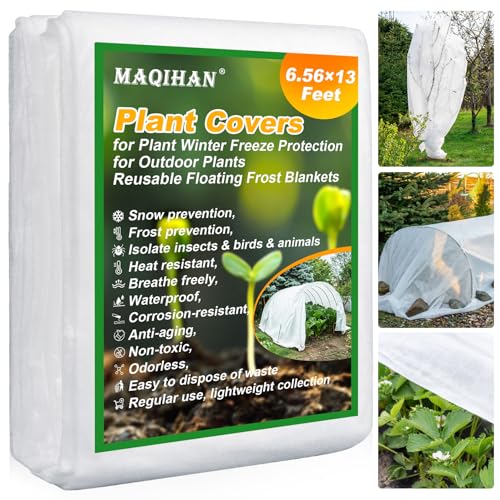
The MAQIHAN cover uses a premium 1 oz/sq non-woven fabric for durable insulation and light transmission. It’s versatile enough to act as frost, snow, animal, insect, and sun shield. This makes it especially suitable for gardeners needing a customizable, reusable option that can be adapted to many plant types and garden layouts. A potential constraint is the need to cut or shape the fabric for unique plant configurations.
- Premium 1 oz/sq non-woven fabric for insulation and breathability
- Multi-purpose: frost, snow, animal/insect barriers, sun shield
- Cut-to-fit customization for varied plants
Who this is best for: Planters with diverse beds and crops who want a flexible, reusable cover that can be trimmed for individual plants and arranged with hoops or frames as needed.
SUNPRO Plant Covers Freeze Protection
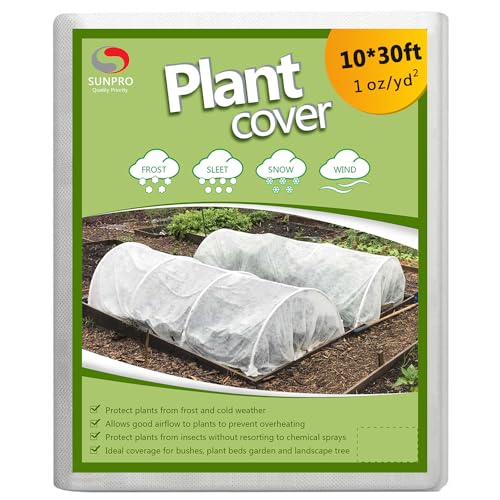
SUNPRO offers a large 10 ft x 30 ft cover, designed to be cut to size for individual beds or rows. It balances warmth with light transmission, letting 70–85% of light through while keeping cold out. It’s best for gardeners who need a big, customizable sheet that won’t smother tender plants. The fabric’s breathability helps prevent moisture buildup, but larger installations may require secure anchoring to resist wind.
- Large 10×30 ft coverage; cut to fit
- 1.0 oz/yd² non-woven polypropylene for warmth and light transmission
- Protects against frost, snow, and pests; preserves germination in early spring
Who this is best for: Gardeners with expansive beds or multiple crops who want to tailor the cover to fit irregular shapes while maintaining light access.
Valibe Plant Covers Freeze Protection
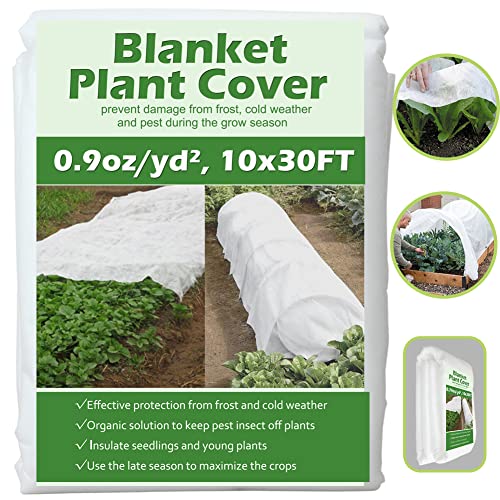
Valibe’s 10×30 ft frost protection blanket is designed for large-area use. It’s lightweight, breathable, and easy to cut for custom shapes. The material guards against frost and helps extend the growing season. A note: while affordable, the largest sizes may require additional securing to withstand heavy winds or rain.
- 10×30 ft size; cut to fit
- 0.9 oz/sq ft non-woven polypropylene for breathability
- Suitable for large patches, vegetables, herbs, and floriculture
Who this is best for: Gardeners seeking a cost-effective option for covering sizable beds or multiple crops across a season, with easy customization.
JUNKOGO Plant Freeze Protection Cover — 7×25 ft

JUNKOGO’s 7×25 ft frost cloth provides comprehensive winter protection with a lightweight, breathable non-woven fabric. This option is easy to install and reuse, and it can be wrapped around trees or laid over beds. It’s well-suited for gardeners who need a relatively compact, reusable solution, though it covers a smaller area than some rivals.
- Lightweight, breathable 0.9 oz/sq non-woven fabric
- Reusable frost protection with simple setup
- Can be secured with stones, stakes, or hoops
Who this is best for: Gardeners with smaller plots or those who want a quick, modular solution that’s easy to store after use.
JUNKOGO Plant Freeze Protection Cover — 7×100 ft

This longer edition maintains the same breathable, lightweight design while offering extensive coverage. It’s best for gardeners who need to protect long rows or multiple beds with a single cloth. A consideration is handling and storage of extended fabric length when not in use.
- 7×100 ft coverage for long rows or multiple beds
- Breathable 0.9 oz/sq non-woven fabric
- Reusable and easy to secure with stakes or frames
Who this is best for: Large-scale plots and raised beds where one cover can protect many plants, or for seasonal gardeners who rotate crops across long gardens.
Buying Guide: Winter Garden Cover Considerations
- Size and coverage: Measure your beds or rows to choose a cover that reduces the need for frequent adjustments. Larger sheets save time but require more securing in wind.
- Fabric weight and breathability: Lighter fabrics (0.9–1.0 oz/yd²) provide adequate frost protection while preserving light transmission. Heavier fabrics offer stronger insulation but may reduce light.
- Light transmission: A balance between warmth and photosynthesis matters. Look for covers that admit enough light for germination and healthy growth.
- Reuse and durability: Reusable non-woven fabrics are cost-effective over time. Check for tear resistance and easy cleaning or storage.
- Ease of installation: Drawstrings, hoops, or frames can simplify setup. Consider whether you need simple draping or a more secure system against wind.
- Season extension vs. winter protection: Some covers excel as season extenders, while others focus strictly on frost protection. Choose based on your climate and crop schedule.
- Protection scope: Decide if you need protection from pests, wind, or animals in addition to frost. Multi-use covers may cover multiple concerns.
Frequently Asked Questions
- Q: How do I choose the right size for my garden?
- A: Measure bed width, length, and any irregular shapes. Pick a cover that overlaps edges by a few inches and allows room for secure anchoring.
- Q: Can plastic sheeting be used as a frost cover?
- A: It’s not recommended for long-term use as it can trap too much heat or restrict airflow, potentially damaging plants. Fabric covers are preferred for breathability.
- Q: Should covers be removed on sunny days?
- A: If temperatures rise above freezing or if plants are actively growing, you may remove or vent the cover to prevent overheating and allow airflow.
- Q: How often should I replace a frost cover?
- A: Reusable non-woven fabric should last several seasons with proper care. Inspect for tears or worn edges before each season.
- Q: Are there covers specifically for fruit trees?
- A: Yes. Some larger covers can drape over small trees or be secured with stakes; for mature trees, use thinner, taller wraps or individual protection solutions designed for trees.
By selecting the right winter garden cover, you can protect young plants, extend the growing season, and maintain garden productivity through cold weather. Each option above offers distinct advantages depending on bed size, plant type, and climate, enabling a practical approach to winter gardening.