If you’re growing vegetables, garden covers can protect seedlings, extend the growing season, and reduce pests. This guide highlights five effective options and who they’re best for. Whether you’re a balcony gardener, raised-bed gardener, or a small homestead grower, these covers help shield crops from pests, wind, and sun while preserving essential air and moisture flow. The table below compares the featured products at a glance to aid quick decisions.
| Product | |||
|---|---|---|---|
| Jevrench Garden Netting | Ultra-fine garden netting | Open-field vegetables and fruit crops | Strong 0.8 mm x 1 mm mesh for broad protection |
| Sunwinx Garden Mesh Netting Kit | Mesh netting with hoops | Raised beds and flexible garden setups | Includes hoops for quick frame assembly |
| RIFNY Garden Netting (2 Pack) | Ultra-fine mesh netting | General vegetable and fruit protection | Two 10×33 ft nets with good permeability |
| FARAER Garden Netting, 10x33ft | Ultra-fine mesh netting | Weed-safe shielding with airflow | Oblong mesh enabling water and light through |
| UYEDUJZ Garden Netting 2 Pack | Raised-bed netting | Small to medium raised beds | Double drawstring for secure in-place coverage |
Jevrench Ultra Fine Garden Netting

The Jevrench netting uses a 0.8 mm by 1 mm ultra-fine mesh designed to defend vegetables, fruits, and flowers from pests while still allowing air, light, and moisture to reach plants. Best for gardeners who need a robust, simple barrier for a wide growing area, including rows and beds. The material is described as durable and reusable for 3–5 years when properly maintained, making it a strong choice for seasonal growers who value long-term protection. A potential limitation is that larger pests may still find gaps if the frame or support is not well secured.
Who this is best for: Home gardeners with row crops or orchard-adjacent plantings seeking a long-lasting, transparent cover.
Sunwinx Garden Mesh Netting Kit

The Sunwinx kit includes a 10×33 ft ultra-fine mesh netting, six 8-foot garden hoops, clips, and connectors. The mesh is 0.03 inch (about 0.76 mm) fine, allowing insects and pests to be deterred while permitting air, light, and moisture to pass through. The fiberglass hoops offer sturdy, rust-free support, making it a versatile choice for raised beds and various garden layouts. A consideration: assembly is more involved due to the hoops and clips, but it provides a sturdy frame for longer use.
Who this is best for: Gardeners wanting a modular frame solution for raised beds or larger garden plots, with the flexibility to reconfigure coverage as plants grow.
RIFNY 2 Pack Ultra Fine Mesh Netting

RIFNY offers two 10×33 ft nets made from ultra-fine mesh with a 0.04 inch (about 1 mm) opening. The design emphasizes high permeability—air, light, and rain can pass through—while providing a barrier against insects, birds, and small mammals. The product notes clarify that a single package contains two nets, with no need to remove the netting for watering. This makes it a convenient option for ongoing plant care. A potential limitation is that extended wind exposure can require extra securing of the edges.
Who this is best for: Gardeners who want continuous protection without removing the cover for irrigation or feeding.
FARAER 10x33ft Ultra Fine Netting
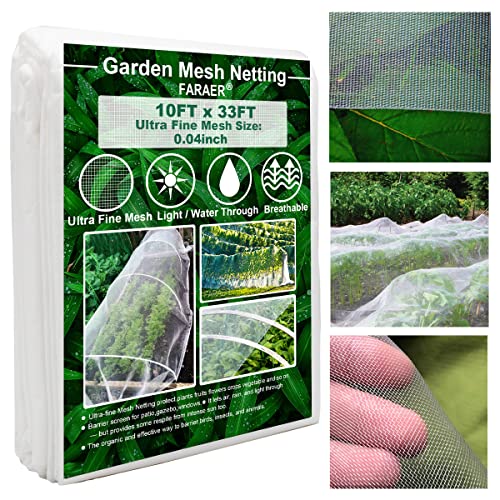
The FARAER netting covers a generous 10×33 feet with a 0.8 mm x 1 mm ultra-fine mesh. It is designed to protect vegetables, fruits, and crops while still allowing air and moisture to pass, so photosynthesis is not hindered. The product is described as multipurpose, usable indoors and for windows as well. A practical note: ensure proper edge securing to maximize wind resistance in exposed areas.
Who this is best for: Long, wide garden beds where a single, continuous net is preferred for weed and pest suppression with preserved airflow.
2Pcs Garden Row Accelerator Covers

These two foldable raised bed covers measure 31.9 x 12.2 x 14.1 inches and come with eight ground stakes for stability. The PVC mesh and green trim emphasize durability and reuse for multiple seasons. The foldable design allows easy storage, and the patches of green trim help blend with garden aesthetics. A limitation to note is that their size is better suited for smaller rows rather than large beds.
Who this is best for: Small to medium raised-bed gardeners seeking a portable, reusable cover that can be easily stored when not in use.
LAVEVE Weed Barrier Landscape Fabric

LAVEVE’s 4-foot by 100-foot weed barrier uses woven polypropylene for durability and permeability. It reduces weed growth while allowing air and water to reach plant roots, supporting soil health. It’s easy to cut to fit shapes and bed outlines and can be fixed with pegs. Use this when weed suppression and soil quality are priorities. A consideration is that larger beds may require multiple rolls for full coverage.
Who this is best for: Gardeners who prioritize weed control and soil health across long, uninterrupted planting areas.
Buying Guide: Key Purchase Considerations
- Mesh size: Ultra-fine meshes (around 0.03–0.04 inches) deter small pests while still letting in air, water, and light. Choose smaller openings for leafy greens but ensure plants still photosynthesize well.
- Coverage area: Measure beds and rows before buying. For raised beds, consider depth and whether sidewalls will touch or crowd the plants.
- Frame vs. loose netting: Some products include hoops or anchors for stability; others are just netting. Frames reduce wind displacement and are better in gusty climates.
- Durability and reuse: Look for UV resistance and material thickness. Reusable nets are more cost-effective over a season or year.
- Ease of use: Foldable designs and double drawstrings simplify installation and removal, especially for frequent watering or feeding.
- Implementation context: Raised beds, row covers, and greenhouse shading each have unique needs. Align the product with your setup and climate.
Frequently Asked Questions
- What size mesh is best for vegetable gardens?
– A mesh around 0.03–0.04 inches works well for most vegetables, balancing pest exclusion with air and light flow. - Can I reuse garden netting for multiple seasons?
– Yes, many nets are described as reusable for several years when properly cared for and stored away from sharp edges. - Do I need a frame with garden netting?
– Frames provide extra stability, especially in windy areas, but some nets work as loose coverings with stakes or clips. - Will these covers stop pollinators?
– Ultra-fine meshes typically deter some pests but still allow pollinators to access flowers if placed carefully around flowering plants. - Should I remove covers during rain?
– Most fine meshes allow rain to pass through; however, heavy accumulation can weigh down the netting and should be managed. - Are these covers suitable for indoor use?
– Some products note indoor or window uses; verify the product description if you need indoor application.