Answering the question “which tools help me plant seeds most efficiently?” this guide highlights reliable seed planters and dibbers that suit different gardeners. Whether you’re starting a vegetable patch, bulb garden, or container beds, the right tool can improve depth accuracy, spacing, and ease of use. The top picks below are best for beginners needing simple guidance, seasoned gardeners seeking speed, and homeowners wanting durable, long-lasting gear. A quick summary table follows to compare key choices at a glance.
| Product | Best For | Key Benefit |
|---|---|---|
| Esvopa Seed Dibber | Precise sowing in rocky or compact soil | Clear depth markings and comfortable wooden handle |
| Sukiise Hand Dibber | Bulb planting and seed placement | All-metal build with durable comfort grip |
| Seeding Square | Organized spacing for bigger harvests | Color-coded template to maximize yields |
| Seed Spacer Tool (HOSUKU) | Customizable layouts | 11 threaded sockets for tailored spacing |
| FLORA GUARD Hand Dibber | Bulbs, seeds, transplanting | Sturdy steel with depth markings |
Esvopa Seed Dibber Hand Dibber
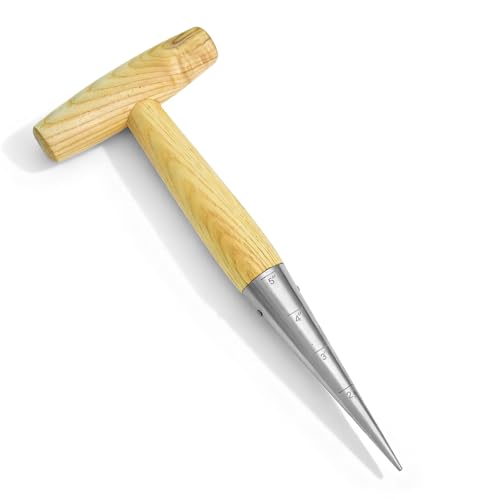
The Esvopa Seed Dibber is designed for precise seed sowing with a wooden T-handle for comfort. Its sturdy stainless steel tip makes clean holes in various soils, and the depth markings help gardeners plant at consistent depths for seeds and bulbs. This tool is best for buyers who want reliable depth control and a familiar, comfortable grip for extended planting sessions. A potential limitation is that it relies on manual alignment for depth, so extremely tiny seeds may still require careful placement.
- Best for precise seed placement and uniform depth
- Clear depth markings reduce the need for extra measuring tools
- Comfortable wooden handle minimizes hand fatigue
Sukiise Hand Dibber
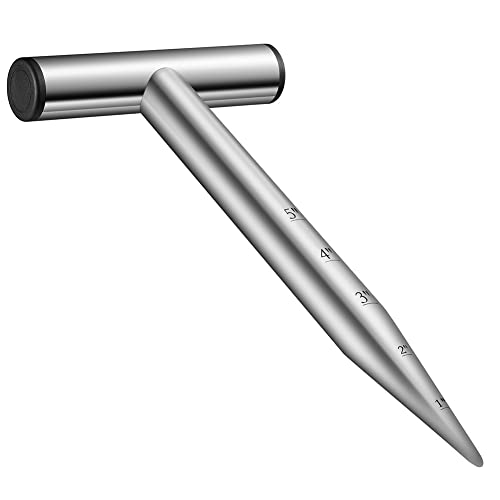
The Sukiise Hand Dibber offers a robust stainless-steel build with a comfortable grip, making it ideal for planting seeds, bulbs, and roots in tight spaces. It’s a durable choice for gardeners who value longevity and easy cleanup. Best for bulb and seed placement in moderately tough soil, it can be less forgiving in very dense clay where lighter tools might slip. A caution: stainless steel’s rigidity means you’ll still need to align depth by eye for very small seeds.
- Better for long-lasting use and steady performance
- All-metal construction supports heavy-duty use
- Ergonomic grip aids precise control
cozyou 4 Pack Seed Dispenser & Dibber Set

This Cozyou set includes a seed sowing dispenser and several related tools designed to streamline sowing and transplanting. The 4-pack provides multiple ergonomic options to create consistent holes and spacing. It’s best for buyers who want an economical, all-in-one solution that simplifies sowing different seed types. The trade-off may be a smaller single-tool footprint if you primarily plant large bulbs or require deeper holes than the kit’s typical design supports.
- Best for simple, low-cost seed spacing
- Ergonomic cranked handle aids one-handed use
- Versatile enough for diverse seeds and bulbs
Seeding Square – Seed & Seedling Spacing Template

The Seeding Square uses a patented, color-coded spacing layout to optimize plant density and weed suppression. It’s a strong choice for vegetable gardens and raised beds where precise spacing translates to bigger yields and easier maintenance. It’s best for beginners and families who want a simple, visual guide for layout. A limitation: the template is best used with steady hands and a plan for crops with consistent spacing; variable row crops may require additional adjustments.
- Best for organized planting and bigger harvests
- Simple visual guide reduces guesswork
- Supports weed suppression through precise spacing
Seed Spacer Tool – Interchangeable Pegs
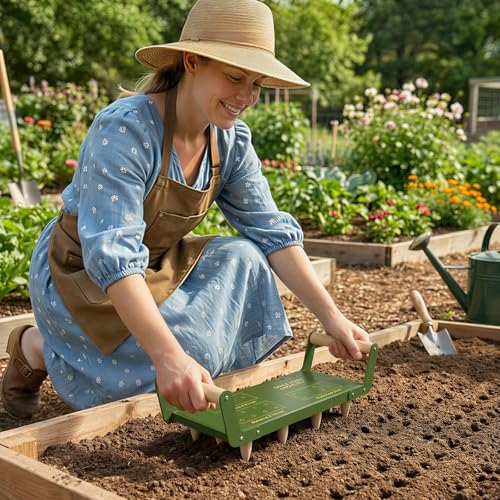
The Seed Spacer Tool offers 11 threaded sockets with interchangeable wooden pegs, enabling customizable planting patterns. It’s best for gardeners who want tailored spacing for varied crops and trials. The sturdy steel construction supports repeated use, and the ergonomic wooden handle adds comfort. A caution: more setup time may be required to assemble different peg configurations for each crop type.
- Best for customizable planting layouts
- Durable steel build withstands regular use
- Wooden handle enhances comfort during long sessions
Seed Planter Tool Kit 10Pcs

The 10-piece Seed Planter Tool Kit combines a 12-hole seed planter, mat, and assorted accessories to facilitate both indoor seed trays and outdoor garden beds. It is best for hobbyists and small-space gardeners wanting a ready-to-use, all-in-one solution. A limitation is that some components may be smaller and require careful handling for novice users attempting large-scale sowing.
- Best for indoor and outdoor seed starting
- Comprehensive set reduces the need for multiple purchases
- Compact design supports small garden spaces
Buying Guide: Choosing Seed-Planting Tools That Fit Your Garden
Key considerations help buyers pick tools that match soil type, crop variety, and personal comfort preferences. Start by asking:
What type of gardening am I doing?
For bulbs and larger seeds, a sturdy dibber with a clear depth scale is ideal. For tiny seeds, a precise spacing template or multi-tool set can reduce waste and ensure even germination.
How important is ease of use and comfort?
Ergonomic handles, lightweight materials, and balanced weight distribution make long planting sessions less tiring. Wooden grips and powder-coated steel offer durable comfort for frequent use.
Do I need customization or fixed templates?
If you grow many crops with different spacing, a tool with interchangeable pegs or a color-coded layout helps manage varying requirements. For straightforward rows, fixed templates or simple dibbers may suffice.
How much maintenance will the tool require?
Stainless steel tend to resist rust and are easy to clean, while wood and plastic components may wear faster under heavy use or exposure to water. Consider tools with easy-clean surfaces for busy gardeners.
What landscape or bed type do I have?
Raised beds, in-ground plots, and indoor seed trays each benefit from different tool designs. Seed planters with depth markings work well in uniform beds; space templates suit irregular layouts.
What is a practical starter set?
A compact kit with a seed planter, a dibber, and a spacing guide often balances upfront cost with broad utility for new gardeners. It allows experimentation without committing to many specialized tools.
Frequently Asked Questions
- What is a seed dibber used for?
A seed dibber creates holes in soil to plant seeds or bulbs at consistent depths, improving germination and growth consistency.
- Why use a spacing template?
Templates help ensure uniform spacing, which supports root development, air circulation, and weed suppression for larger harvests.
- Are stainless steel dibbers better than wooden ones?
Stainless steel is more durable and easier to clean, while wooden handles can be more comfortable for extended use.
- Can I use these tools indoors?
Yes, several sets come with seed planar components compatible with seed trays and indoor germination mats.
- How do I maintain depth accuracy?
Rely on depth markings and measure by eye if needed for very small seeds. Regularly check the tip wear and replace if needed.
- Which tool is best for beginners?
A basic seed planter or dibber with a simple depth guide is usually the easiest starting point for new gardeners.