Answering common gardening and property-maintenance needs, gas-powered water pumps move water quickly for irrigation, pool draining, and general transfer tasks. This guide highlights five reliable models suited for yard hoses and garden use. The best picks balance power, portability, and ease of use for homeowners, small farms, and DIY enthusiasts. Read on to see clear pros, limits, and who each pump is best for.
XtremepowerUS Gas Water Pump — 36 GPM, 1″ In/Out

The XtremepowerUS model offers a 3 HP 79cc engine and 1-inch inlet and outlet, delivering up to 36 gallons per minute. It’s designed for a variety of garden tasks, water transfer, and irrigation across larger plots. The engine provides solid power for moving water from wells, ponds, or tanks to distant sprinkler systems. Its practical weight under 28 pounds and a built-in handle aid in transport between work sites.
Best for: Taller irrigation runs and portable backyard projects where a steady, mid-range flow is needed. Better for users who prioritize a single, versatile transfer pump with straightforward setup.
Limitation: The pump’s performance depends on fuel availability and maintenance; keep the carburetor clean and follow starting procedures to avoid startup issues.
Honda WX10 Gas Water Pump — 32 GPM, 121 ft Head

The Honda WX10 uses a GX-series 4-stroke engine and provides about 32 GPM with a total head lift of 121 feet. It’s renowned for reliable starts and solid power for pool drains, ponds, and yard irrigation. At roughly 13 pounds, it remains highly portable while offering a compact footprint suitable for quick jobs around the home or boat dock area.
Best for: Homeowners and gardeners needing a compact, easy-start pump with dependable performance for draining pools, irrigation, or small water transfers. Choose this if portability and brand reliability are priorities.
Limitation: Lower maximum flow compared to larger trash pumps; not ideal for heavy sludge or debris-filled water without additional filtration or pre-cleaning. Avoid if you routinely move large solids.
DC HOUSE 2″ Gas-Powered Semi-Trash Water Pump — 158 GPM

This 212cc, 6.5 HP pump targets higher flow tasks with a semi-trash capability. It can move water at up to 158 GPM and handles moderate solids, making it suitable for larger irrigation lines, quick drainage, and farm chores. The design emphasizes ease of maintenance with accessible spark plug and fuel access, though it’s heavier than compact home-use models.
Best for: Property owners who need higher throughput and can manage a heavier unit. Better for longer irrigation runs and on-site drainage where speed matters and some debris can be tolerated with pre-cleaning.
Limitation: Weight and size reduce portability; this unit requires more storage space and stronger handling for transport between sites.
Gosangom 4-Stroke Gas Water Pump — 1″ High-Pressure Irrigation
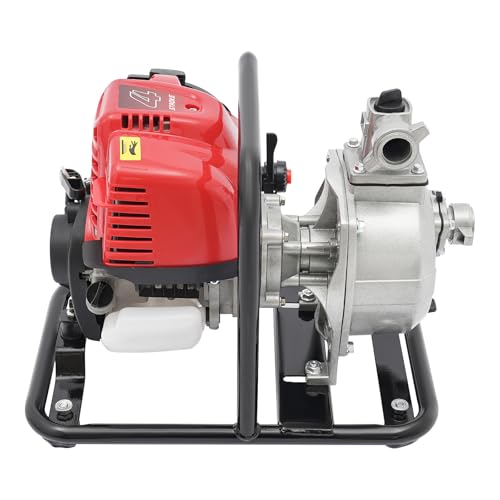
The Gosangom 1-inch pump emphasizes high pressure and reliability for irrigation tasks. It uses a four-stroke gasoline engine and advertises a strong flow with a 30-meter head, suitable for garden hose irrigation and other transfer needs. Its carbon steel and aluminum build aims to balance durability with lighter weight compared with larger trash pumps.
Best for: Gardeners and small farm setups seeking higher pressure for sprinkler systems or elevated irrigation lines. Choose this if you need better head pressure in a compact package.
Limitation: Flow rate and head are competitive but not the top in the category; for heavy sludge or large solids, some maintenance might be required after extended use.
YSHUSTGY Gas Powered Water Pump — 43cc, 2-Stroke, High Flow

The YSHUSTGY unit operates on a 43cc 2-stroke motor and is designed for quick water movement in small yards and farms. It supports clean or mildly dirty water tasks, such as irrigation, garden watering, pool draining, and general outdoor maintenance. The unit emphasizes portability and straightforward operation for homeowners and hobby farmers alike.
Best for: Quick jobs in modest spaces where mobility and ease of use matter most. Suitable for those who need to move between locations often and require a light, simple-start pump.
Limitation: Two-stroke engines require mixed fuel and can require more maintenance than larger four-stroke equivalents over time.
Buying Guide
- Flow rate vs. head height: Higher GPM is beneficial for rapid transfer, but adequate head (lift) is essential to reach sprinklers or elevated tanks. Match your garden layout to the pump’s flow and lift capabilities.
- Solids handling: If you expect debris or sludge, choose a semi-trash or trash-capable model. For clean water tasks, a standard transfer pump suffices.
- Portability: Weight and handles matter for moving between hoses and job sites. Smaller units are easier to carry but may offer less throughput.
- Fuel considerations: Four-stroke engines are typically easier to refuel and maintain than two-stroke units, which require fuel-oil mixtures.
- Durability and maintenance: Look for a steel or alloy body, accessible spark plugs, and simple carburetor access to reduce downtime during busy outdoor seasons.
Practical comparison at a glance
- Best for high-throughput irrigation: DC HOUSE Semi-Trash Water Pump (158 GPM).
- Best for portability and compact spaces: Honda WX10.
- Best overall value for garden hose irrigation with solid power: XtremepowerUS Gas Water Pump.
- Best for elevated irrigation or high-pressure needs: Gosangom 1″ High-Pressure Pump.
- Best for quick, light outdoor tasks: YSHUSTGY 43cc Gas Pump.
Frequently Asked Questions
- What is the main factor to consider when choosing a gas water pump for a garden hose? Consider flow rate (GPM), head height (lift), and whether you need to handle solids. Balance throughput with the elevation and distance of your hose layout.
- Do I need a trash-capable pump for garden use? Not always. If you’re moving clean water to sprinklers or tanks, a standard transfer pump suffices. Trash-capable units are better when debris is possible in water supply.
- Are two-stroke engines suitable for regular garden use? They can be lighter and cheaper but require fuel-oil mixes and more maintenance; four-stroke engines are often easier to live with for frequent use.
- Is portability important for garden hoses? Yes, especially for moving between rain barrels, pools, and irrigation zones. Look for models under 15 pounds with comfortable handles for easy transport.
- How should I maintain a gas water pump after use? Empty fuel if storing for a long period, clean the carburetor, check seals, and drain water from the inlet and outlet to prevent corrosion.
- Can these pumps be used for pool draining? Yes, especially models designed for water transfer. Ensure the pump’s head and discharge hose fit your pool size and drainage location.
Summary: For garden hose irrigation and small yard tasks, the XtremepowerUS, Honda WX10, Gosangom, YSHUSTGY, and DC HOUSE options each offer distinct strengths. Consider flow rate, head height, portability, and debris handling to choose the best fit for your property and typical water-transfer needs.