Answering the needs of vegetable gardeners seeking reliable, easy-to-apply granular inputs. This guide highlights five granular fertilizers that support vegetable growth, soil health, and stable yields. Best for home vegetable beds, container gardens, and mixed veggie plots. Each option is evaluated for suitability, application style, and potential limitations to help you choose what fits your garden best.
| Product | Best For | Form | Notes |
|---|---|---|---|
| Burpee Organic Tomato & Vegetable Granular Plant Food | Organic vegetable gardens and tomatoes | Organic granules | Long-lasting, up to 3 months |
| Miracle-Gro Shake ‘N Feed Tomato, Fruit and Vegetable Plant Food | Vegetables requiring calcium boost | Granular | Feeds up to 3 months |
| Southern Ag All Purpose Granular Fertilizer 10-10-10 | General-purpose garden beds | Granular, balanced NPK | Contains NPK with minor elements |
| Jobe’s Organics Granular All Purpose Fertilizer | Organic vegetable gardens and tomatoes | Organic granules | No synthetic chemicals; OMRI listed |
| 10-10-10 Plant Fertilizer Slow Release (GardenWise) | Outdoor vegetable gardens and containers | Slow-release granular | Up to 8 weeks; versatile for multiple plants |
Summary of selected products at a glance:
- Best for organic gardening: Burpee Organic Tomato & Vegetable Granular Plant Food; Jobe’s Organics Granular All Purpose Fertilizer.
- Best for calcium support in fruiting vegetables: Miracle-Gro Shake ‘N Feed Tomato, Fruit and Vegetable Plant Food.
- Best for balanced NPK with broad use: Southern Ag 10-10-10 and GardenWise 10-10-10.
- Best for slow-release scheduling: GardenWise 10-10-10 Slow Release, with extended feeding windows.
Burpee Organic Tomato & Vegetable Granular Plant Food

Product overview: Burpee Organic All Purpose Granular Plant Food releases nutrients immediately and continues to supply plant food for up to 3 months. It is formulated for organic gardens and supports sustained growth and yields.
Best for: Organic vegetable gardens and tomato-heavy beds that benefit from a steady nutrient stream without synthetic additives.
Why chosen: This product emphasizes organic input with a long feed period, simplifying maintenance for steady harvests.
Caution: For non-organic beds or where synthetic alternatives are needed, consider other options listed here.
Miracle-Gro Shake ‘N Feed Tomato, Fruit and Vegetable Plant Food

Product overview: This fertilizer feeds for up to 3 months and includes calcium to help strengthen cell walls, supporting better quality fruits and vegetables in both in-ground and container settings.
Best for: Vegetable growers needing calcium enrichment to improve fruit firmness and storage quality.
Why chosen: Calcium-enhanced formulas can reduce occasional blossom end rot tendencies in tomatoes and peppers, improving fruit integrity.
Caution: Formulated with calcium; assess soil calcium levels to avoid imbalance if using additional calcium supplements.
Southern Ag All Purpose Granular Fertilizer 10-10-10
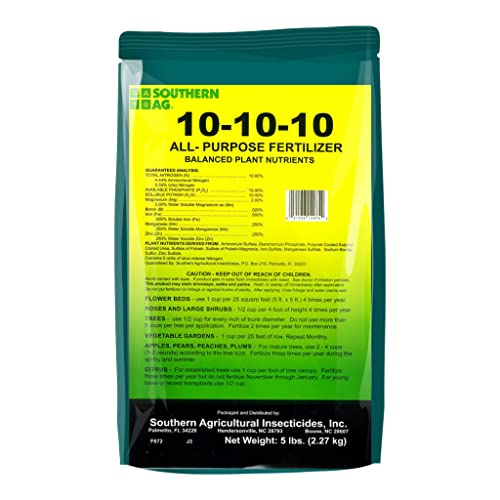
Product overview: A uniform, homogeneous granular formulation containing 10% nitrogen, 10% phosphorus, and 10% potassium, plus minor elements.
Best for: General-use vegetable plots and mixed gardens that need a balanced, all-purpose nutrient boost.
Why chosen: The balanced NPK profile supports root development, foliage, and fruiting across a broad range of vegetables.
Caution: As a broad feed, it may not tailor to crops needing richer phosphorus or potassium; consider crop-specific options when necessary.
Jobe’s Organics Granular All Purpose Fertilizer

Product overview: An all-purpose organic granular fertilizer designed to minimize runoff and odors, with 2-5-3 NPK providing nutrients to vegetables and tomatoes while staying organic.
Best for: Organic vegetable beds and tomato-heavy gardens seeking an environmentally friendly option with targeted nutrient delivery.
Why chosen: OMRI-listed organic formula supports organic gardening standards and reduces synthetic chemical exposure in the soil.
Caution: Organic options often have slower visible effects than synthetic blends; plan feeding schedules accordingly.
10-10-10 Plant Fertilizer Slow Release (GardenWise)

Product overview: A balanced 10-10-10 formula with slow-release properties that provide up to 8 weeks of nutrition for outdoor gardens, containers, and trees.
Best for: Gardeners who prefer fewer applications and want steady feeding for vegetables, fruit trees, and flowering plants.
Why chosen: The slow-release mechanism reduces application frequency and maintains steady nutrient availability for vegetable growth.
Caution: Slower acting compared with quick-release formulas; plan for ongoing feeding with multiple seasons in mind.
Buying Guide: Key Considerations For Granular Fertilizers
What should you consider before buying?
- Organic vs. synthetic: Organic options (like Burpee and Jobe’s Organics) support organic gardening goals, but may release nutrients more slowly.
- NPK balance: Choose 10-10-10 for general use, or adjust based on vegetable type (calcium-rich formulas for tomatoes, phosphorus for root crops).
- Release type: Slow-release granules reduce application frequency; quick-release blends deliver nutrients faster but require more frequent applications.
- Soil health: Consider soil tests to tailor amendments to your garden’s needs, avoiding over-fertilization.
- Container vs. in-ground: Some blends are better suited for containers with smaller nutrient reserves; others work well in larger beds.
- Environmental impact: Organic options typically have lower potential runoff and environmental footprint; check product labels for OMRI or similar certifications.
Frequently Asked Questions
- What is the best granular fertilizer for vegetables?
- How long do granular fertilizers last?
- Should I use a calcium-rich fertilizer for tomatoes?
- Can I mix granular fertilizers in the same bed?
- Are organic fertilizers safe for vegetables?
- Do granular fertilizers work in containers?
There is no single best option; choose based on organics preference, crop type, release timing, and whether you garden in-ground or in containers.
Many products offer up to 3 months of feeding for quick-release blends; slow-release formulas can extend to 6–8 weeks between applications.
Yes, calcium helps with stronger cell walls and fruit quality in tomatoes and peppers, reducing several common issues.
Mixing is possible if the NPK profiles are compatible with your crop’s needs. Avoid stacking incompatible formulations that could cause nutrient imbalances.
Organic fertilizers are generally suitable for vegetables and soil biology; ensure they are OMRI-listed if you follow strict organic standards.
Yes, many granular blends are appropriate for containers; select a formula suited for potted plants and follow guidelines for reapplication frequency.